


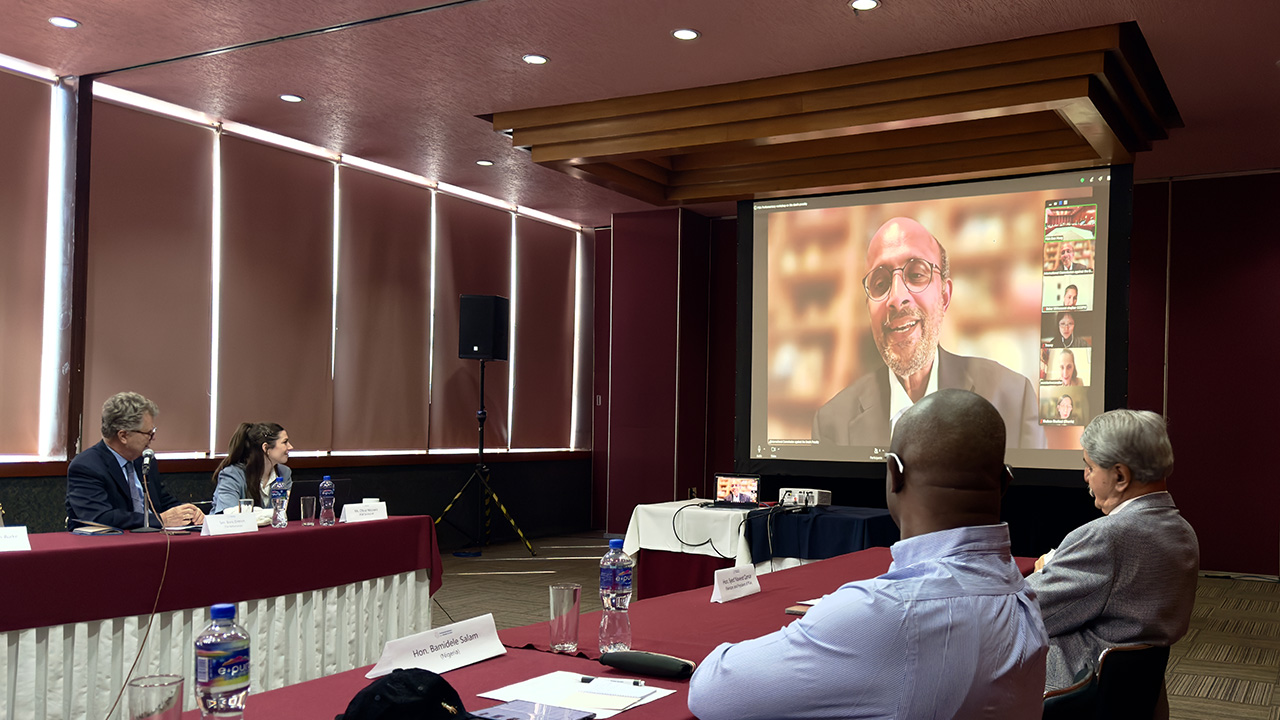
El 25 de marzo, en el marco del 46º 46.º Foro Anual de la PGA en Ciudad de México,, parlamentarios de Jamaica, Nigeria, Gambia, Pakistán y los Países Bajos se reunieron en un taller parlamentario sobre la pena de muerte , unidos por una convicción compartida sobre la universalidad de los derechos humanos. En un panorama geopolítico volátil, donde las prioridades contrapuestas amenazan con relegar la cuestión de la pena capital a un segundo plano, los legisladores de países que la mantienen y de países abolicionistas en la práctica debatieron estrategias concretas para superar los obstáculos nacionales a la abolición, replicar modelos exitosos y apoyar el movimiento abolicionista en sus países. Como explicó el senador Boris Dittrich ( Países Bajos), coordinador de la campaña de la PGA, el objetivo era identificar medidas concretas que los parlamentarios pueden adoptar, tanto a título individual como colectivo, para desmantelar un sistema estructuralmente represivo, incompatible con el derecho a la vida y la prohibición de la tortura y los malos tratos.
Actuar cuando el progreso se enfrenta al retroceso:
Aunque más de dos tercios de los Estados miembros de la ONU han abolido ya la pena de muerte en la ley o en la práctica, la Sra. Asunta Vivó Cavaller y el Sr. Rajiv Narayan, codirectores ejecutivos de la Comisión Internacional contra la Pena de Muerte (ICDP), advirtieron a los parlamentarios: «el progreso es real, pero no irreversible. Un compromiso político sostenido es esencial». Datos recientes confirman que, si bien el número de países que imponen la pena de muerte sigue disminuyendo, persisten retrocesos alarmantes. Esto incluye cifras récord de ejecuciones en Irán, Arabia , Singapur, y los Estados Unidos, junto con amenazas de restablecer o ampliar la pena capital, como recientemente en Israel con la adopción de la discriminatoria Ley de la pena de muerte para terroristas o en las Maldivas, que tiene previsto presentar un proyecto de ley de pena de muerte para los delitos relacionados con las drogas.
Para contrarrestar este retroceso y mantener la abolición en la agenda política, los codirectores ejecutivos del ICDP animaron a los parlamentarios a colaborar más allá de las líneas partidistas para reformar la legislación, derogar leyes, establecer moratorias y proponer enmiendas constitucionales. También recordaron a los legisladores su papel en la supervisión y el seguimiento de las obligaciones en materia de derechos humanos, lo que refuerza el compromiso y allana el camino hacia la abolición. Surinam ofrece un ejemplo convincente: tras reunirse con expertos, los parlamentarios se comprometieron plenamente a redactar y revisar un proyecto de ley para abolir la pena de muerte, que posteriormente fue aprobado y promulgado en 2015. Los países pueden optar por otra vía para lograr la abolición mediante la ratificación del Segundo Protocolo Facultativo del Pacto Internacional de Derechos Civiles y Políticos, destinado a la abolición de la pena de muerte, tal y como hizo Kazajistán en 2022 tras haber observado una moratoria de larga duración.
Crisis oculta: Género, discriminación y condiciones carcelarias
El taller sensibilizó sobre la intersección entre la violencia de género y la pena de muerte. La Sra. Bahar Mirhosseni, distinguida investigadora jurídica y directora de Defensa Legal en el Centro Cornell sobre la Pena de Muerte en todo el Mundo, presentó conclusiones que indican que al menos 1.000 mujeres están condenadas a muerte en todo el mundo. Muchas —o la mayoría de ellas— son supervivientes de violencia de género y/o víctimas de privaciones socioeconómicas . En los Estados Unidos de América, por ejemplo, el 96 % de las mujeres condenadas a muerte han sufrido violencia de género. En algunos países, las mujeres condenadas a muerte por delitos relacionados con las drogas suelen ser trabajadoras migrantes, se enfrentan a la inseguridad económica o se encuentran en relaciones coercitivas. A pesar de estos patrones, los tribunales rara vez reconocen circunstancias atenuantes específicas de género, lo que exacerba aún más la discriminación. Los también revelan las diferencias de género en el trato durante los procesos judiciales y los interrogatorios policiales, lo que conduce a la construcción de narrativas injustas. La Sra. Mirhosseni recomendó a los parlamentarios que abordaran los sesgos sistémicos para garantizar un juicio justo , pero hizo hincapié en que, dada la actual incapacidad para erradicar dichos prejuicios, la prioridad fundamental sigue siendo la abolición de la pena de muerte.
La Sra. Tracey Cui, investigadora del Centro para los Derechos de los Presos de Japón, proporcionó a los parlamentarios una visión más profunda de las condiciones a las que se enfrentan los reclusos condenados a muerte, incluidas las mujeres, a través de una visión general de la situación de el corredor de la muerte en Japón, que en 2025 contaba con 108 personas, entre ellas seis mujeres. La documentación y la investigación llevadas a cabo por la ONG pusieron de relieve la violencia de género y los malos tratos, incluida la vigilancia constante , una práctica considerada ilegal por el Tribunal Supremo de Tokio en 2025. A pesar de la sentencia de 2025, en 2026, el Colegio de Abogados de Osaka protestó contra la vigilancia constante de una mujer que había pasado más de 20 años en el corredor de la muerte. La Sra. Cui explicó que la violencia contra las mujeres sigue profundamente arraigada en el sistema de justicia penal japonés, sin tener en cuenta sus necesidades específicas y sin reconocer la violencia de género durante los juicios. Destacó la necesidad de realizar más investigaciones para informar al público, permitir juicios fundamentados sobre la pena capital y abordar el impacto del género en relación con los casos de pena de muerte.
Historias humanas detrás de la pena de muerte
La abogada malasia Khaizan Sharizad Ab. Razak ofreció un impactante testimonio, en el que destacó su compromiso en primera línea con la abolición de la pena de muerte. Con la abolición de la pena de muerte obligatoria en Malasia, 1.020 personas se han beneficiado de la revisión de sus sentencias. Su equipo jurídico pro bono facilitó la puesta en libertad de varias personas, el 20 % de las cuales había pasado más de 20 años en el corredor de la muerte. Entre ellas, un hombre fue puesto en libertad en octubre de 2024 después de que un documental sacara a la luz su condena injusta. Destacó que la mayoría de los clientes proceden de comunidades marginadas y, incluso tras su puesta en libertad, siguen enfrentándose al estigma y a dificultades para encontrar empleo. Puso de relieve la grave falta de especialistas en salud mental en Malasia, señalando que muchos clientes padecen problemas de salud mental y de otro tipo, por lo que necesitan apoyo y asistencia al salir de prisión. «El cambio de políticas debe ir de la mano de la reforma legislativa», afirmó. Se necesitan reformas estructurales en diferentes ministerios, especialmente en educación, pobreza y salud, incluida la salud mental.
Al responder a una pregunta sobre la opinión pública, señaló un cambio significativo en las actitudes hacia los delitos relacionados con las drogas y la pena de muerte en Malasia durante la última década. Las historias humanas, cuando se comunican de manera eficaz, pueden cambiar las percepciones y remodelar las actitudes.
Del debate a la acción: estrategias para los parlamentarios
La sesión final transformó el debate en planes de acción concretos ; los parlamentarios identificaron estrategias que pueden utilizar para impulsar la abolición de la pena de muerte:
- Participar en el debate público para cambiar el discurso público y mantener la cuestión de la pena de muerte en la agenda;
- Formar grupos parlamentarios que trasciendan las líneas políticas para crear coaliciones;
- Presentar pregunta parlamentaria para exigir transparencia al gobierno sobre los datos relacionados con el tema, la postura del gobierno al respecto o impulsar cualquier avance en la cuestión;
- Redactar proyectos de ley para reducir el alcance o abolir la pena de muerte, establecer una moratoria como primer paso hacia la abolición total, o mejorar las condiciones carcelarias, incluidas las de las mujeres;
- Aprovechar las oportunidades legislativas, como las reformas constitucionales, para consolidar la abolición de forma permanente;
- Promover la ratificación del Segundo Protocolo Facultativo del PIDCP u otros tratados regionales pertinentes; y
- Participar en la diplomacia global, entre otras cosas promoviendo votos a favor de la Resolución de la Asamblea General de la ONU sobre la moratoria.
Varios parlamentarios subrayaron la dificultad y la persistente sensibilidad que rodea a la cuestión, especialmente cuando ciertos casos que afectan profundamente a la opinión pública. A modo de ejemplo, el honorable Bamidele Salam, diputado (Nigeria) advirtió sobre la creciente presión religiosa y política para ampliar la pena de muerte a los casos de secuestro y violación, lo que demuestra la necesidad de continuar con la sensibilización, ya que la pena de muerte nunca ha sido un elemento disuasorio y solo perpetúa el ciclo de violencia y discriminación, sin abordar nunca las causas fundamentales de la delincuencia. A pesar de los diferentes contextos, los parlamentarios participantes coincidieron en que estas estrategias podrían aplicarse a nivel nacional y regional . La honorable Heatha Miller, diputada (Jamaica), se comprometió a colaborar con los grupos jamaicanos que abogan contra la pena de muerte para promover un proyecto de ley de iniciativa parlamentaria. La Sra. Fatoumatta Njai, diputada (Gambia), destacó la actual incoherencia entre la ley y la práctica en su país: aunque la pena de muerte sigue figurando en la legislación gambiana , ya no se aplica. Subrayó la necesidad de que los legisladores aborden esta cuestión y trabajen para eliminar todas las referencias a la pena capital de la Constitución de Gambia mediante una enmienda constitucional.
Estos compromisos son esenciales para garantizar un progreso continuo, ya que los parlamentarios son actores clave para lograr la abolición universal de la pena de muerte. La atención constante a los elementos interseccionales de los sistemas de justicia penal y las condiciones carcelarias es esencial para implementar sistemas orientados a la rehabilitación y la reintegración, guiados por la humanidad más que por la retribución.