


Loading...

Abolition of the Death Penalty

The Challenge: Justice, not Revenge

Every victim and every survivor has the right to see the perpetrator of a crime held to account in a court of law. But the death penalty is not a form of justice, it is an act of revenge.

The death penalty does not deter crime: there is no evidence that States with capital punishment have lower crime rates, or that crime rates increase when the death penalty is abolished. On the contrary, studies show that it is the threat of being arrested and being sanctioned – more than the severity of the sanction itself – that is the key factor in crime prevention.


The death penalty disproportionately affects the most vulnerable populations, and notably minorities, people living in poverty, people with mental disabilities and other already marginalized groups. In some countries, the death penalty can be used as an instrument of political repression.


No judicial system is immune to error: even when due process and all judicial safeguards are duly implemented and respected, it is impossible to guarantee that new evidence will not reveal that an innocent person has been executed.


The justice system should not have the right to kill: the death penalty is unethical and morally wrong. Carrying out executions violates the right to life of convicts, and deprives them of any possibility of rehabilitation and future contribution to the society.

This is why every year, an increasing number of countries decide to abolish the death penalty, thus reinforcing the global trend in favor of putting a definitive end to this cruel punishment. The progress of the abolitionist movement notably resulted in an unprecedented support for the UN 9th resolution for a universal moratorium on the use of the death penalty. This crucial instrument to advance international standards was adopted on 15 December 2022, by an historic majority of 125 States in favor.

Despite the growing isolation of States that still employ the death penalty, global executions have known a significant increase in 2023. Amnesty International reported that in 2023, at least 1,153 individuals were executed (excluding China, where figures are kept secret), marking the highest number since 2015 (during that year, 1,634 executions were recorded by Amnesty International – China excluded). Alarmingly, this very high number of recorded executions took place in only 16 countries – the lowest number of executing countries on record according to Amnesty International. The majority of them took place in Iran (more than 853 executions) and Saudi Arabia (172 executions recorded).

Furthermore, and contrary to the global trend, certain States that had abolished or implemented a long-standing moratorium on the death penalty, continue to run against this global abolitionist trend. Thus, in many countries, voices are rising, advocating for stricter criminal sentences and the revival of the capital punishment.

In this context, it is the responsibility of the abolitionist movement to intensify its efforts towards achieving universal abolition of the death penalty.

The Response: The Campaign for the Abolition of the Death Penalty

In 2013, PGA launched its Campaign for the Abolition of the Death Penalty. The goal of the campaign is to ensure the right to life is upheld and to promote justice systems grounded in the rule of law, in line with SDG 16, particularly target 16.3. Parliamentarians have a crucial role to play in the movement to restrict the use of the death penalty and ultimately abolish it through drafting legislation; deliberating on national policies; and enlightening public opinion.

For this purpose, PGA assists its members from both retentionist and abolitionist countries. It takes a step-by-step approach to further up the country’s abolitionist path, including:

  1. Improving conditions of detention on death row by addressing issues like prison overcrowding, insufficient food or drinking water, lack of medical care, lack of personnel and infrastructure, deplorable sanitary conditions, physical violence, etc.

  2. Strengthened legal safeguards in capital cases, including right to due process, right to appeal and clemency proceedings, right to adequate legal counsel, right to a fair trial.

  3. Reduced scope of application of the death penalty, including the elimination of mandatory sentencing.

  4. [For retentionist countries] Adoption of a moratoria, including through affirming the biannual United Nations General Assembly (UNGA) resolution on a moratorium on the use of the death penalty.

  5. Abolition of the death penalty and promotion of an international norm prohibiting it, through supporting the ratification, accession or adoption the Second Optional Protocol to the International Covenant on Civil and Political Rights (ICCPR-OP2).

Listen to the Death Penalty Information Center’s Podcast featuring PGA member Rep. Renny Cushing (USA)
Listen to the Death Penalty Information Center’s Podcast featuring PGA member Rep. Renny Cushing (USA) on empowering survivors and repealing New Hampshire’s death penalty »

PGA members participate every three years in the World Congress against the Death Penalty organized by ECPM.

ADP Campaign Achievements

A Parliamentary Peer Exchange Supports Efforts to End the Death Penalty in Malawi and Beyond

A Parliamentary Peer Exchange Supports Efforts to End the Death Penalty in Malawi and Beyond

Today, 28 out of the 55 African Union Member States have abolished the death penalty in law, while 14 States maintain a moratorium on executions.

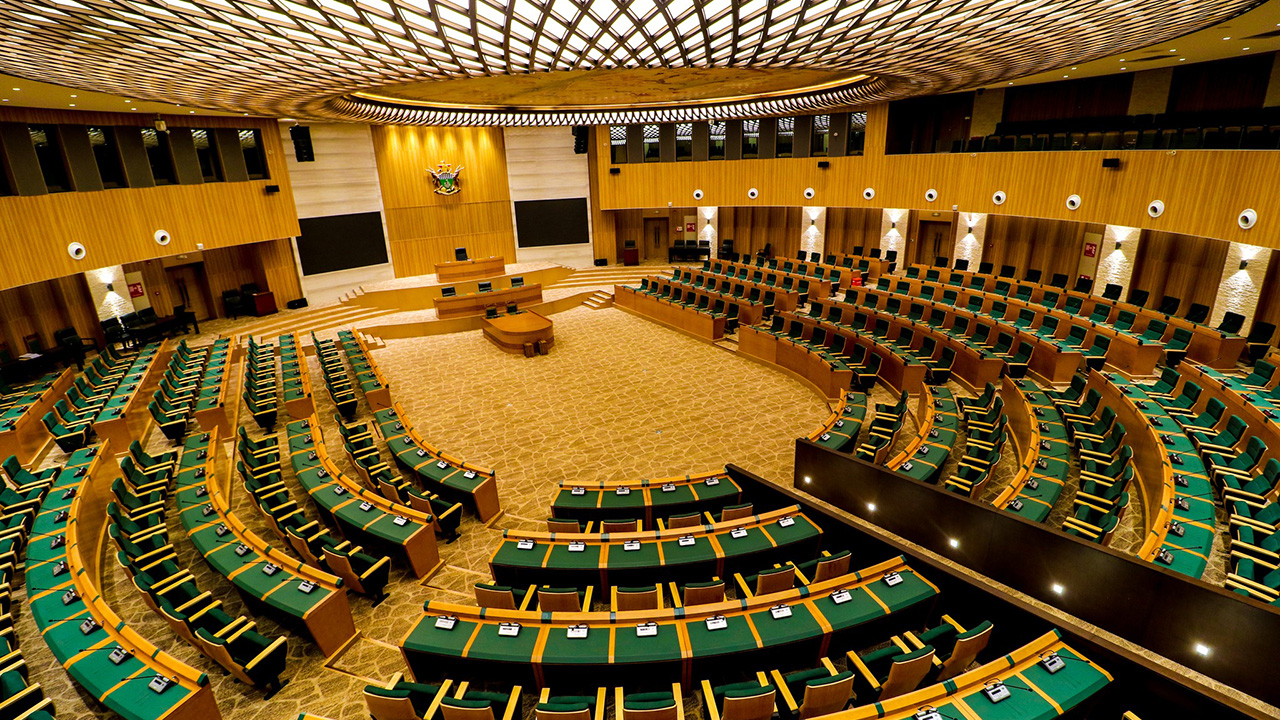
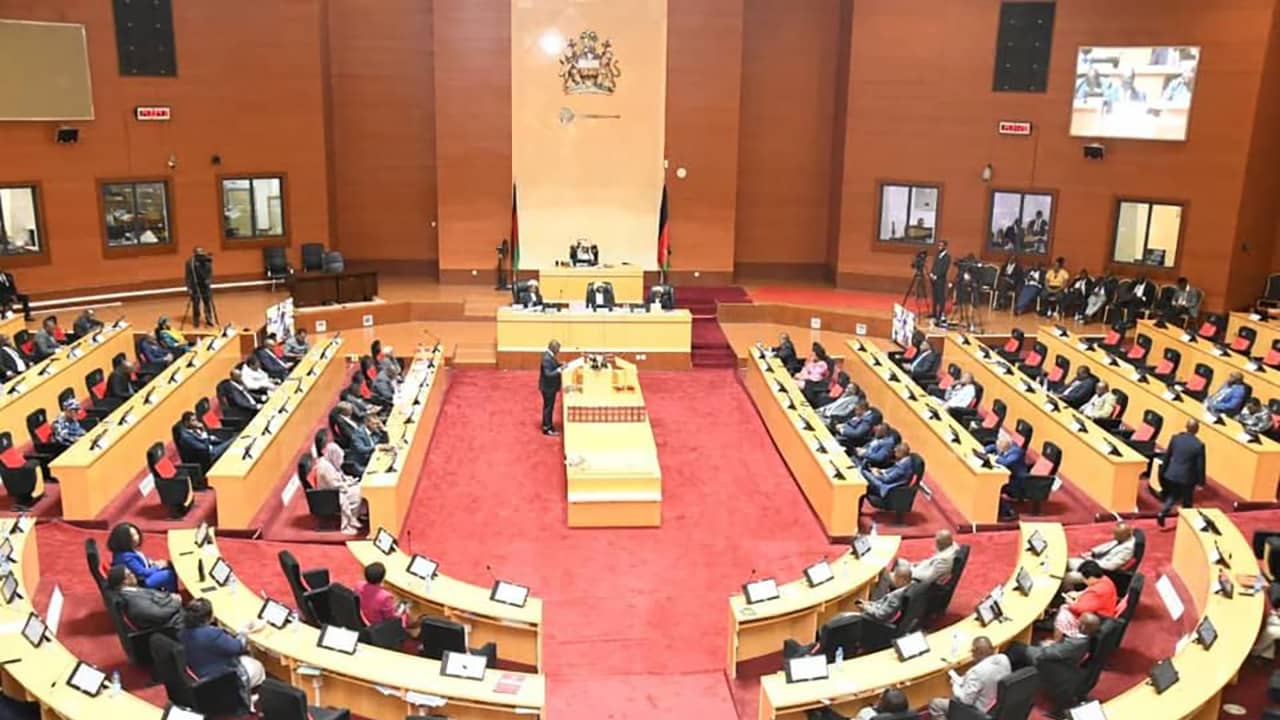
Lilongwe / The Hague / New York Parliamentary leaders in Ghana and Zimbabwe have been championing legislative efforts to abolish the death penalty in recent years, becoming the standard bearers of the global abolitionist movement among African countries. Today, 28 out of the 55 African Union Member States have abolished the death penalty in law, while 14 States maintain a moratorium on executions. The experiences of parliamentarians from these countries offer valuable insights that can inspire and guide further abolition efforts across the African continent — particularly in Malawi, where the death penalty remains part of Malawi’s legal system despite having no executions carried out since 1992. Hon. Yusuf Nthenda, MP (Malawi), PGA Member, is currently championing a private member’s bill appearing on the order paper of the 51st session of the Parliament of Malawi. The bill aims to amend both Malawi’s Penal Code and the Criminal Procedure and Evidence Code by removing all references to death sentences. Encouraged by this development and in an effort to build momentum for reform in Malawi, several civil society organizations, together with Parliamentarians for Global Action, hosted a virtual roundtable event on 9 April 2025. The gathering brought together parliamentarians from Malawi, Ghana, and Zimbabwe as well as representatives from Reprieve; the Center for Human Rights Education, Advice and Assistance (CHREAA); the World Coalition Against the Death Penalty (WCADP)  to share experiences and exchange legislative strategies aimed at ending the use of capital punishment. Learning from Recent Abolition Successes Hon. Kwame Anyimadu-Antwi, MP (Ghana) and PGA Member, explained how Ghana passed a private member bill in 2023 to replace the death penalty with life imprisonment. As the former Chair of the Constitutional, Legal, and Parliamentary Affairs Committee, he led inclusive public consultations and participated in the legislative review process to achieve consensus, engaging religious leaders, civil society, and the broader public. One of the most persuasive arguments was the irreversible risk of executing innocent people. The financial burden of keeping death row inmates and the conditions of detention in prisons were also important arguments for abolishing the death penalty. While building consensus was challenging, reasoned debates and careful engagement led to the introduction and adoption of the bill resulting in the abolition of the death penalty for ordinary crimes. Since Ghana’s constitution still includes provisions related to capital punishment, the ongoing constitutional review presents more opportunities for parliamentarians to fully remove all references to the death penalty. Hon. Edwin Mushoriwa, MP (Zimbabwe), shared his country’s path to abolition, driven by the conviction that the death penalty was a relic of colonial rule and did not reflect Zimbabwean values. He championed Zimbabwe’s abolition through a private member bill,  adopted by the National Assembly and the Senate just days before its promulgation by the President on 31 December 2024. This road has been long, despite no executions taking place since 1995. In the absence of consensus on abolition, incremental steps were taken, such as reducing the scope of application of the death penalty in 2013, when the new constitution outlawed death penalty for women and individuals under 21 or over 70 years old. Hon. Mushoriwa emphasized the unwavering support of civil society organizations, including Veritas Zimbabwe, Amnesty International, and Death Penalty Project, which conducted public awareness campaigns and demonstrated that constitutional reform was not necessary to abolish the death penalty for ordinary crimes. This helped pave the way for swift legislative action. These concerted actions helped build consensus within the opposition and members of the ruling party, leading to this historic vote. As the law is being implemented, national courts are currently resentencing all individuals who were on death row. Hon. Mushoriwa concluded his intervention by underlining that, from a Southern African point of view, abolition in Malawi will be an extremely important step for the region and indicated that Zimbabwean parliamentarians stand ready to assist their Malawian peers, including from a technical point of view, to support their efforts in moving in the same direction. A Critical Moment for Malawi Hon. Yusuf Nthenda, MP (Malawi) and PGA member, has introduced a private member bill to abolish the death penalty through the amendment of the Penal Code and Criminal Procedure and Evidence Codes.  Given these bills are listed in the order paper for the 51st session of Malawi’s parliament, there is a critical opportunity to advance national debate and legislative reform. In this context, several Malawian parliamentarians joined the roundtable and affirmed their support for reform. Hon. Roseby Gadama, MP (Malawi) and PGA member, highlighted the moratorium in place since 1992, but pointed out the lack of political will to definitely abolish this practice from the legislative texts. She highlighted support from the NGO Reprieve, which organized an exchange in 2023 between Zambian and Malawi officials, and the Malawi’s Parliamentary Women’s Caucus (as Zambia just abolished the death penalty in 2022). This experience strengthened the Caucus’ commitment to abolition. Hon. Gadama expressed her continued strong support towards efforts led by Hon. Nthenda, the champion of the private member’s bill. Hon. Mary Mpanga, MP (Malawi), representing the Catholic members of parliament in Malawi, spoke from a religious perspective. She underlined her commitment to respecting and protecting life, which the use of the death penalty violates. Learning from the experiences of Ghana and Zimbabwe parliamentarians, she voiced her support for the abolition of the death penalty by law. Hon. Ephraim Kayembe Abelle, MP (Malawi) and PGA Member, acknowledged the challenge ahead and the need for a strategy to engage legislators from both sides of the political spectrum in order to build consensus and move toward eliminating the death penalty from the statute books. With additional technical support and consultations, he is confident that Malawi will have the opportunity to amend its legislation. Hon. Susan Dossi, MP (Malawi) and PGA Member, also expressed her commitment to abolish the death penalty, stressing the willingness of Malawian parliamentarians to leave a positive legacy for future generations. She underlined the value of learning from their peers in neighboring countries and other African countries, which can help overcoming challenges and facilitate progress. While Malawi citizens have voiced growing support for abolition, as reflected in parliamentary and the Ministry of Justice processes (respectively in 2022 and 2023), participants in the roundtable event agreed that Malawi still needs a clear cross-party strategy to ensure political will. Civil Society Recommendations Mr. Victor Mhango, Executive Director of the CHREAA, urged the parliament to act without delay. With elections scheduled in September 2025, and the private member bill still pending in the parliamentary agenda, the window for reform may be narrowing. Yet, pushing for debate on the abolition of the death penalty within parliament will allow elected representatives to reflect the will of Malawian citizens and address the broader human rights concerns related to the criminal justice system. He  outlined four main recommendations for Malawian parliamentarians: Seize the legislative moment and ensure the timely debate of the bills aiming at abolishing the death penalty (amendment to the Penal Code and amendment to the Criminal Procedure and Evidence Code), as delays risk the loss of political momentum< Demonstrate cross-party support to show unified national commitment to human rights Create a legacy for future generations by ending an outdated and inhumane punishment Engage with civil society to foster transparency, inclusion, and public trust throughout the process. Malawi has the opportunity to join the growing number of African countries that have shown the political courage to end capital punishment. Through cross-party political commitment, public engagement, and principled leadership, Malawi can forge its place as a leader in criminal justice reform on the African continent and allow the country to join neighbors who have taken the path towards abolition of the death penalty. PGA opposes capital punishment in all circumstances. Parliamentarians have a crucial role to play in the movement to restrict the use of the death penalty and ultimately abolish it through drafting legislation, deliberating on national policies, and enlightening public opinion. Find out more about our Campaign on the Abolishment of the Death Penalty

Growing Momentum for the Abolition of the Death Penalty – Adoption of the 2024 UN General Assembly Biennial Resolution on a Moratorium on the Use of the Death Penalty

Growing Momentum for the Abolition of the Death Penalty – Adoption of the 2024 UN General Assembly Biennial Resolution on a Moratorium on the Use of the Death Penalty

This historic resolution represents a crucial step forward for the abolitionist movement.

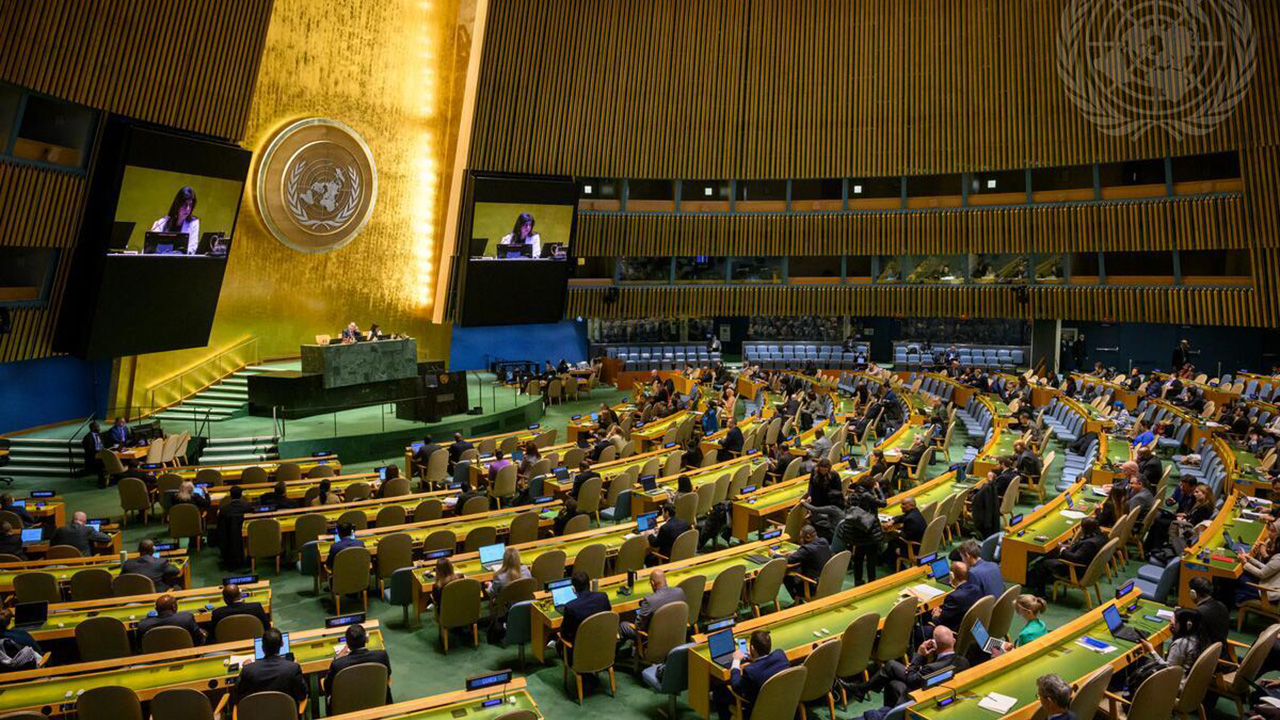
New York / The Hague On 17 December, during the 79th session of the United Nations General Assembly (UNGA), Member States overwhelmingly adopted the tenth Resolution on a “Moratorium on the use of the death penalty”. With 130 votes in favor, 22 abstentions and 32 votes against, this historic result represents a crucial step forward for the abolitionist movement. Compared to the 2022 resolution, which received 125 votes in favor, the significant support for this year’s resolution reflects the increasing international momentum for the implementation of a universal moratorium, as a first step towards ending the use of capital punishment. This resolution, co-facilitated by Argentina and Italy on behalf of the Inter-Regional Task Force, was co-sponsored by 70 States. It calls upon all States to establish a moratorium on executions, with a view to abolishing the death penalty. Today, two-thirds of the world’s countries have expressed their support for the implementation of a universal moratorium, as a decisive step towards the full abolition of the death penalty. The death penalty is incompatible with the principles of human dignity and justice. I am proud that Kenya has endorsed the resolution this year, and we will persist in our efforts – at the national level, in our respective regions, and globally – not only to implement moratoria, but to ensure the complete elimination of the death penalty from our laws. Millie Odhiambo, MP (Kenya), Convenor of PGA’s Campaign on the Abolition of the Death Penalty In terms of positive developments observed, several States made remarkable shifts in their positions compared to 2022: From Against to In Favor: Antigua and Barbuda, Burundi; From Abstention to In Favor: Gabon, Kenya, Morocco, Zambia; From No Vote to In Favor: São Tomé and Príncipe, Seychelles, Somalia, Vanuatu; From Against to Abstention: Bahamas, Bangladesh and the Democratic Republic of the Congo. Nevertheless, challenges remain, as some setbacks were also noticed: From In Favor to Abstention: Guinea, Uganda; From Abstention to Against: Mauritania, Papua New Guinea; From In Favor to Absent during the vote: Central African Republic, Marshall Islands. PGA acknowledges the tireless work of the global abolitionist movement, and expresses its gratitude to its parliamentary members for their engagement and advocacy, which contributed to this result. Through their efforts, parliamentarians play a pivotal role in urging their governments to support this resolution, and take meaningful action towards ending capital punishment.   About the moratorium resolution Every two-years, the UN General Assembly is expected to consider and vote on a draft resolution calling for a moratorium on the death penalty. The adoption of the moratorium resolution underscores States’ commitment to end the use of this cruel punishment. It also fosters support for abolishing the death penalty and advances national dialogues and measures towards abolition. By explicitly linking the establishment of a moratorium to human rights, the adoption of the first resolution (62/149) on 18 December 2007, marked a critical turning point: the use of capital punishment is not just a criminal justice issue – it is a question of upholding human rights. Since then, the UNGA has adopted ten resolutions on the moratorium, each receiving broader support. The number of votes in favor has increased from 104 in 2007, to 130 in 2024, reflecting the global abolitionist trend. PGA opposes capital punishment in all circumstances. Parliamentarians have a crucial role to play in the movement to restrict the use of the death penalty and ultimately abolish it through drafting legislation, deliberating on national policies, and enlightening public opinion. Find out more about our Campaign on the Abolishment of the Death Penalty

Historic vote: Zimbabwe Parliament adopts the Death Penalty Abolition Bill

Historic vote: Zimbabwe Parliament adopts the Death Penalty Abolition Bill

PGA acknowledges the leadership and tireless efforts of Zimbabwean parliamentarians, including PGA Members and most notably Hon. Dorcas Sibanda, whose collective unwavering commitment has made this historic achievement possible.

New York / The Hague / Harare [Update from 9 January 2025] On 31 December 2024, the President of Zimbabwe, Emmerson Mnangagwa, signed the Death Penalty Abolition Bill into law, officially making the country an abolitionist for all crimes. This landmark development prohibits national courts from imposing the capital punishment. Existing death sentences will be resentenced or commuted to jail time. Nevertheless, a provision allows the death penalty to be reinstated during “any state of public emergency declared in terms of section 113 of the Constitution.” PGA warmly congratulates the Senate of Zimbabwe on the historic adoption of the Death Penalty Abolition bill, during the night of 11 December. This Bill, which had previously been passed by the National Assembly, now paves the way for Zimbabwe to officially abolish the death penalty once it receives presidential assent. The country has been de facto abolitionist since its last execution in 2005. PGA acknowledges the leadership and tireless efforts of Zimbabwean parliamentarians, including PGA Members and most notably Ms. Dorcas Sibanda former parliamentarian, whose collective unwavering commitment has made this historic achievement possible. This landmark development also comes at a pivotal time, just a few days before the United Nations General Assembly considers the resolution calling for a universal moratorium on the use of the death penalty. Zimbabwean parliamentarians therefore sent a powerful message to the international community, about the importance of upholding human rights and strengthening justice systems. This achievement is a testament to the dedication of parliamentarians and the collective voice of Zimbabweans who believe in justice and human rights. I urge other nations to follow and join Zimbabwe’s example in building a world free of capital punishment. I also want to commend President Mnangagwa for his consistent leadership in opposing the death penalty. His personal experience underscores the profound injustice of capital punishment. I encourage him to once again reaffirm his commitment by signing this act into law without delay, thereby cementing Zimbabwe’s role as a leader in the global movement against the death penalty. Honorable Kindness Paradza, Member of the National Assembly of Zimbabwe, PGA Member As the country moves closer to the abolition, PGA calls on the government to also consider taking the next step by signing and ratifying the Second Optional Protocol to the ICCPR, aiming at the abolition of the death penalty (ICCPR-OP2) PGA opposes capital punishment in all circumstances. Parliamentarians have a crucial role to play in the movement to restrict the use of the death penalty and ultimately abolish it through drafting legislation, deliberating on national policies, and enlightening public opinion. Find out more about our Campaign on the Abolishment of the Death Penalty.

Global Movement towards the Abolition of the Death Penalty

0
countries have completely abolished the death penalty in law for all crimes as of May 2024
0
countries have abolished the death penalty in law or practice as of May 2024
0
People were executed in 2023 (excluding China) – up 31% from 2022

Latest News for the ADP Campaign:

Photo by Palliamentarians for Global Action

The event highlighted Malawi’s journey towards abolition, discussed remaining challenges, and shared best practices.

We Call Upon Parliamentarians to Take Action on this World Day Against the Death Penalty 2025

Each year on 10 October, the global abolitionist movement comes together to observe the World Day Against the Death Penalty. In 2024 and 2025, the focus has been on addressing the myth that the death penalty ensures safety, with the message: “The Death Penalty Protects No One: Abolish it Now.”

Photo Courtesy Parliament of Malawi

Today, 28 out of the 55 African Union Member States have abolished the death penalty in law, while 14 States maintain a moratorium on executions.

World Map of Abolitionist and Retentionist Countries

 
Abolitionist for all crimes
 
Abolitionist for ordinary crimes only
 
Abolitionist in practice*
 
Retentionist country
 

As of May 2023. Source: Amnesty International
* countries that retain the death penalty for ordinary crimes but that have not executed anyone during the last 10 years or more

How We Work

Supported by an expert Secretariat, PGA members work together to educate, sensitize, build technical capacity, and strengthen the political will of parliamentarians to achieve campaign objectives through concrete legislative and policy initiatives. PGA works with individual parliamentarians in their national contexts through country-specific strategies, leveraging that capacity with international networking to facilitate connections among parliamentarians and build bridges with civil society, domestic and international policy-makers, and other stakeholders.

Read more on our Theory of Change