


Loading...

Campaña Mundial Contra Crímenes Cibernéticos

Background

While the world advances towards digitalization, the use of and dependance on information technology, networks and databases has become more and more pervasive in society. Targeting and illegally exploiting computer systems and data have also become increasingly common. The COVID-19 global pandemic has spurred an unprecedented increase in cyber-based illegal activities both in number and in sophistication.

Developing effective countermeasures has proven to be challenging in the global context, as well as aligning legislation, strategies and policies in a consistent and harmonized manner. Heterogeneous legal frameworks, lack of national strategies, limited criminal justice capacities to counter cybercrime and secure electronic evidence, and information infrastructures that are still scarcely secured in a number of countries, has made societies worldwide vulnerable targets for cybercrime. Moreover, governments struggle in reconciling effective responses to cybercrime with human rights and rule of law requirements online.

Cybercrime, indisputably, also exhibits Weapons of Mass Destruction (WMD) characteristics in certain manifestations, including actual manipulation of manufacture of existing WMD, with the clear potential for mass destruction/loss of life of large population groupings and/or mass destruction of essential networks and energy supplies, in many instances also essential for human survival. It is an existential threat to humanity. Recent cyberattacks on public utility facilities, including adjusting chemicals in town/city water supplies with the potential to poison whole communities/towns/cities/surrounding regions, is also now an entrenched reality worldwide. Similarly, wholesale cyberattacks on hospitals and other critical/emergency care institutions in many countries worldwide, loss/ransoming of vital digitalized health records for millions of individuals, including many currently hospitalized with serious illness/disease, lives jeopardized by such activities. Another robust example of the close nexus/overlap between cybercrime and WMD is the use of cybercrime/attacks on Nuclear power plants.

The Role of Parliamentarians in Promoting Cybersecurity and Preventing Cybercrime

Both as advocates and lawmakers, Parliamentarians can advocate for the ratification and accession of international treaties which promote cybersecurity as well as the adoption and implementation of cybersecurity legislation in their respective countries to give effect to the obligations they assume under such international treaties. Parliamentarians have ample opportunity in this sphere to encourage their respective Governments to also support, draft and ensure passage of requisite implementing legislation.

The Budapest Convention on Cybercrime, with 76 States Parties serves as a guideline for any country developing comprehensive national legislation against cybercrime and as a framework for international cooperation between States Parties to this treaty. The Convention was adopted in November 2001. 2003 has seen the adoption of a First Additional Protocol concerning the criminalization of acts of a racist and xenophobic nature committed through computer systems. Reflecting new realities, the Second Additional Protocol to the Convention on Cybercrime on Enhanced Cooperation and Disclosure of Electronic Evidence was opened for signature in May 2022.

Although a Council of Europe Convention, several non-Council of Europe States were actively involved in the adoption of the Budapest Convention on Cybercrime, including Canada and the United States, and it is open to ratification/accession by all countries. A growing number of non-Council of Europe countries have already taken this step from several global regions. Significant potential exists, therefore, for PGA Members to make essential contributions in many current Non-State Parties to promote universality and implementation of the .Budapest Convention on Cybercrime, both directly and indirectly, poses one of the greatest threats, if not the greatest, to international peace and security today.


Recent Activities
Past Activities

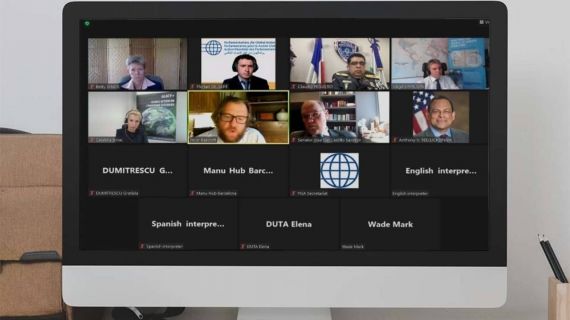
Parliamentarians for Global Action, GLACY+ project and Octopus Project of the Council of Europe are joining efforts to co-organise a series of thematic webinars to promote the importance of the universality and implementation of the Budapest Convention on Cybercrime and its Protocol/s.

Resources

For further Information on PGA IPSP's Cybersecurity Initiative, please contact:

Sr. Peter Barcroft
Director senior,
Programa de paz y seguridad internacionales
E: 

Sr. Florian Delsert
Asociado del programa,
Programa de paz y seguridad internacionales
E: 

Logros

Vanuatu and Fiji Take Important Steps to Address Cybercrime

Vanuatu and Fiji Take Important Steps to Address Cybercrime

PGA's Global Parliamentary Campaign against Cybercrime actively promotes universalization of the Budapest Convention on Cybercrime, as well as its two Additional Protocols,  including in the Pacific Islands region.

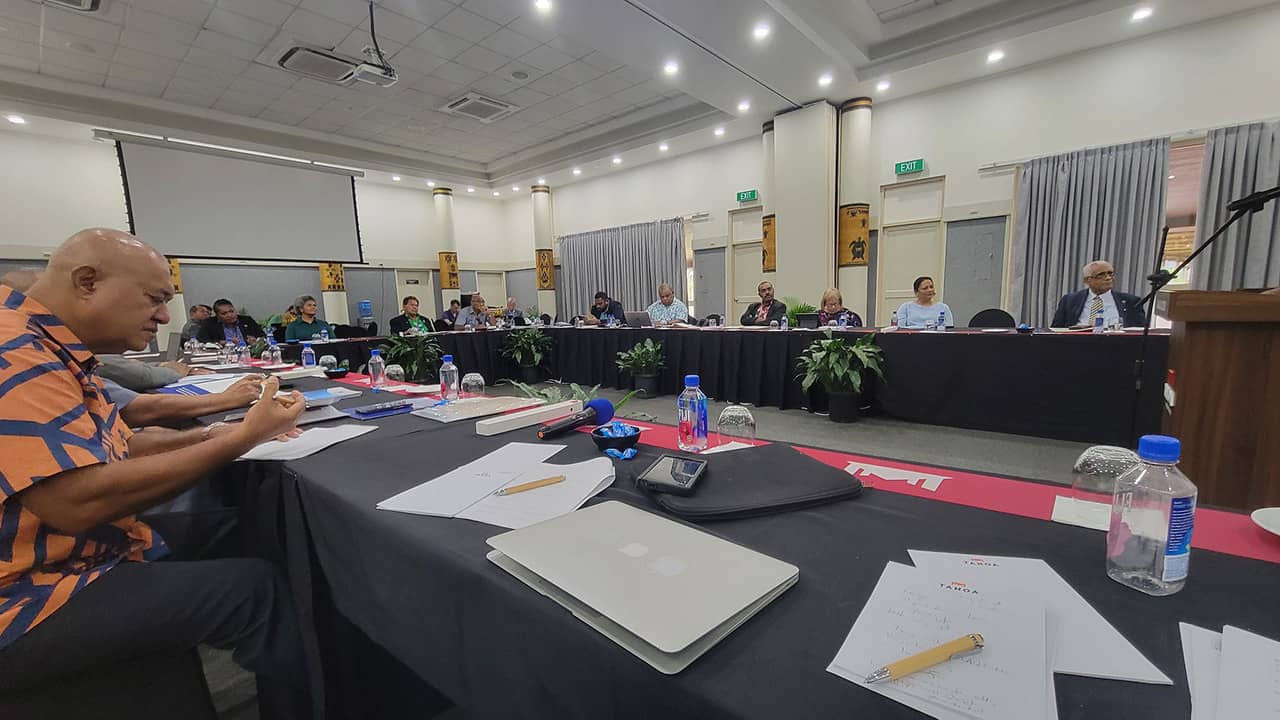
PGA congratulates Vanuatu on its recent ratification of the Budapest Convention on Cybercrime, as well as Fiji on the same occasion signing the Second Additional Protocol on enhanced cooperation and sharing of electronic evidence to the Budapest Convention. PGA's Global Parliamentary Campaign against Cybercrime actively promotes universalization of the Budapest Convention on Cybercrime, as well as its two Additional Protocols,  including in the Pacific Islands region. We partner with the Council of Europe worldwide and many relevant regional organizations in promoting this key treaty to effectively address cybercrime. The Budapest Convention on Cybercrime, adopted in 2001, has been ratified by 80 States worldwide to date and 50 States have now also signed its Second Additional Protocol on enhanced cooperation and sharing of electronic evidence. It was the first — and remains the preeminent — international treaty seeking to address cybercrime by harmonizing national laws related to cybercrime, improving investigative techniques and fostering international cooperation. PGA organized a Regional Pacific Islands Workshop to Address Cybercrime in Fiji in May 2024 in which numerous prominent MPs from Fiji and across the region participated. Attendees included then Speaker of Parliament and now President of Fiji, Hon. Ratu Niqama Lalabaluva, as well as the then First Deputy Speaker and current Minister of Internal Affairs of Vanuatu, PGA Member Hon. Andrew Solomon Napuat. Fiji deposited its Instrument of Accession to the Budapest Convention in June 2024, approximately six weeks after the conclusion of this regional PGA Workshop.

Últimas noticias de la Campaña Mundial Contra Crímenes Cibernéticos:

Amuzujoe, CC BY-SA 4.0 , via Wikimedia Commons

The PGA Weekly Cybercrime Update is prepared by the International Peace and Security Program of PGA and is provided strictly for informational purposes only.

W.carter, CC BY-SA 4.0 , via Wikimedia Commons

The PGA Weekly Cybercrime Update is prepared by the International Peace and Security Program of PGA and is provided strictly for informational purposes only.

Photo by Kvistholt Photography on Unsplash

The PGA Weekly Cybercrime Update is prepared by the International Peace and Security Program of PGA and is provided strictly for informational purposes only.

Declaraciones y medidas anteriores sobre Irán

Donantes de campaña


The Pew Charitable Trusts
Oak Foundation

Cómo trabajamos

Mediante el uso de una metodología de igual a igual y estrategias adecuadas a cada país, la Secretaría de PGA y sus miembros trabajan juntos para educar, sensibilizar, desarrollar capacidad técnica y fortalecer la voluntad política de los parlamentarios para que tomen iniciativas concretas y acciones legislativas y lograr resultados en el marco de las campañas de PGA..

PGA trabaja con parlamentarios individuales en sus contextos y parlamentos nacionales y a partir de allí crea redes internacionales que conectan a la sociedad civil y los parlamentarios, así como también como los responsables políticos y partes interesadas a nivel nacional e internacional.

Más sobre nuestra Teoría de Cambio