


Parliamentarians for Global Action (PGA), in partnership with the Southern Africa Litigation Centre (SALC), convened a high-level regional webinar bringing together parliamentarians, human rights leaders, civil society representatives, and legal experts to examine the role of legislatures and oversight institutions in addressing hate speech while safeguarding democratic freedoms.
The discussion focused on practical approaches to strengthening accountability mechanisms, promoting ethical leadership, and ensuring that democratic institutions can respond effectively to harmful rhetoric without undermining freedom of expression.
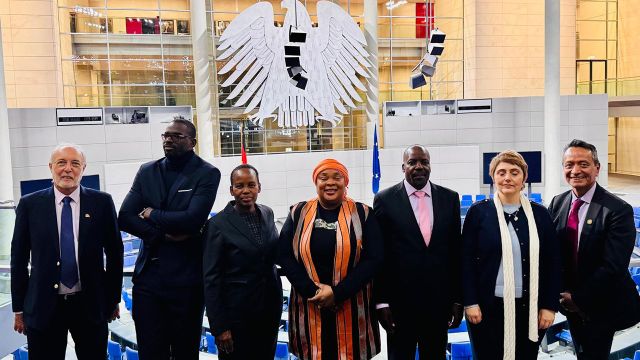
The webinar featured contributions from Hon. Steve Letsike, Deputy Minister in the Presidency for Women, Youth and Persons with Disabilities of South Africa; Hon. Bernard Georges, Leader of the Opposition in the National Assembly of Seychelles and Member of PGA’s Executive Committee; and Prof. Tshepo Madlingozi, Commissioner of the South African Human Rights Commission. The discussion was moderated by representatives of PGA and SALC.
Lessons from South Africa: Constitutional Values and Democratic Responsibility
Drawing on South Africa’s constitutional experience, Hon. Steve Letsike emphasized that efforts to address hate speech must be rooted in the protection of human dignity, equality, and democratic participation. Reflecting on South Africa’s historical experience, she noted that harmful rhetoric can contribute to exclusion and discrimination long before physical violence occurs.
Constitutional safeguards, independent institutions, accessible complaint mechanisms, and public education are important components in creating a comprehensive response to hate speech. She also underscored the role of parliamentary rules, ethics frameworks, and oversight bodies in ensuring that parliamentary privilege is not misused to undermine the dignity of vulnerable groups.
Among the key lessons identified were the importance of clear legal definitions, accessible remedies, institutional accountability, and sustained civic education to prevent harmful narratives from becoming normalized.
Legislative Innovation and Challenges in Seychelles
Hon. Bernard Georges shared Seychelles’ experience in developing hate crime legislation, highlighting the Penal Code (Amendment) Act 2024, which for the first time enables hate crimes to be formally recognized within the criminal justice system and requires courts to take the hate-motivated element of an offence into account during sentencing. The Act provides that an offence is aggravated by hate where an offender demonstrates hostility towards a victim, or commits the offence because of the victim’s actual or perceived protected characteristics, including sexual orientation, gender identity, race, religious belief, disability, sex characteristics, political affiliation, or HIV/AIDS status. He also reflected on the ongoing challenge of strengthening legal protections for vulnerable groups while preserving the constitutional right to freedom of expression.
The Seychelles approach sought to build broad political support while ensuring legal protections against discrimination and targeted harm. Hon. Georges emphasized that legislative reform alone is insufficient if it does not translate into changes in public behavior and political culture.
One of the central challenges facing many democracies is ensuring that legal frameworks are accompanied by effective implementation, public awareness, and ongoing engagement between lawmakers and civil society.
The Role of Independent Oversight Institutions
Prof. Tshepo Madlingozi highlighted the important role of National Human Rights Institutions in promoting human rights, monitoring compliance with constitutional standards, and addressing complaints related to discrimination and hate speech.
Accountability efforts must extend beyond parliamentary chambers and address broader societal trends, including harmful rhetoric in public discourse and online spaces. The growing influence of digital platforms, misinformation, and disinformation can contribute to the amplification of harmful narratives.
Prof. Madlingozi outlined several initiatives undertaken by the South African Human Rights Commission, including civic education programs, school-based interventions, digital literacy initiatives, social media accountability efforts, and strategic litigation before Equality Courts.
Collaboration among parliaments, human rights institutions, and civil society organizations can strengthen democratic resilience and promote a culture of respect for human rights.
Civil Society Engagement and Parliamentary Accountability
Throughout the discussion, speakers highlighted the critical role of civil society organizations in supporting democratic accountability. Effective engagement requires sustained dialogue between parliamentarians, oversight institutions, and community-based organizations.
Speakers encouraged civil society actors to strengthen advocacy and engagement strategies, identify parliamentary champions for human rights, and work collaboratively with legislators to advance reforms that promote dignity, equality, and inclusive democratic participation.
Parliamentary rules, codes of conduct, and ethics frameworks are most effective when combined with strong institutional leadership and a commitment to implementation.
Building Democratic Resilience
Addressing hate speech requires a whole-of-society approach that combines legal frameworks, democratic oversight, public education, and civic participation.
Participants agreed that while different countries face distinct legal and political contexts, many of the challenges are shared across the region. Continued peer-to-peer exchanges between parliamentarians, human rights institutions, and civil society organizations remain essential to strengthening democratic discourse, protecting human dignity, and ensuring that democratic institutions remain responsive, inclusive, and accountable.
PGA and SALC reaffirmed their commitment to supporting regional dialogue and practical cooperation on parliamentary ethics, democratic governance, and human rights protection across Southern Africa and beyond.