


On 4 November, the United Nations Human Rights Council reviewed Malawi’s human rights record through a process called the Universal Periodic Review. This peer-review mechanism enables every United Nations Member State to evaluate each other’s progress on human rights and to offer recommendations for improvement.
For Malawi, one issue stood out: despite several attempts and commitments, the country has yet to abolish the death penalty. While the country hasn't executed anyone in three decades, maintaining what's called a de facto moratorium, the death penalty remains on the books. The Universal Periodic Review provided an opportunity to definitively put an end to this practice. During this 2025 review, 31 UN Member States recommended that Malawi abolish the death penalty and/or ratify the Second Optional Protocol to the International Covenant on Civil and Political Rights, aiming at the abolition of the death penalty.
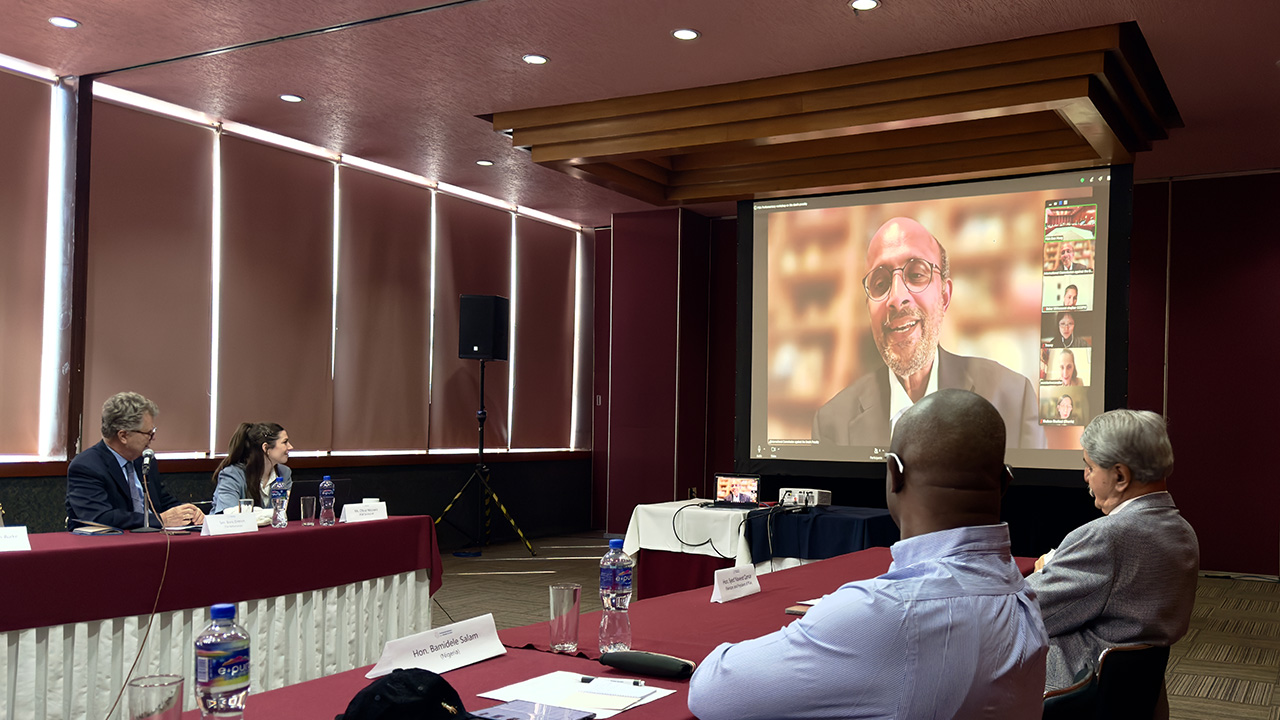
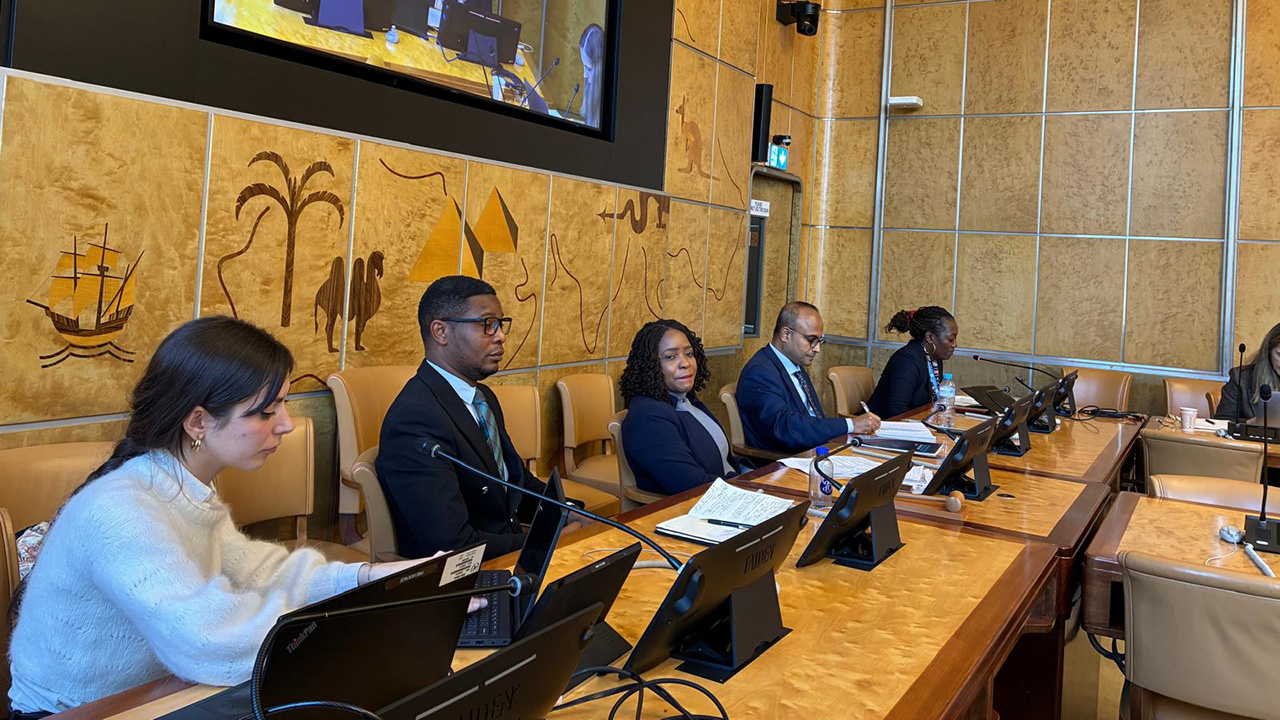
Within this context, Parliamentarians for Global Action, Reprieve, and The Advocates for Human Rights gathered national and international experts in Geneva for an “Information Meeting on the Universal Periodic Review Process in Malawi: Towards the Abolition of the Death Penalty in Malawi and the Region.” The event highlighted Malawi’s journey towards abolition, discussed remaining challenges, and shared best practices.
Malawi’s Evolving Stance on the Death Penalty
Opening the meeting, Ms. Grace Malera, Commissioner of the Malawi Human Rights Commission and Ombudsperson for Malawi, traced the country’s journey towards abolition. She explained that while Malawi’s 1993 Constitution enshrines one of the most progressive Bills of Rights, including the right to life, the death penalty persists as a holdover from the colonial era, embedded in the Penal Code and Criminal Procedure and Evidence Code. A turning point came in 2007 with a landmark Constitutional Court ruling declaring the mandatory death penalty unconstitutional. Ms. Malera emphasized that abolishing the death penalty isn’t just a legal matter — it’s a political and human rights issue requiring inclusive dialogue, engagement, and leadership.
That leadership can be seen in recent parliamentary actions in Malawi. PGA member Hon. Victor Musowa, First Deputy Speaker of the Parliament of Malawi, highlighted the work done in 2022 when the Legal Aid Committee conducted the largest public consultation ever held in the country and demonstrated unequivocal support for abolition across Malawi.
I make the commitment knowing where we are coming from, knowing our commitments, knowing what we are able to achieve and knowing what we are able to do as Malawian Parliament. The work out here is enormous but manageable if we catch the new MPs to understand the whole concept of the abolition of death sentence. Honorable Victor Musowa, MP (Malawi), PGA Member
Mr. Chimwemwe Chithope-Mwale, Director of the Legal Aid Bureau, shared an encouraging success story from the Malawi Resentencing Project, carried out in partnership with Reprieve and the Cornell Centre on the Death Penalty Worldwide. The initiative followed the 2007 High Court landmark ruling abolishing the mandatory death penalty, which allowed prisoners to seek reduced sentences based on mitigating factors the courts had previously overlooked. Through careful investigation and presentation of new evidence, sentencing hearings were held under international fair trial standards. Many prisoners were released immediately, others received reduced sentences (with only one case resulting in life imprisonment), and no individual was resentenced to death.
For Mr. Chithope-Mwale, this project demonstrated that when mitigation is conducted and fair trials are ensured, the death penalty loses its appeal as a sentence. Even more striking were the stories of reconciliation: Traditional leaders and communities welcomed back former inmates after resentencing — powerful examples of forgiveness and social healing in action.
Mr. Chithope-Mwale also emphasized the importance of addressing prison conditions in the justice process, as they are often degrading and inhumane. They must be urgently addressed to uphold justice and human dignity.
Lessons from other countries and international commitments
Dr. Rajiv Narayan, Co-Executive Director of the International Commission Against the Death Penalty, brought a more global perspective, citing the different paths that other countries have taken toward abolition, including:
- Legislative reforms and political leadership, such as in Zambia, Zimbabwe, or France
- Ratification of the Second Optional Protocol to the International Covenant on Civil and Political Rights, such as in Mongolia or Kazakhstan
- Breaking away from an oppressive past, such as Rwanda or Cambodia
- Constitutional Court judgement, such as in South Africa
Malawi has already taken important steps, Dr. Narayan observed. Now the country should consider ratifying the Second Optional Protocol to the International Covenant on Civil and Political Rights — the key international instrument for abolition.
Ms. Liza Sekaggya, OHCHR Desk Officer for Malawi, welcomed the growing momentum across Africa. She highlighted recent progress in Zambia and Côte d’Ivoire as the last two countries to have ratified the Second Optional Protocol.
She reminded participants that the UN provides crucial frameworks for this work. The Universal Periodic Review and States’ pledges create structured pathways for countries to advance human rights and monitor compliance with international law. She also pointed to the 2024 General Assembly Resolution on a Moratorium on the use of the death penalty, which received a record 130 votes in favor — clear evidence of increasing global momentum toward abolition.
Calling Malawi to Action:
Mr. Victor Mhango, Founder and Executive Director of the Centre for Human Rights Education, Advice and Assistance (CHREAA), urged the new government and parliamentarians to act swiftly and hold an early debate in the new legislature to pass legislative reform.
Malawi has the opportunity and responsibility to join the growing number of African nations that have abolished the death penalty. Continuing diplomatic engagement and peer-to-peer dialogue among parliamentarians will be essential to sustaining this momentum and supporting Malawi on its path towards full abolition.