


148 Articles with this tag
Historic progress for the abolition of the death penalty

Lebanon has today reaffirmed its dedication to fundamental human rights principles
Global trends and use of the death penalty in drug-related offences
The need to turn commitments into action
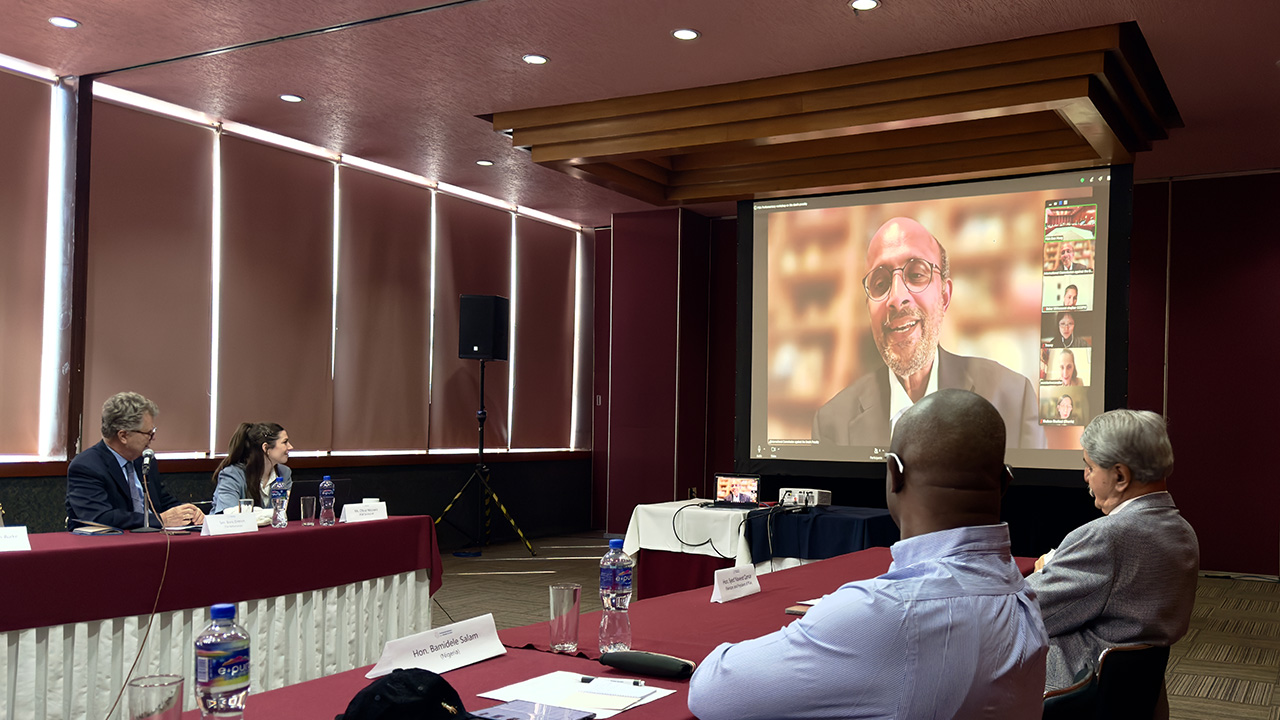
Parliamentarians gathered for a parliamentary workshop on the death penalty, united by a shared conviction on the universality of human rights
2025: alarming developments for the abolition of the death penalty
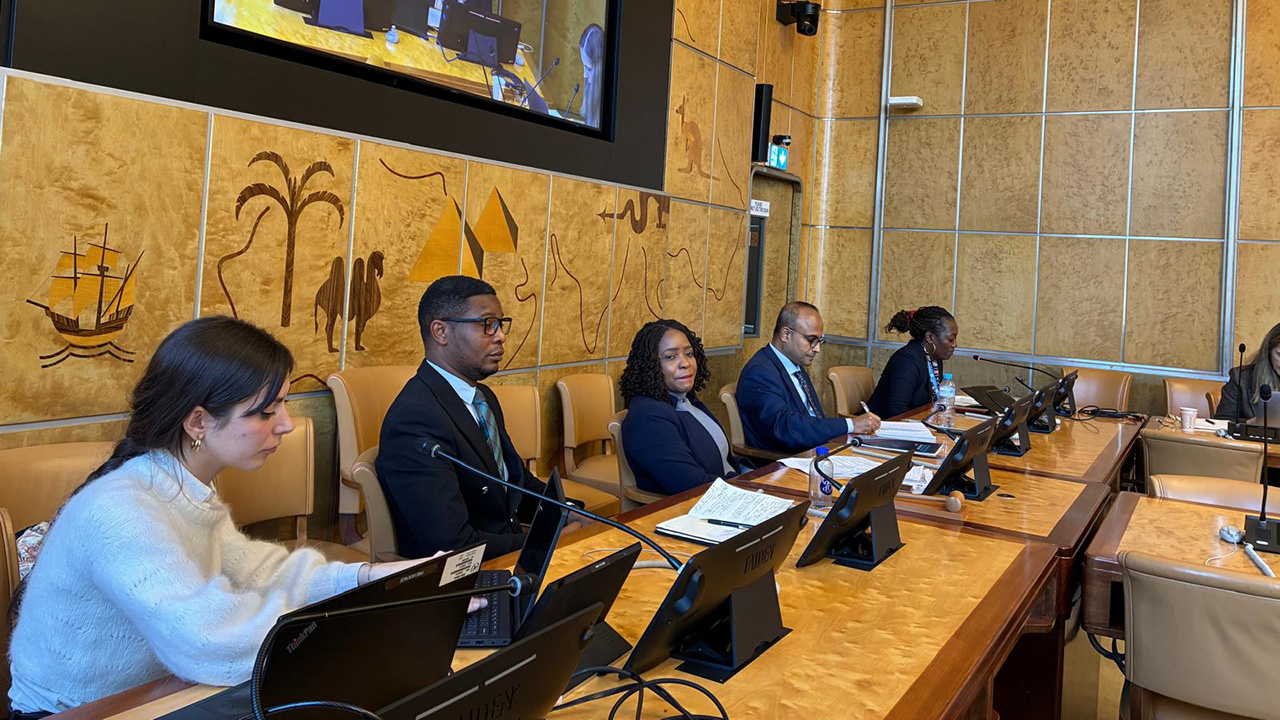
The event highlighted Malawi’s journey towards abolition, discussed remaining challenges, and shared best practices.
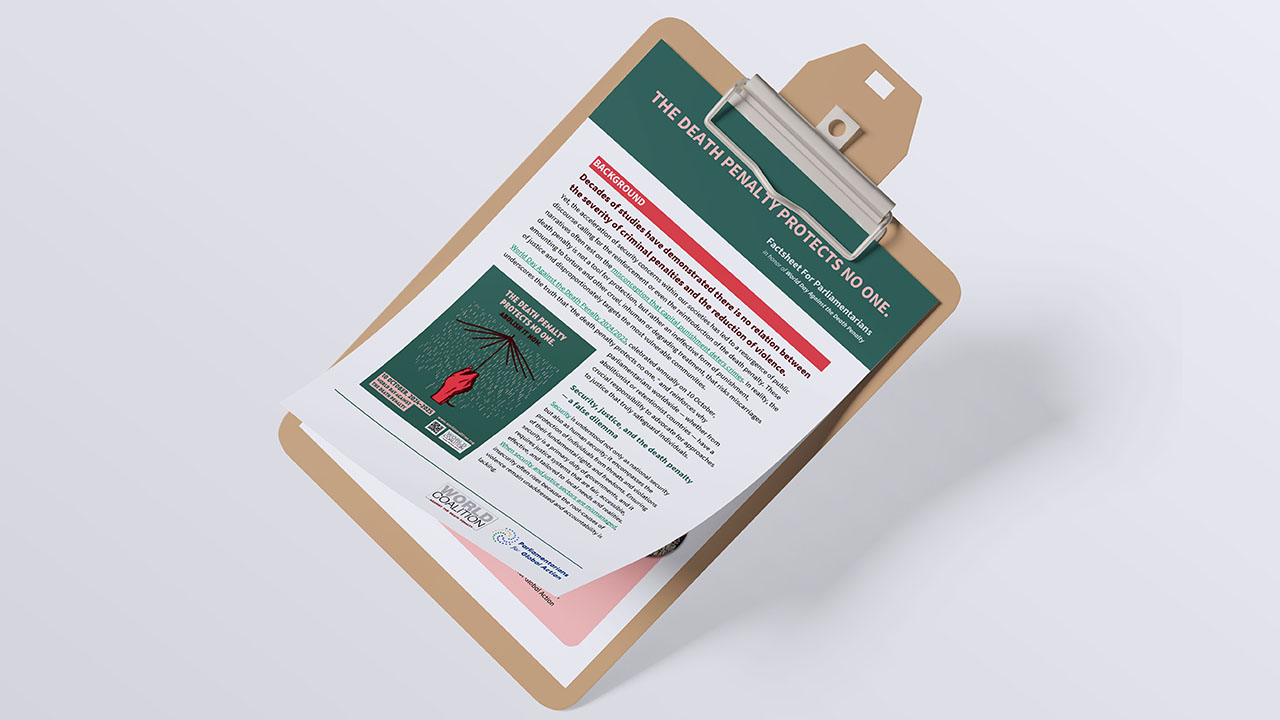
A factsheet highlighting how governments have used “security” as a political tool to justify the death penalty and provides parliamentarians with arguments to counter these false narratives.

Every victim and every survivor has the right to see the perpetrator of a crime held to account in a court of law. But the death penalty is not a form of justice, it is an act of revenge.
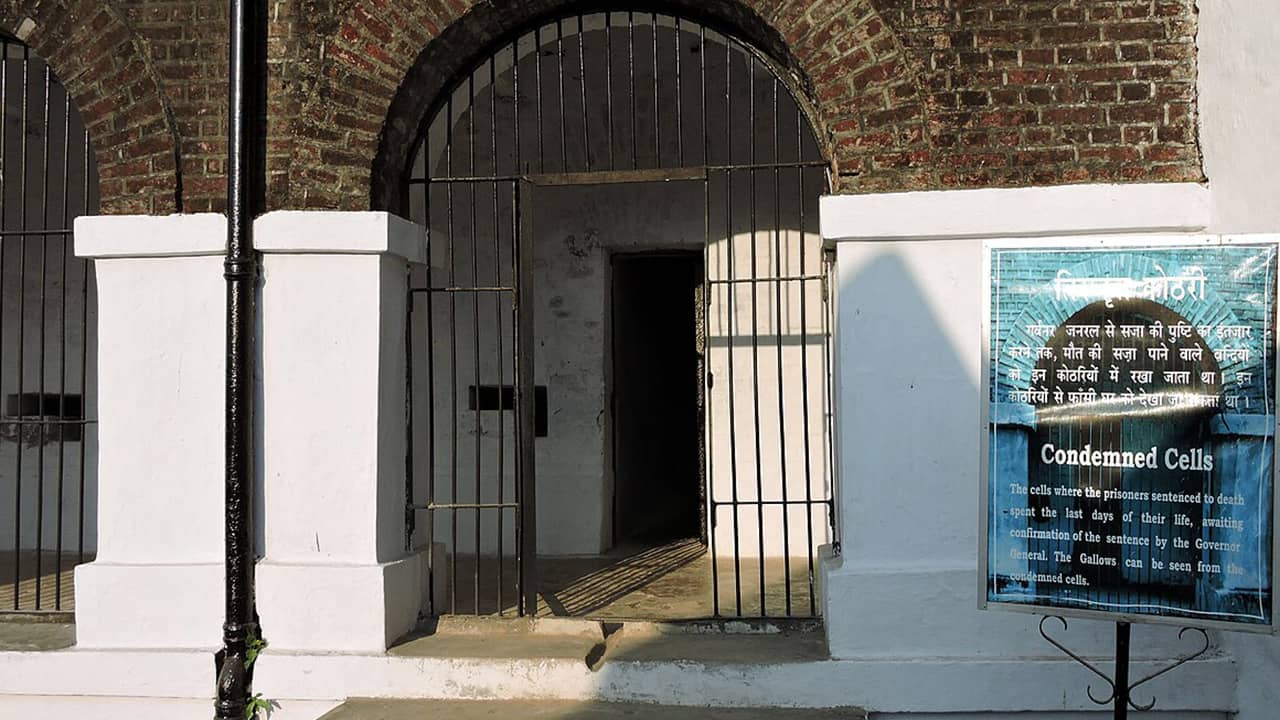
Global Action Needed: Ending the Death Penalty for Drug Offences
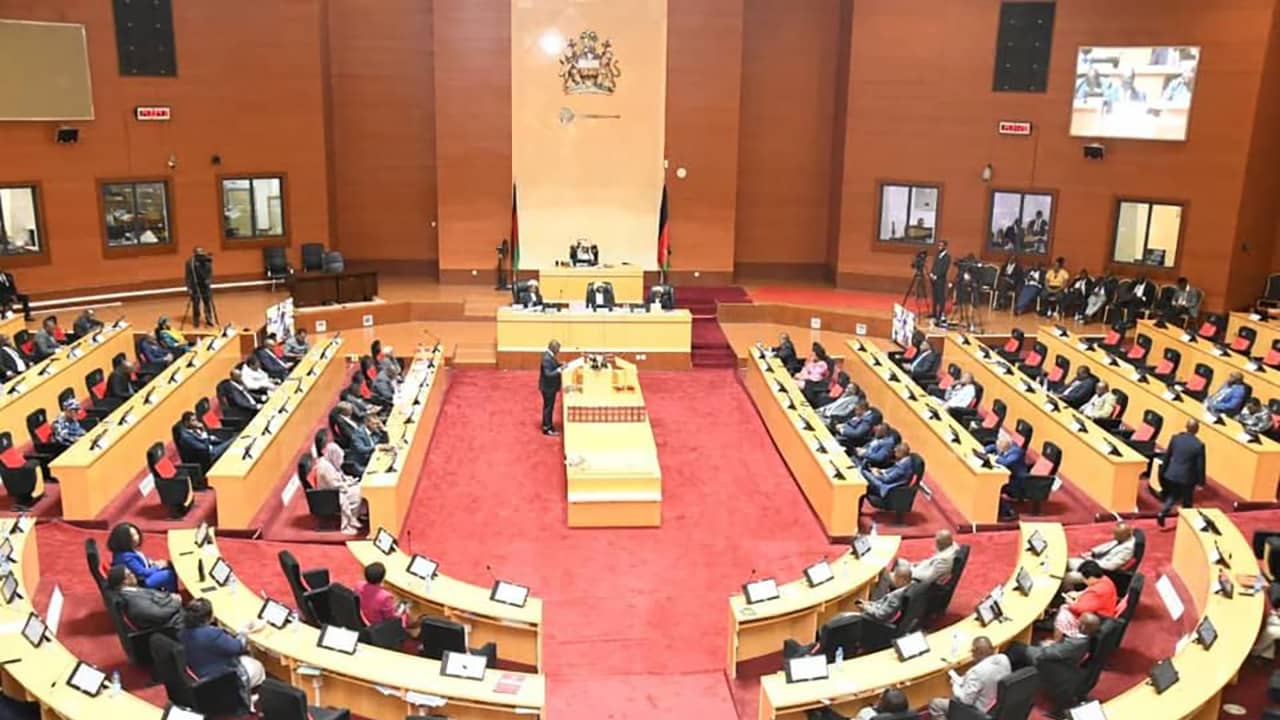
Today, 28 out of the 55 African Union Member States have abolished the death penalty in law, while 14 States maintain a moratorium on executions.

Progress achieved in December 2024 has allowed the abolitionist movement to start 2025 under the best auspices.
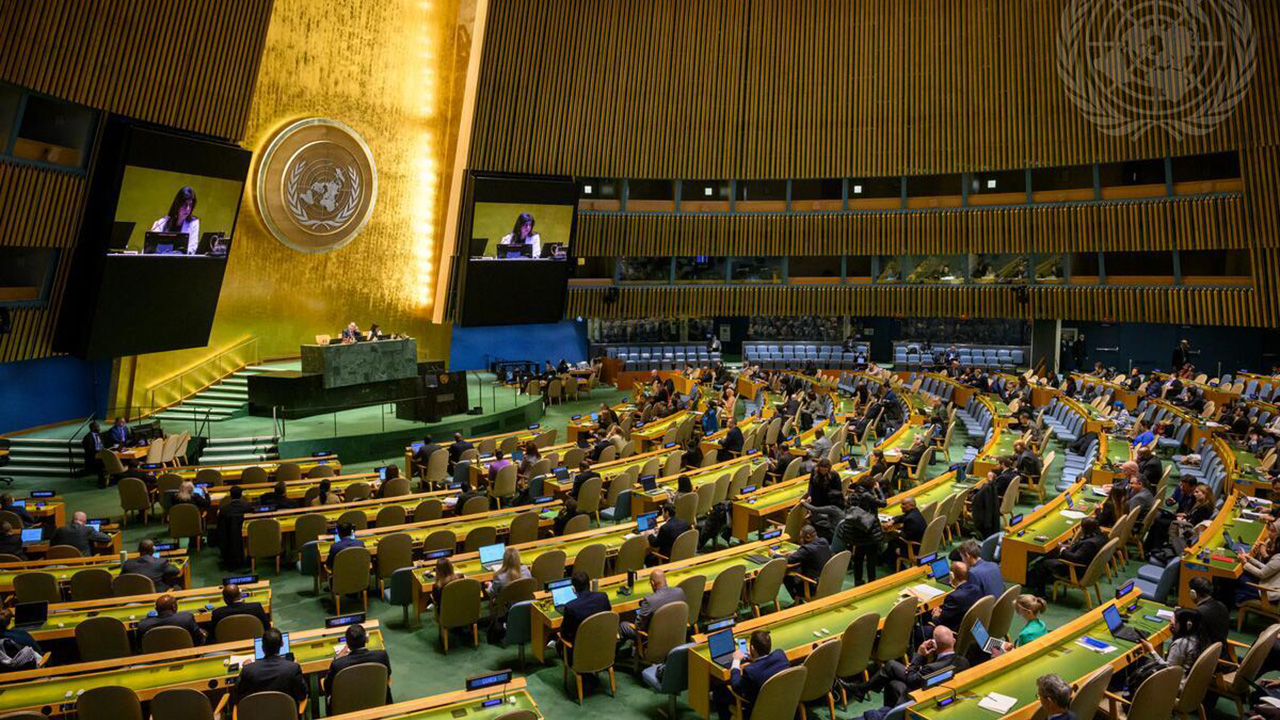
This historic resolution represents a crucial step forward for the abolitionist movement.

PGA acknowledges the leadership and tireless efforts of Zimbabwean parliamentarians, including PGA Members and most notably Hon. Dorcas Sibanda, whose collective unwavering commitment has made this historic achievement possible.
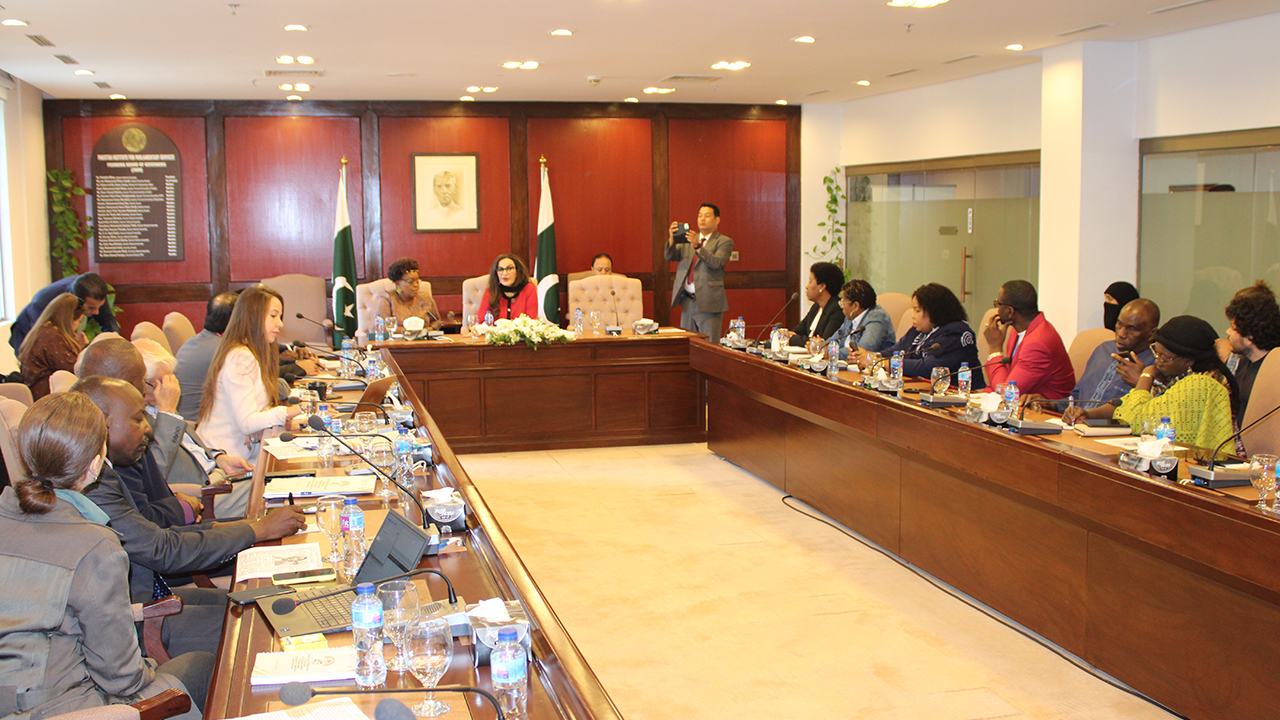
PGA brought together parliamentarians from different regions around the world, to discuss and strategize towards the abolition of the death penalty.
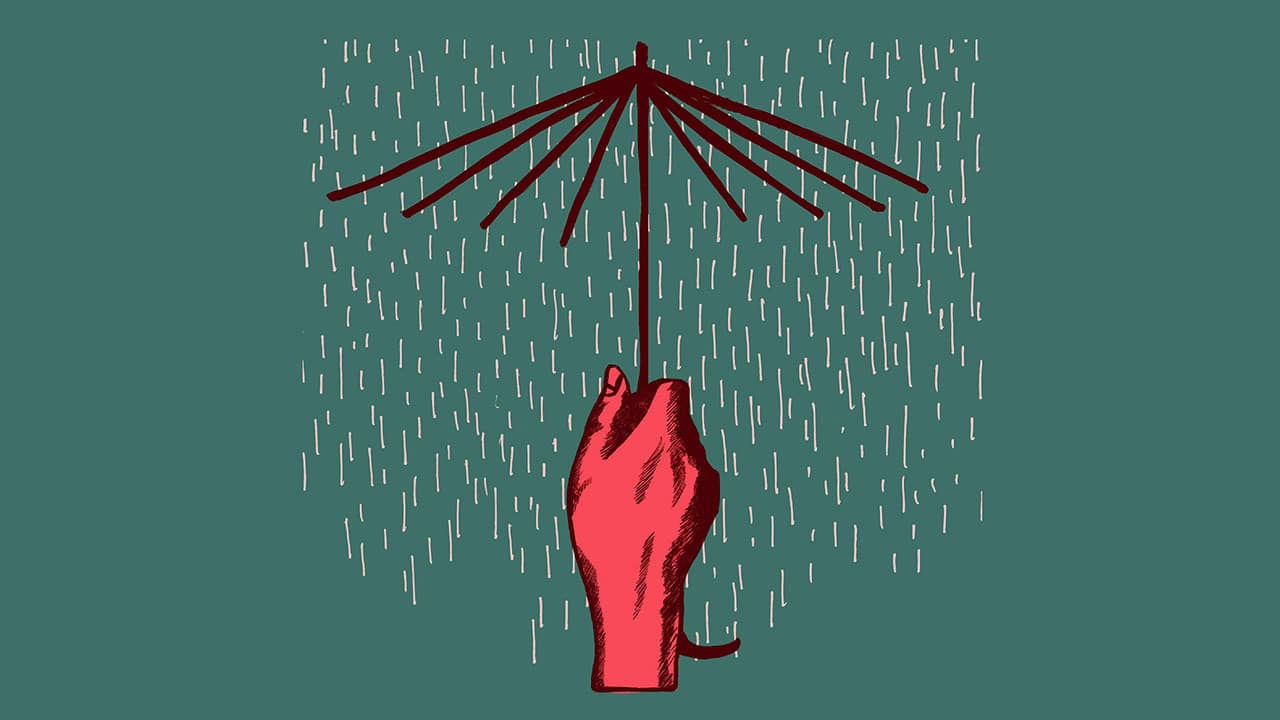
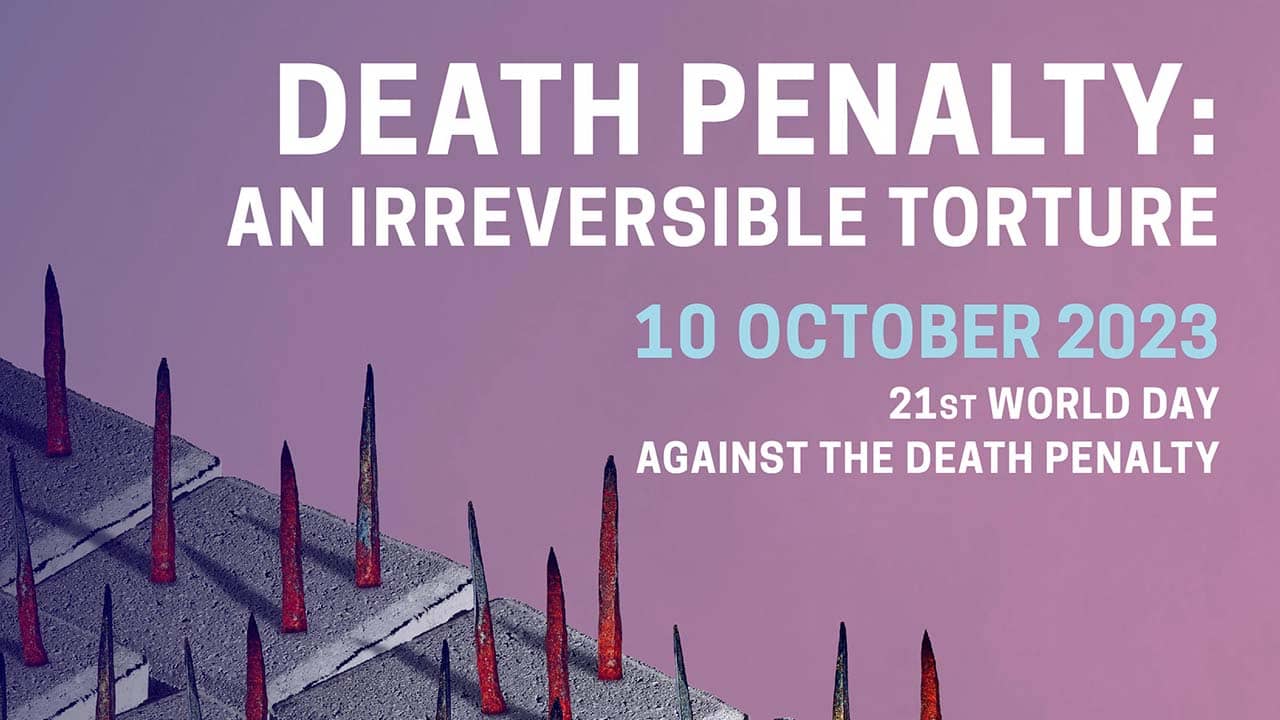
Each year on 10 October, the global abolitionist movement comes together to observe the World Day Against the Death Penalty. “The Death Penalty Protects No One: Abolish it Now.”

The death penalty remains a significant human rights concern. In 2023 alone, Amnesty International recorded 1,153 executions marking a 31% increase from the previous year and the highest since 2015.

It is with profound concern that PGA became aware this morning of the communication of a circular from the Ministry of Justice of the Democratic Republic of the Congo formalizing the decision to lift the moratorium on the death penalty in the country.

The ratification comes 2.5 years after the ratification of the Second Optional Protocol to the International Covenant on Civil and Political Rights (ICCPR), aiming at the abolition of the death penalty (ICCPR-OP2) by the Government of Armenia which took place on 18 March 2021.
Capital punishment constitutes a grave violation of international standards and human rights law, as it inflicts torture and other forms of ill-treatment on death row inmates – the prohibition of which is nevertheless a peremptory norm of international law.
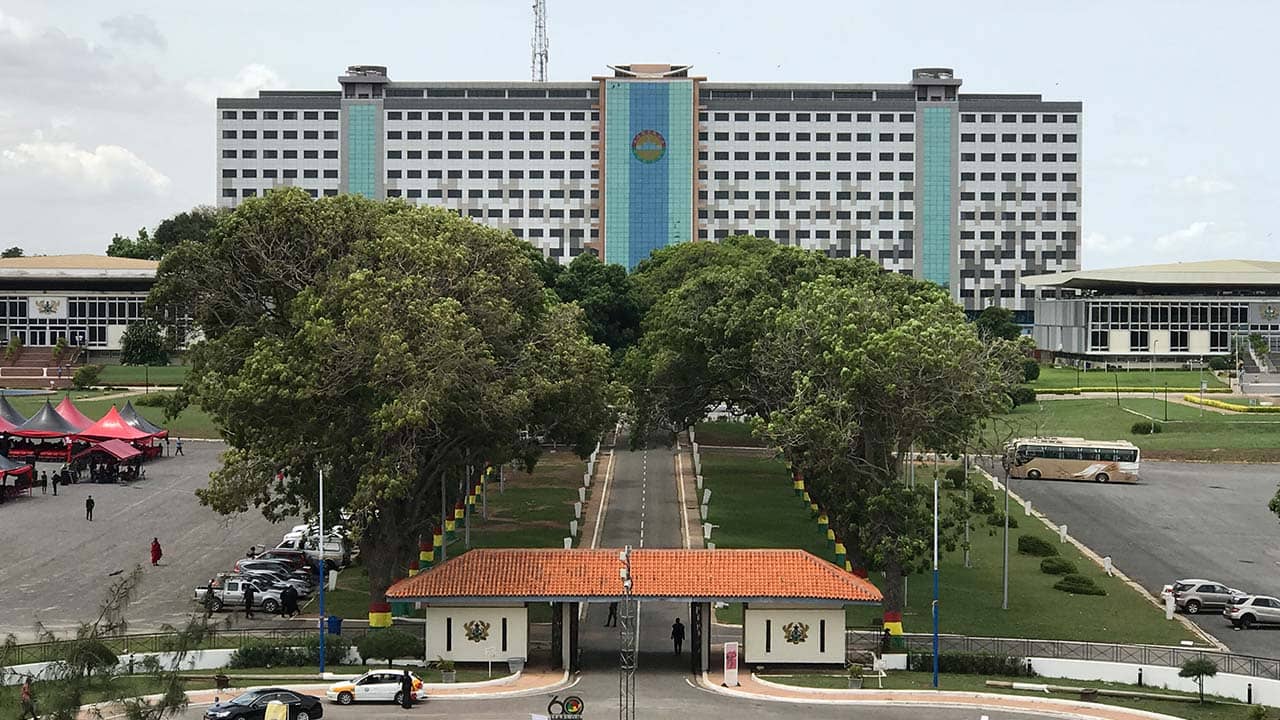
The adoption of the Criminal Offences (Amendment) Bill, 2022, replacing capital punishment with life imprisonment, marks a significant milestone as it aligns Ghana’s criminal system with international best practice
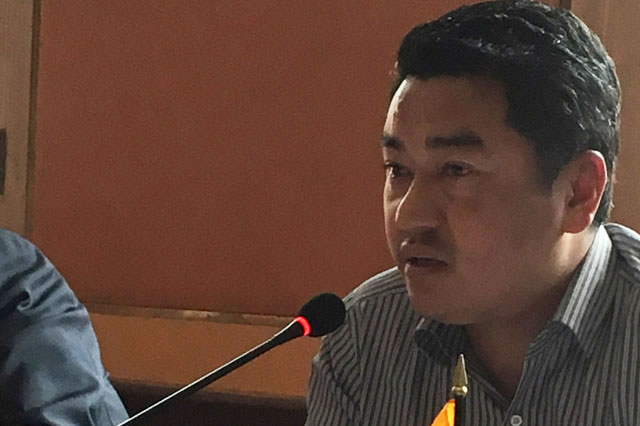
In the past three months, positive strides have been made in Malaysia towards limiting the scope of capital punishment, as its Parliament removed the mandatory death penalty for 12 offenses.

Torture, as a peremptory norm of international law, must always be prohibited under all circumstances. Yet, it still does persist in various corners of the world.
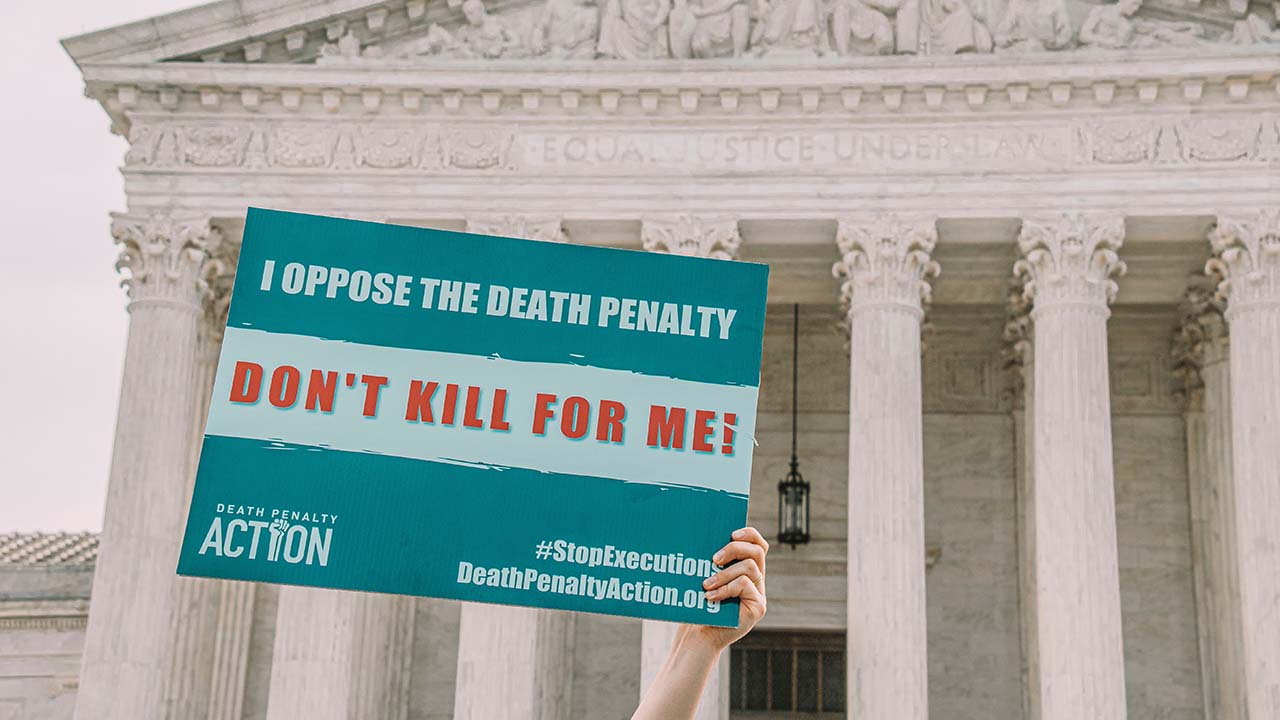
The first quarter of the year was marked by the opening of the 52nd regular session of the Human Rights Council, and the organization of the Biennial high-level panel discussion on the death penalty.
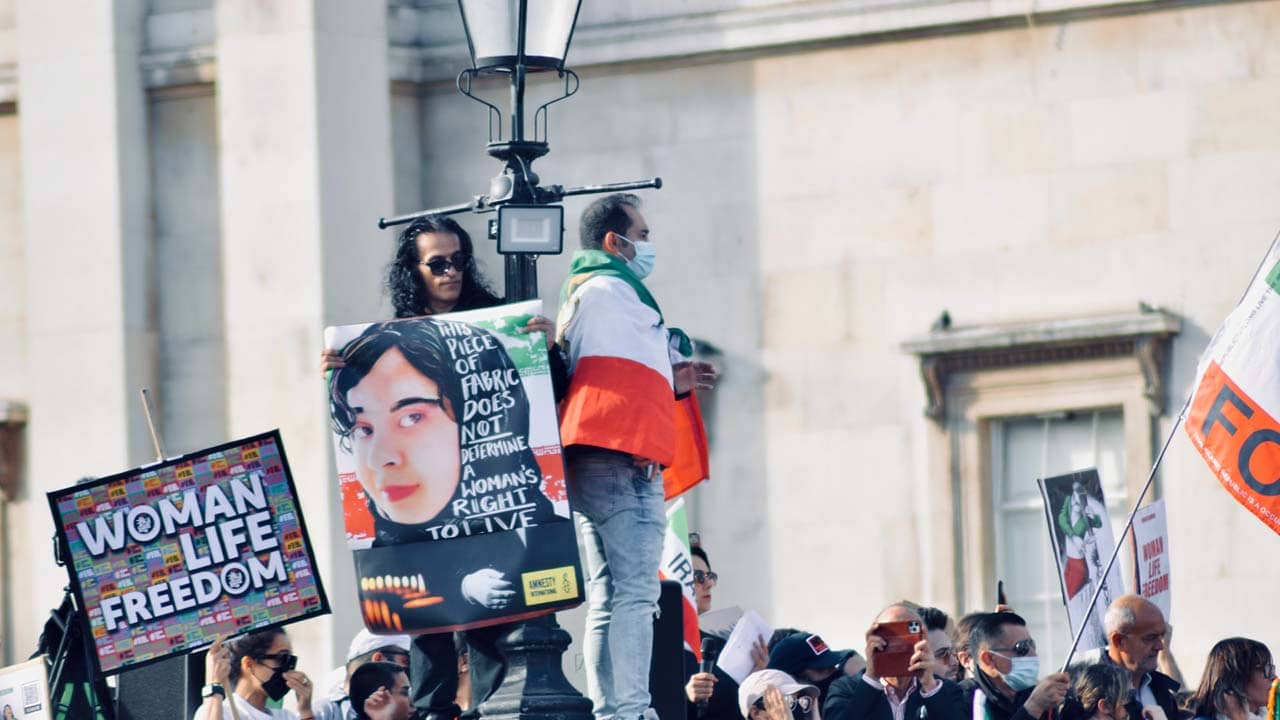
PGA welcomes the unprecedented support towards the adoption of the UN resolution A/RES/77/222, for a universal moratorium on the use of the death penalty, which took place on 15 December.
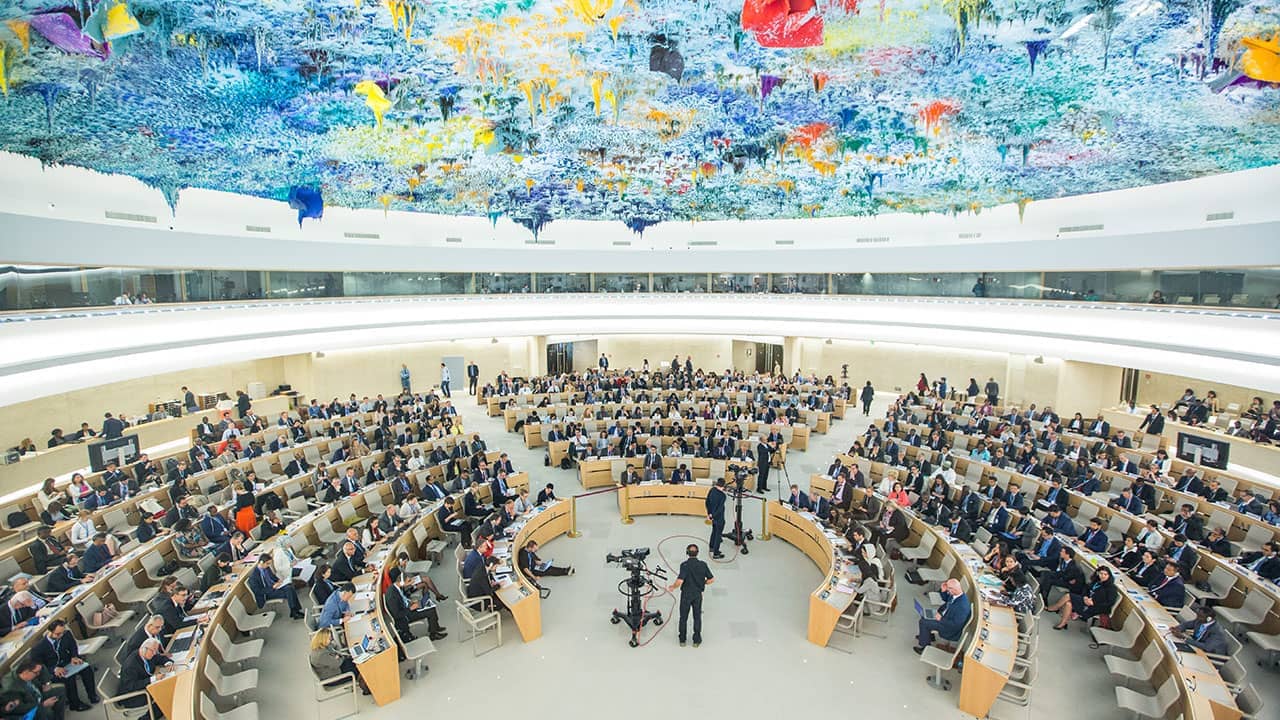
The 51st session of the Human Rights Council concluded in Geneva (12 September – 7 October), during which the Secretary General presented his report (A/HRC/51/7) to update previous reports on the question of the death penalty, including the quinquennial report of the Secretary-General.

Today, October 10 marks the 20th International Day Against the Death Penalty, an important moment to recall the importance of our efforts to advance the abolitionist movement, for which parliamentarians have played and continue to play a crucial role.
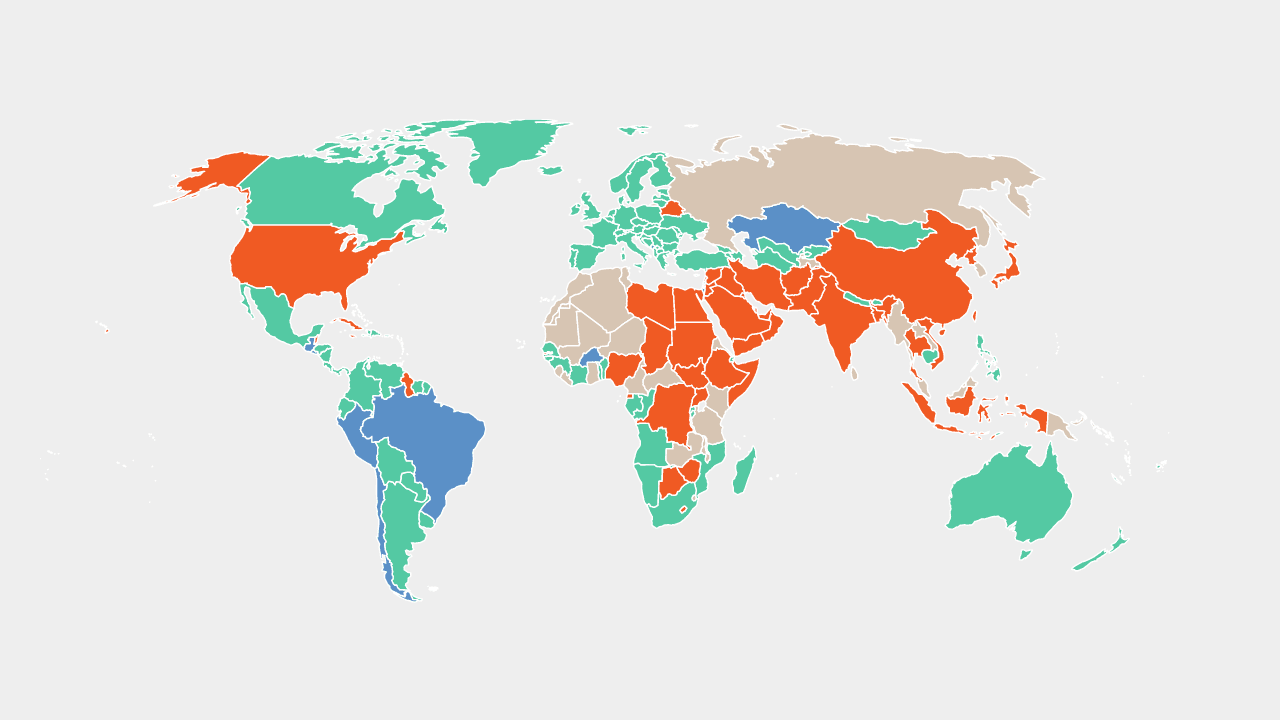
The Philippines was the first Asian country to abolish the death penalty under the 1987 Constitution, but it was re-imposed during the administration of President Fidel Ramos to address the rising crime rate in 1993, only to be abolished again in 2006.
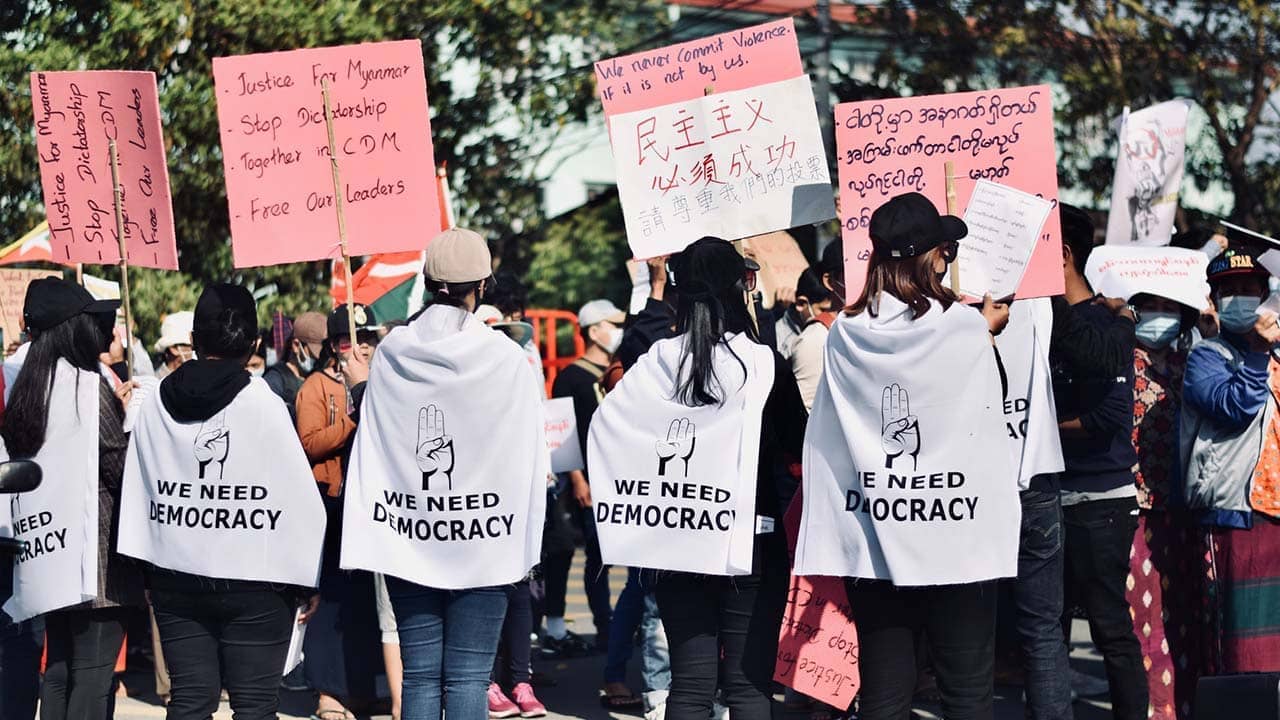
Parliamentarians condemn politically motivated executions by the military junta of Myanmar and urge all States and International Organizations to take immediate countermeasures against the dictatorship.
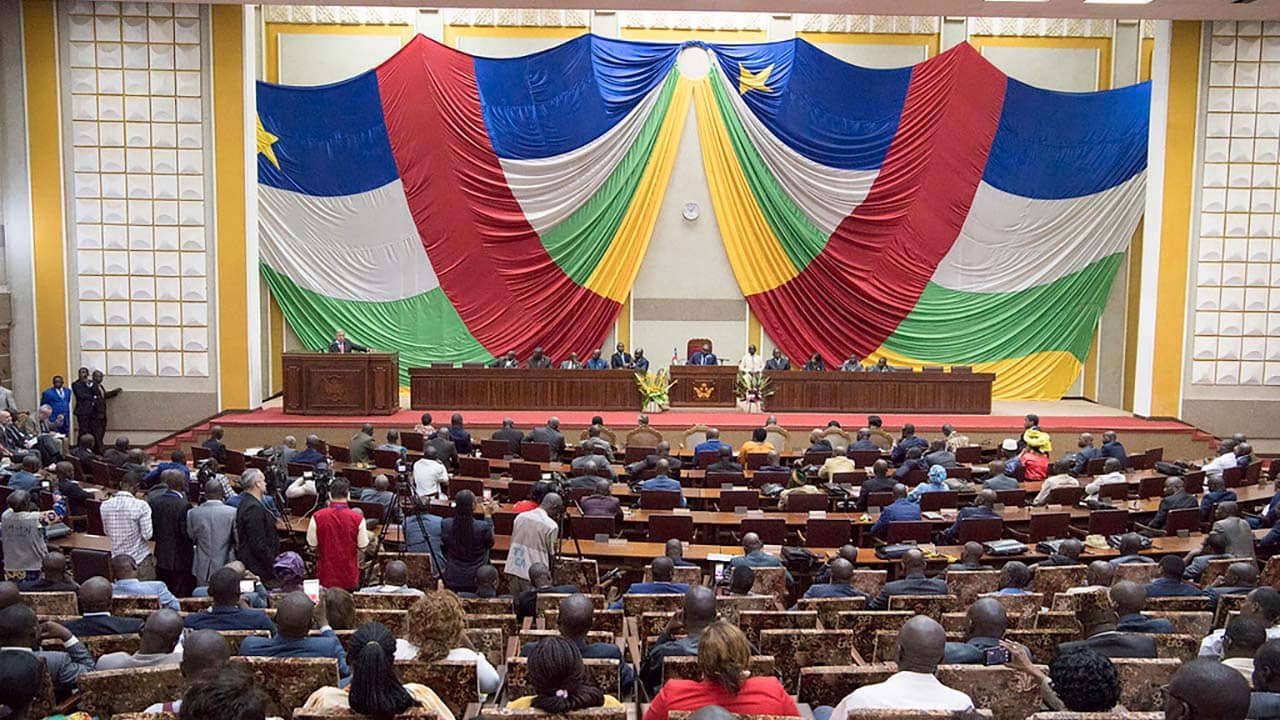
PGA welcomes such an important development for the status of human rights in the Central African Republic: although the country had been abolitionist in practice as no executions have taken place since 1981, legally ensuring the abolition of the death penalty is a crucial step to prevent any ratchet effect.

Malaysia Law Minister Wan Junaidi Tuanku Jaafar has indicated that its Cabinet had agreed to abolish the mandatory use of the capital punishment for serious crimes and replace it by “alternative punishments” applied at the discretion of the courts.

PGA joins the global urgent call of human rights organizations and academic associations pleading Iranian authorities to halt the execution of the Iranian-Swedish medical doctor, lecturer and researcher, Dr. Ahmad Reza Djalali and to release him instead.

PGA strongly condemns the execution of Mr. Nagaenthran Dharmalingam on 27 April 2022, which testifies to the failure of the Singaporean judicial system and of Malaysian authorities to protect and uphold fundamental principles under international law.

Given that Mr. Nagaenthran Dharmalingam is intellectually disabled, and committed a non-violent crime, we sincerely appeal for the authorities of Singapore to pardon Mr. Nagaenthran Dharmalingam’s death sentence.
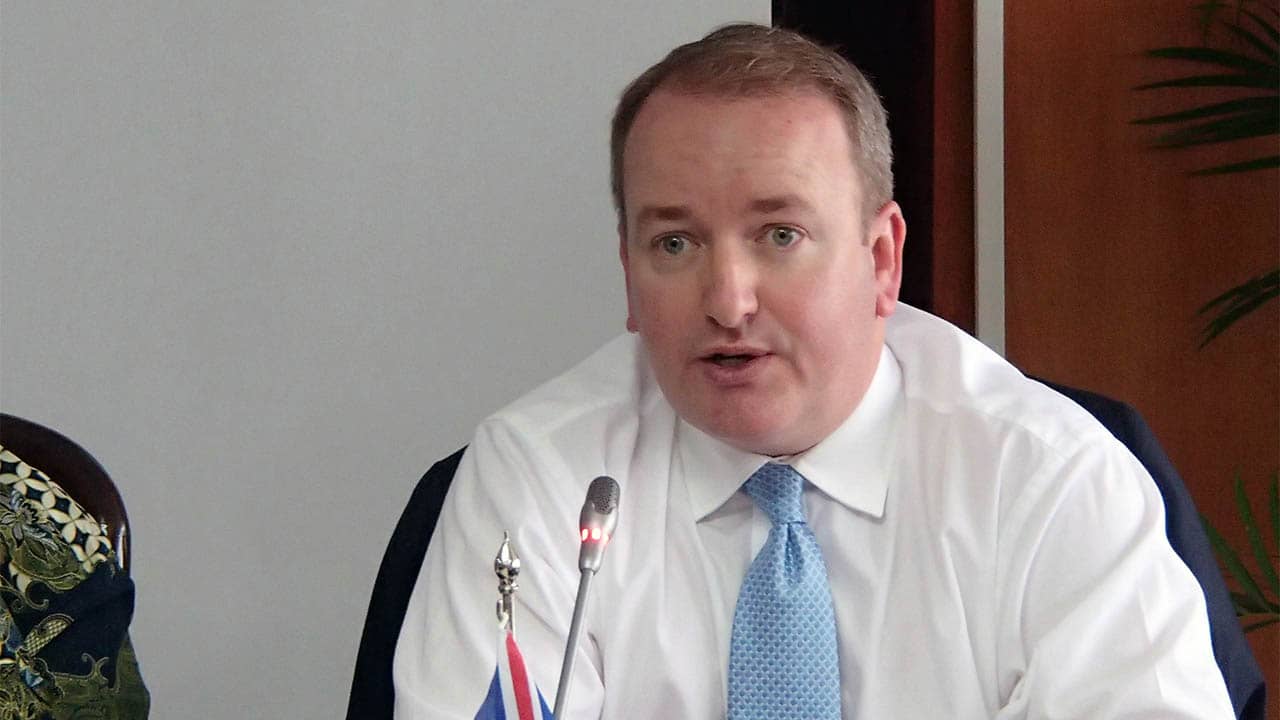
Chair of PGA’s UK National Group, Mr. Mark Pritchard MP, asks the Secretary of State for Foreign, Commonwealth and Development Affairs, if she will hold discussions with her counterparts in Commonwealth countries on ending the death penalty.

PGA, together with WCADP, organizied an online event on "How to Work with Parliamentarians for the Abolition of the Death Penalty" on 20 October 2021
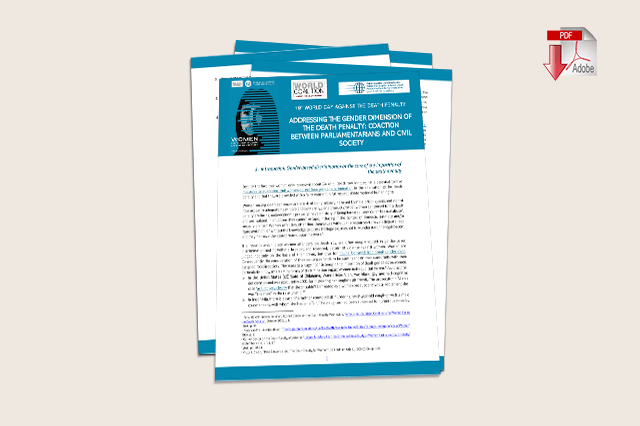
A factsheet outlining the need for cooperative action among parliamentarians and civil society to address gender discrimination in the application of the death penalty.
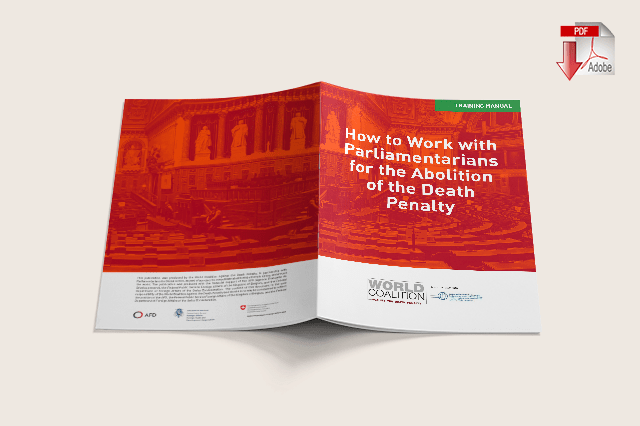
A manual for understanding who parliamentarians are and how to engage with them around the abolition of the death penalty.
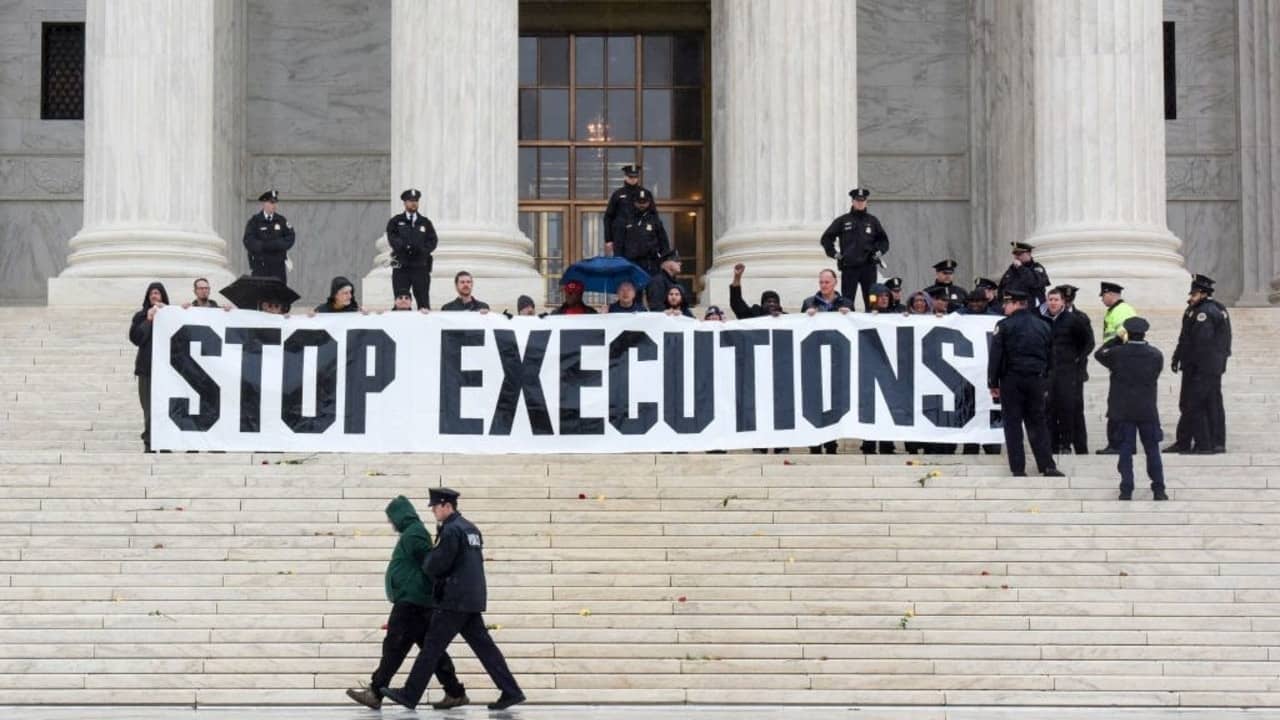
On behalf of PGA we welcome your commitment to justice, equality and fairness and your vow to end the federal death penalty
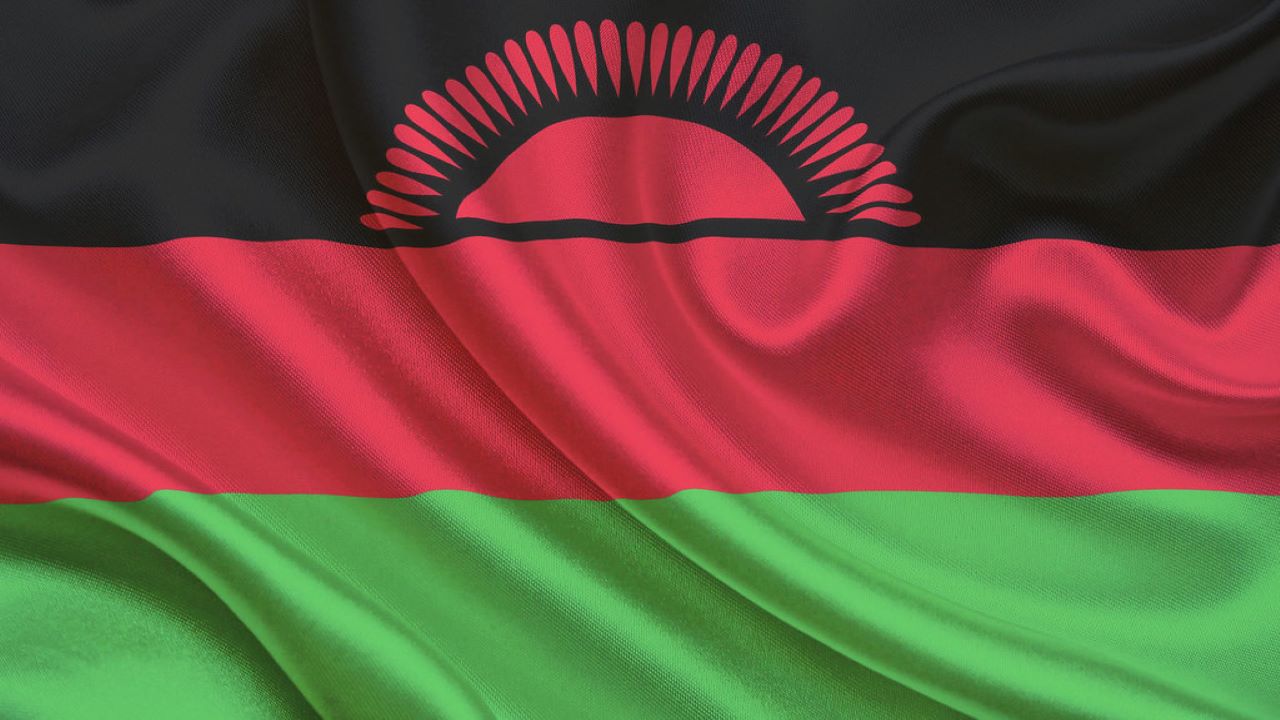
On 28 April 2021, the Supreme Court of Appeal of Malawi declared the death penalty unconstitutional as an impermissible derogation from the right to life under the Malawi’s Constitution
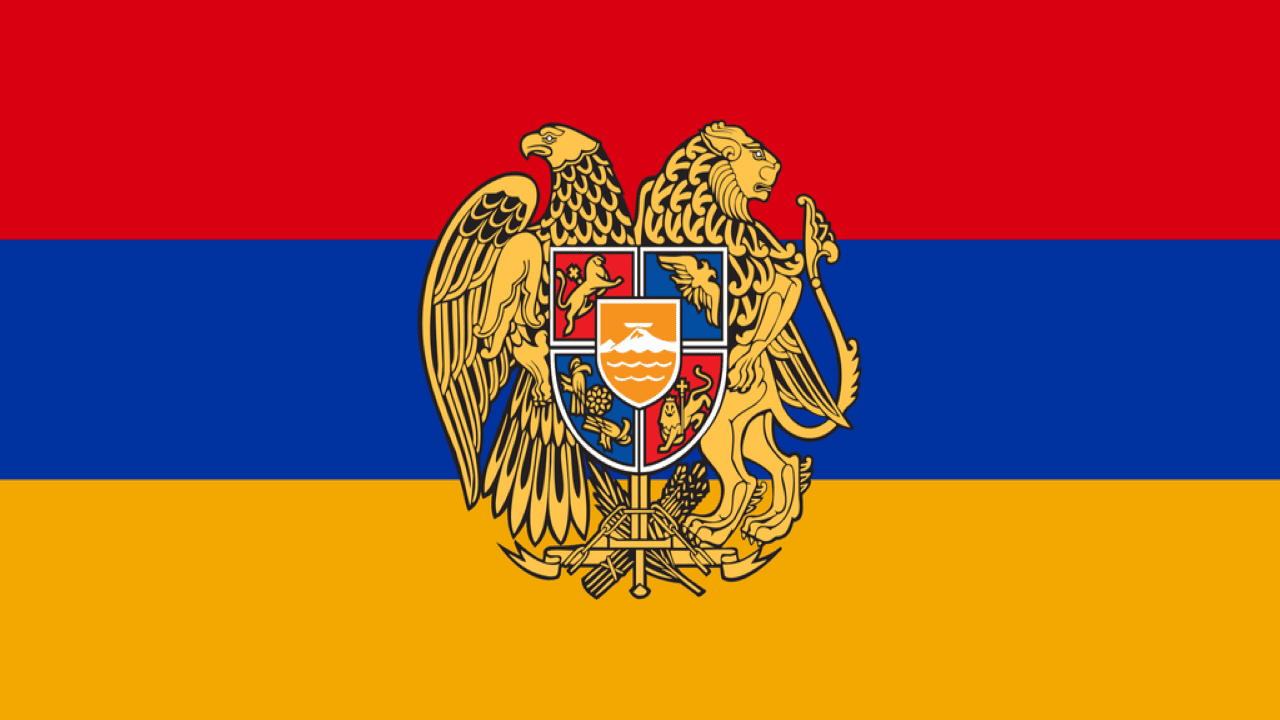
PGA welcomes the ratification on 19 March 2021 by the Government of Armenia of the Second Optional Protocol to the International Covenant on Civil and Political Rights (ICCPR), aiming at the abolition of the death penalty..
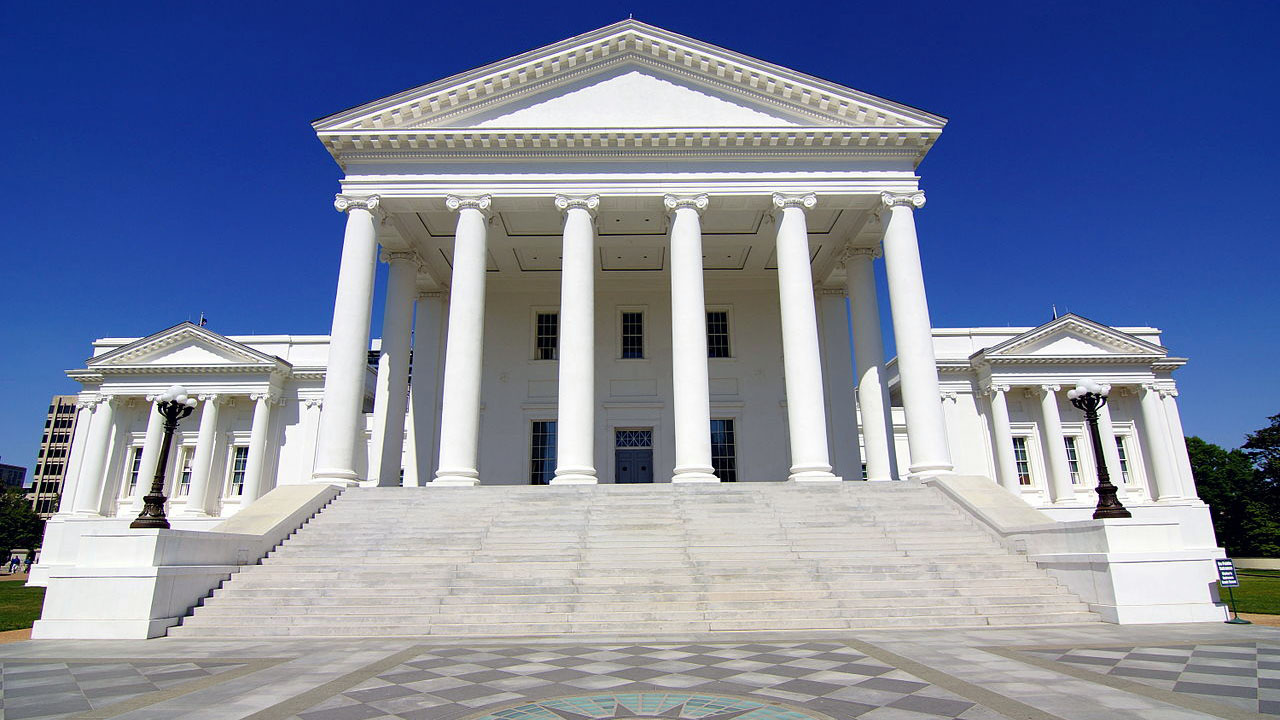
Virginia (USA) Governor Ralph Northam signed into law a bill that ends capital punishment in the State. Virginia has thus become the first Southern US State to abolish the death penalty.

To commemorate the 18th International Day Against the Death Penalty, the PGA National Group, together with the Parliamentary Group on Human Rights of the National Assembly of Ecuador, organized a virtual seminar.
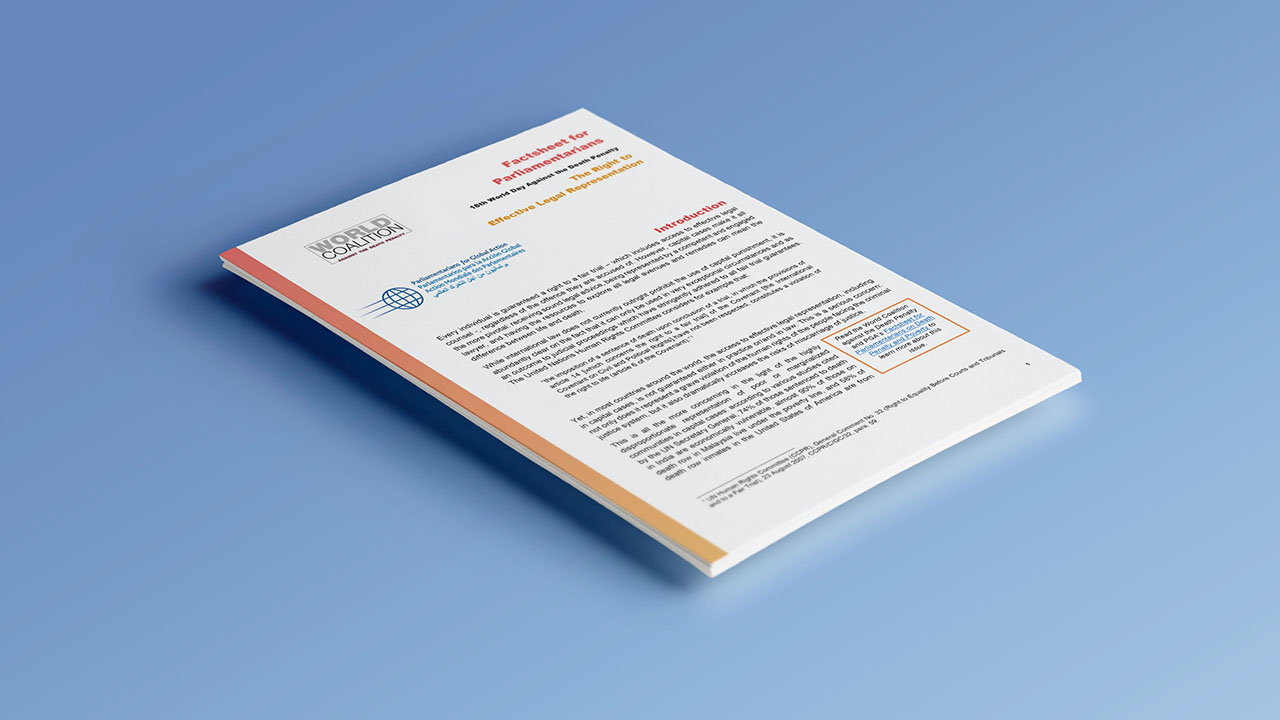
A factsheet the right to access effective legal counsel as it relates to the death penalty.
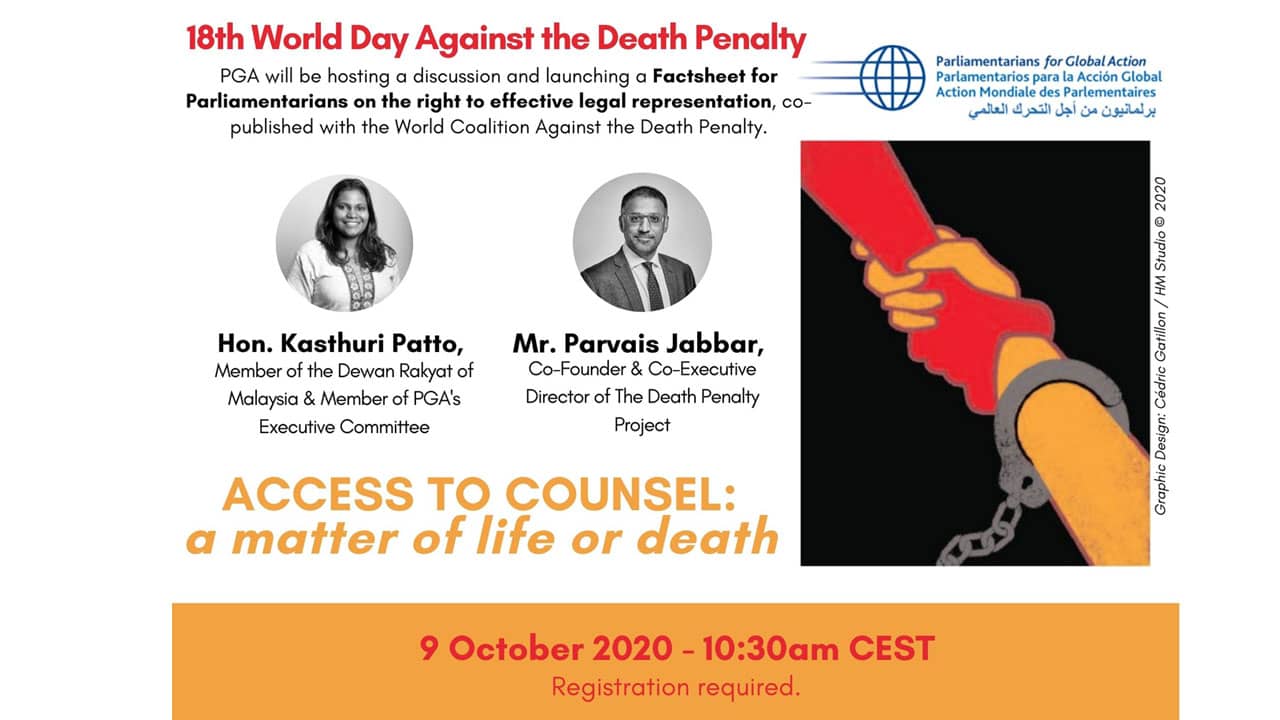
To mark the 18th World Day Against the Death Penalty – which falls on 10 October – PGA will be organising a webinar to discuss the right to effective legal representation in capital cases and launch a Parliamentary Factsheet.
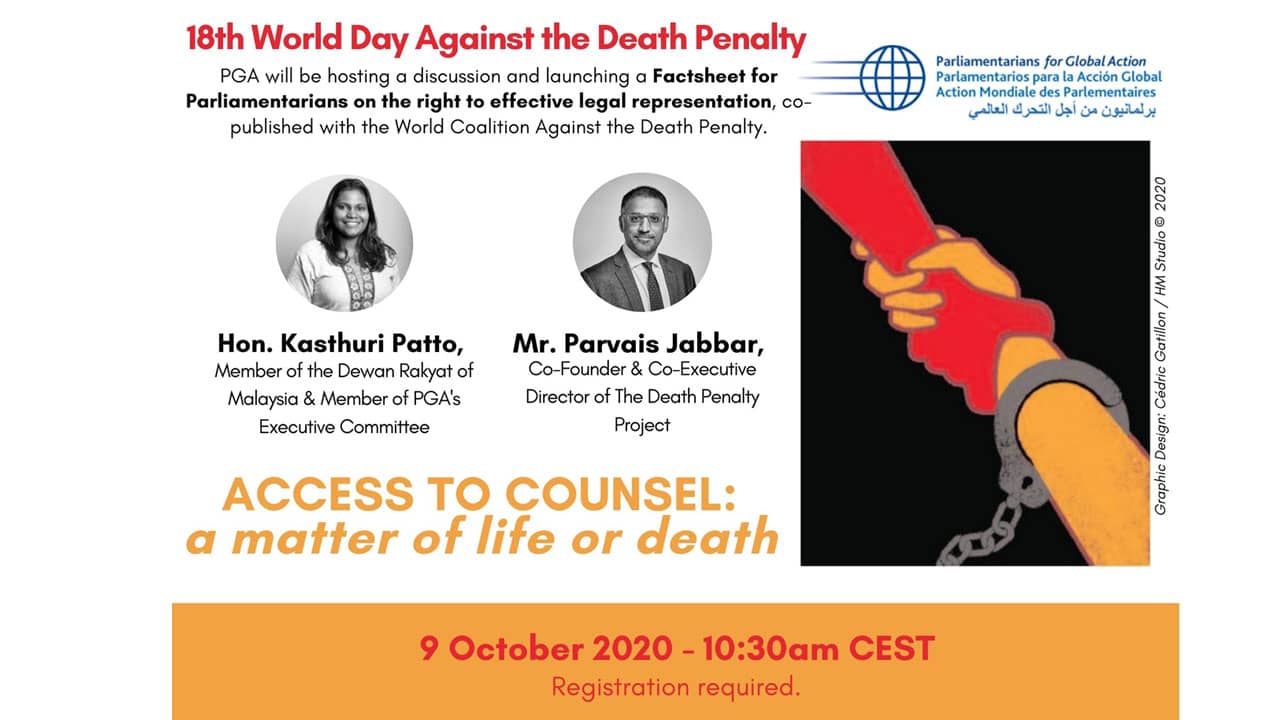
To mark the 18th World Day Against the Death Penalty, members of the World Coalition Against the Death Penalty (WCADP) focused on the right to effective legal representation.
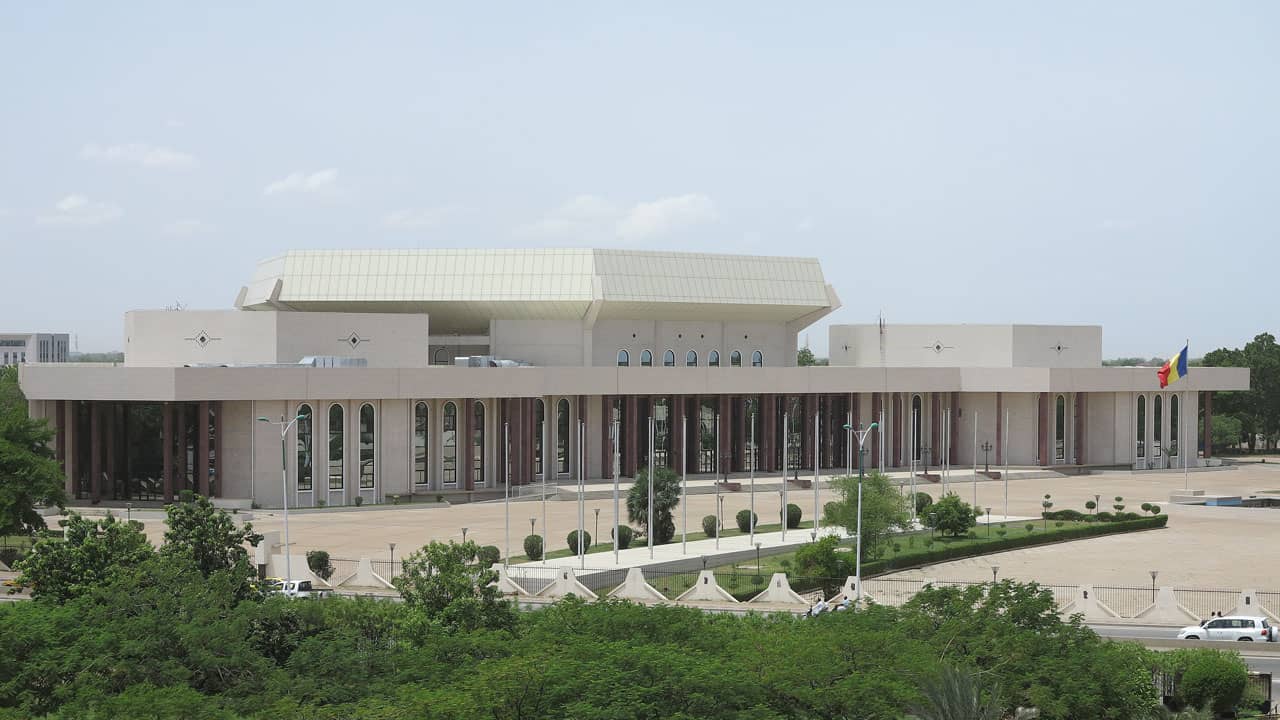
On 28 April 2020, the National Assembly of Chad voted to amend its 2015 counter-terrorism bill, thus abolishing capital punishment for all existing capital crimes in the country.
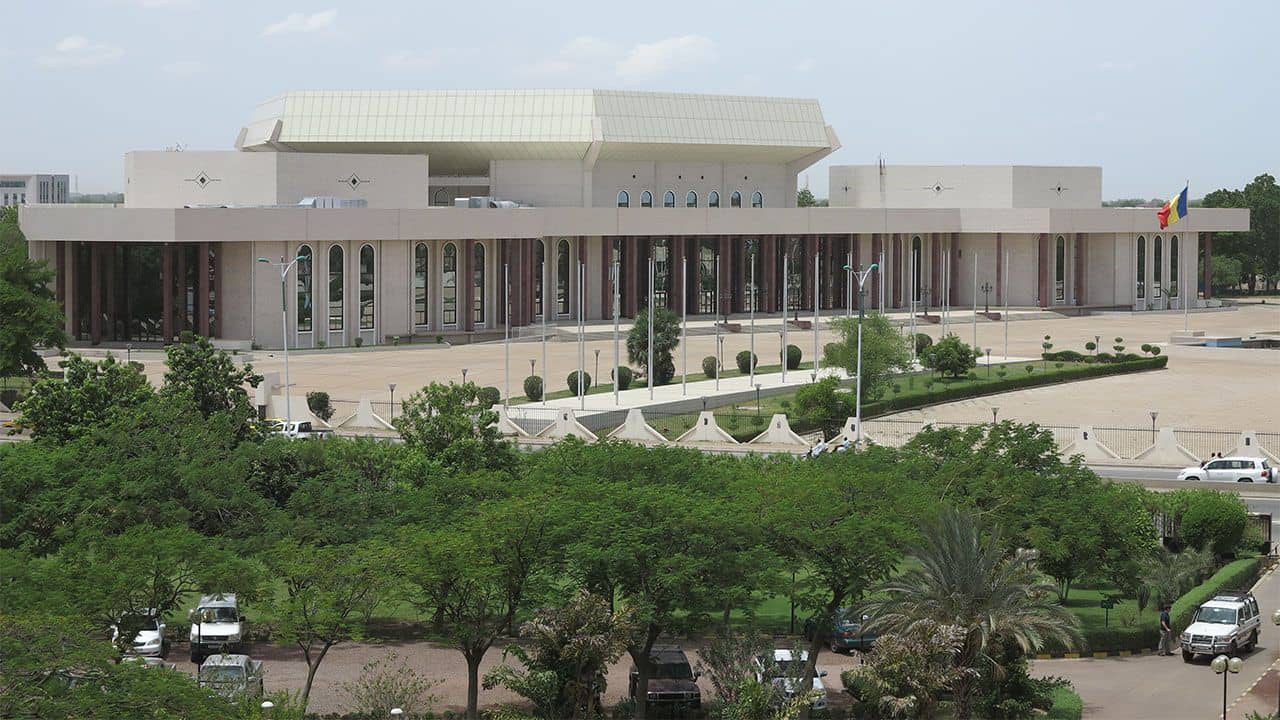
On 28 April 2020, the National Assembly of Chad adopted with a historical unanimous vote the full abolition of the death penalty for all crimes.
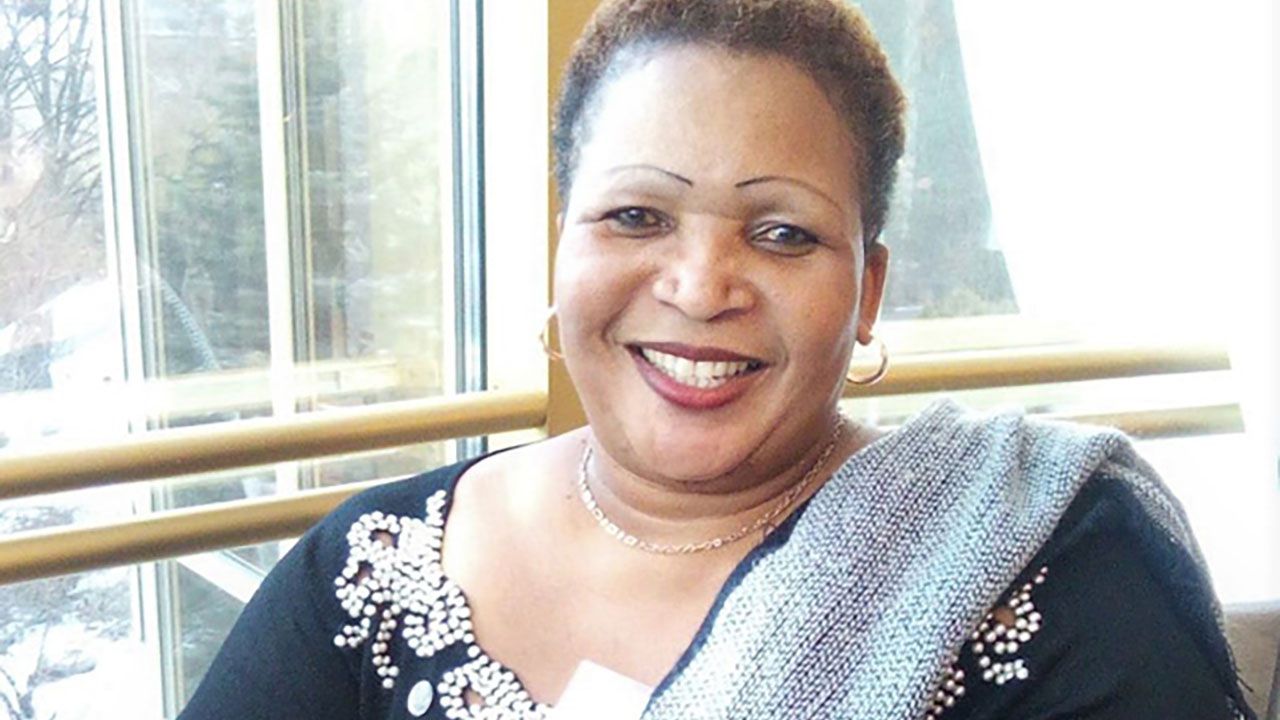
Dorcas Sibanda says while Zimbabwean President Emmerson Mnangagwa has done well to commute death sentences to life imprisonment, he should have completely abolished the death sentence as stipulated in the national Constitution.
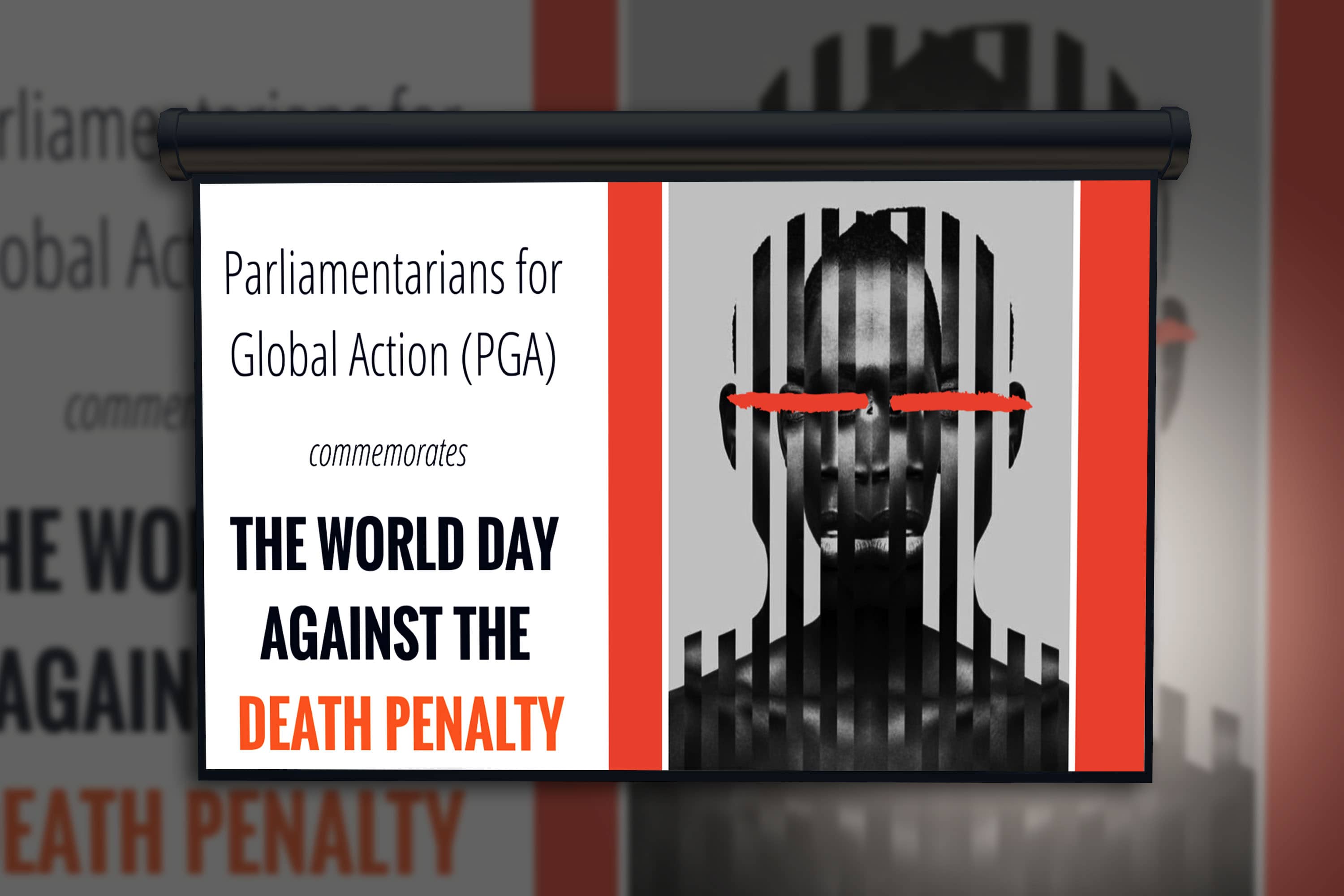
Commemorated since 2003, the World Day Against the Death Penalty is marked on 10 October. This year, PGA highlighted its members’ efforts to promote abolition of the death penalty and a fairer criminal justice system.
Malaysia announced a moratorium on executions in 2018. It did not carry out any executions in 2018 and more than 190 individuals received a death sentence.
Commemorated since 2003, the World Day Against the Death Penalty (WDADP) on 10 October raises awareness of the conditions and the circumstances which affect prisoners with death sentences and offers an opportunity to advocate for its abolition worldwide.

Malaysia’s move to abolish the mandatory death penalty is a valiant display of courage to uphold restorative justice and to return discretionary judiciary powers back to the courts as a breakthrough to fight crime and punish criminals instead of...
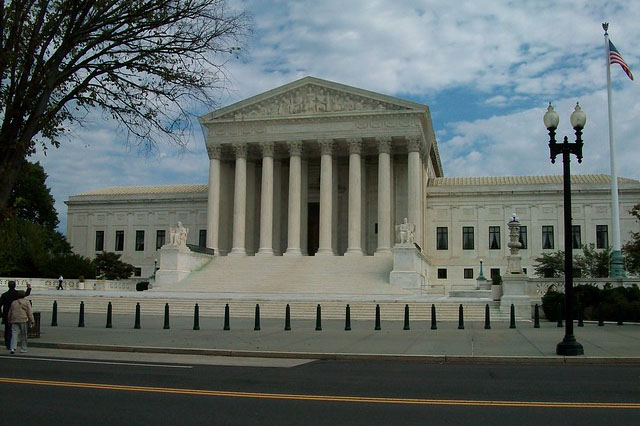
US Federal Government decides to resume executions.
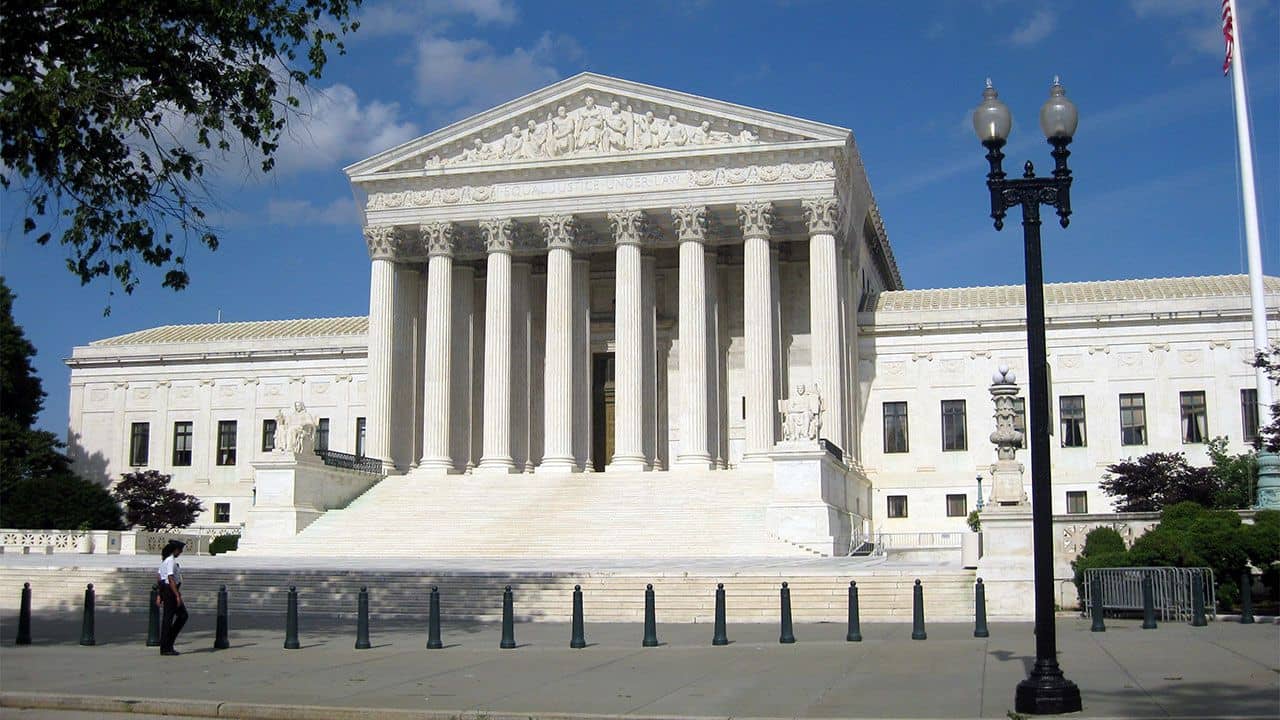
Each year, more States opt to declare a moratorium on the use of capital punishment or abolish it entirely; yet, a few outliers have in the recent years been vocal about resuming executions or reintroducing the death penalty in their domestic legal system
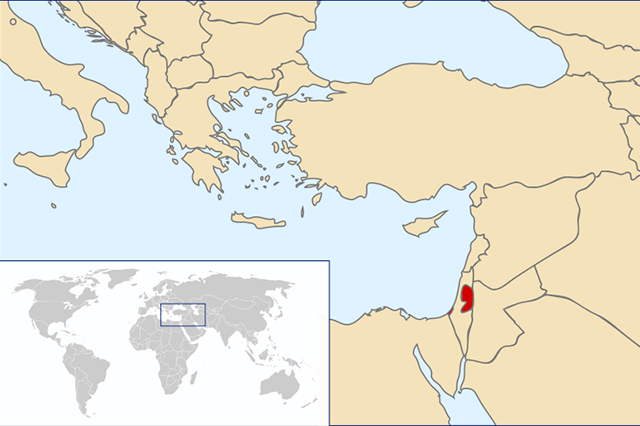
Palestine accedes to the Second Optional Protocol to the International Covenant on Civil and Political Rights, aiming at the abolition of the death penalty (ICCPR-OP2)

This historic achievement is an excellent reminder that it is essential to continue mobilizing against the death penalty, particularly when it is applied disproportionately against minorities and vulnerable groups.
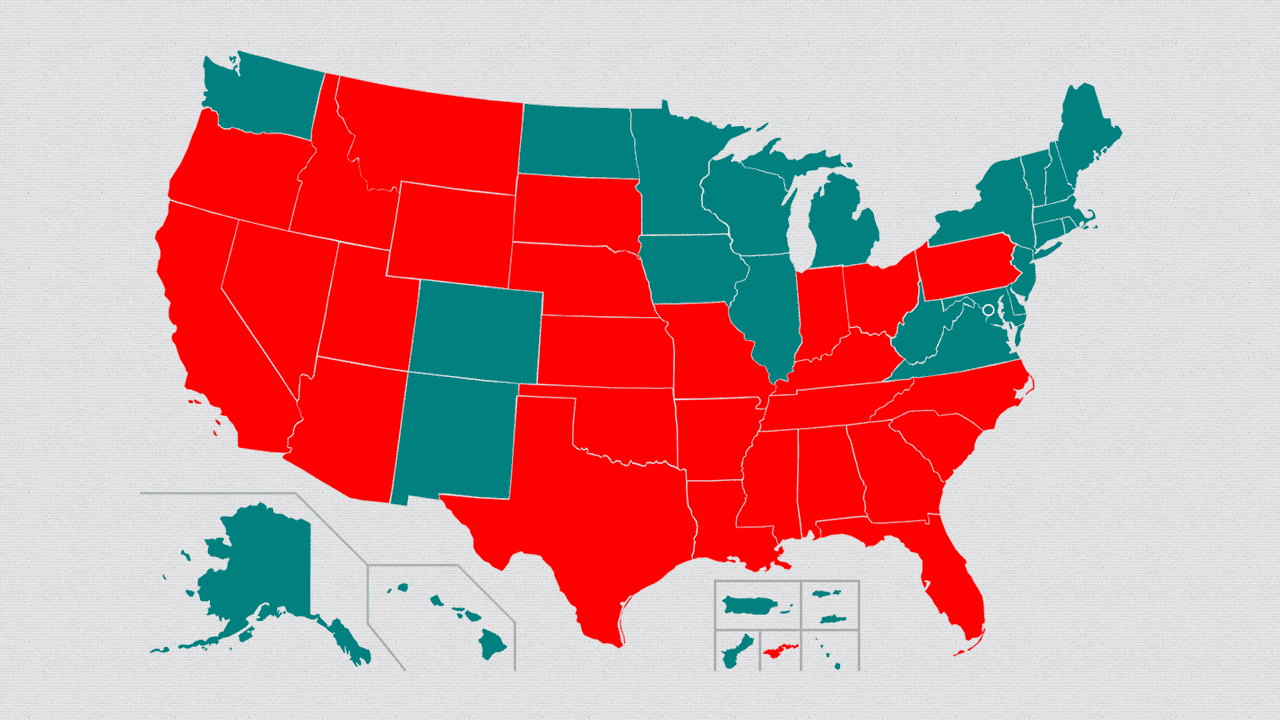
The United States is a retentionist country. However, 21 states and the District of Columbia have abolished the death penalty, including the state of Washington in 2018.
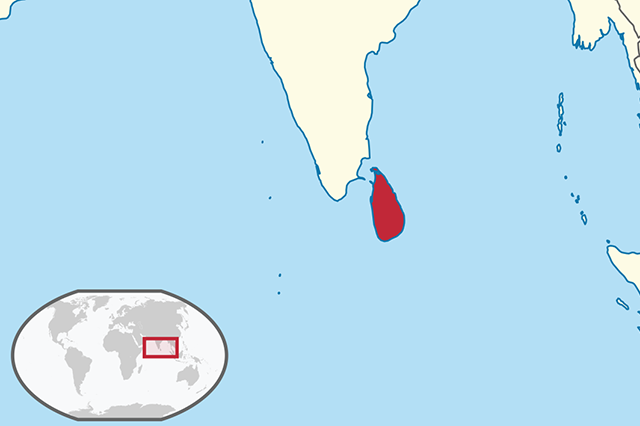
Sri Lanka is a de facto abolitionist country, having carried out the last execution in 1976. The country sentenced at least 17 individuals to death but carried out no executions in 2018.
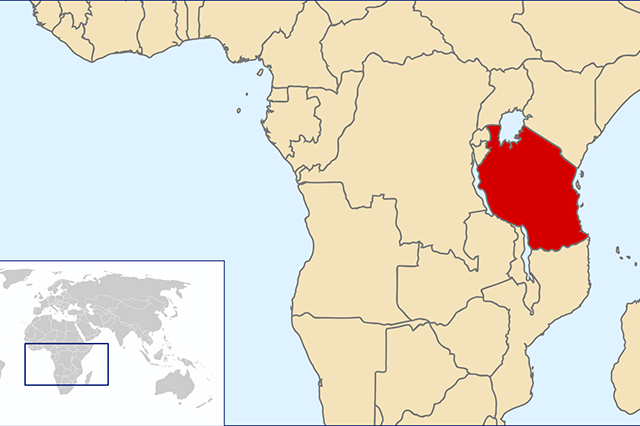
Kenya is a de facto abolitionist country, having not carried out an execution since 1987. The country sentenced at least 12 individuals to death but carried out no executions in 2018.
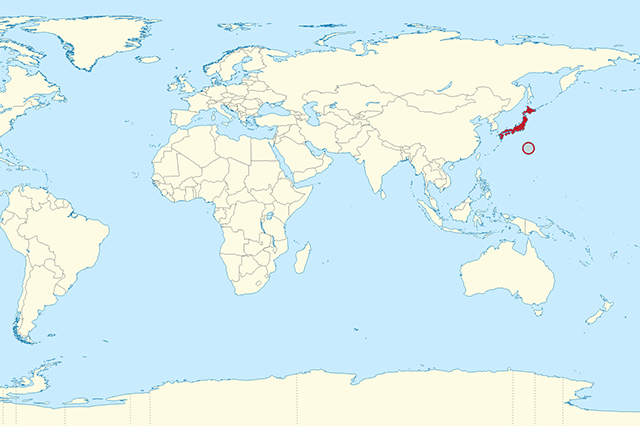
Japan is a retentionist country. The country sentenced 4 individuals to death and carried out 15 executions in 2018.
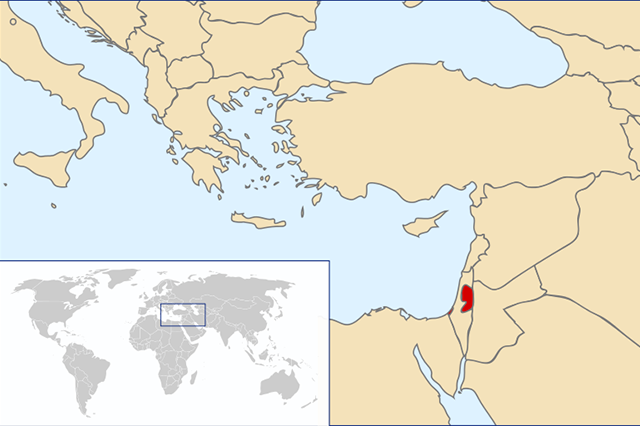
The State of Palestine is de facto abolitionist, having carried out no execution since 2002. In the Gaza strip however, capital punishment is still in use.
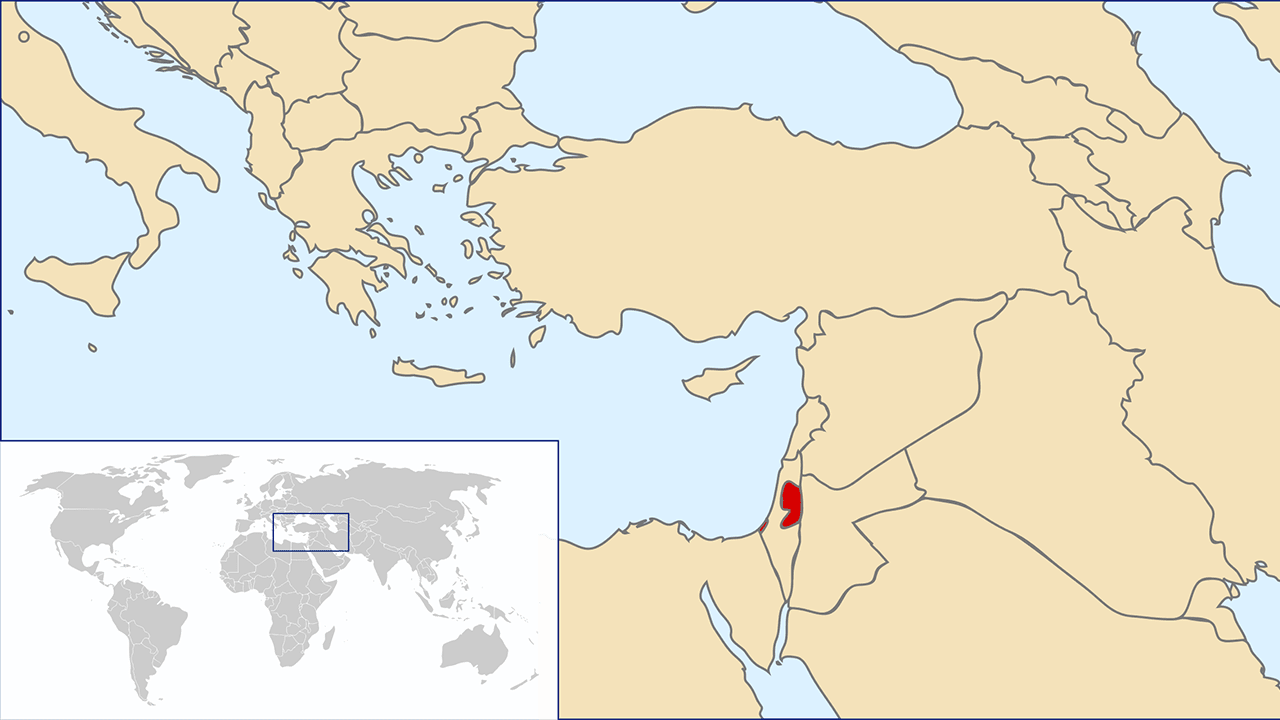
PGA Members from Lebanon, Morocco and Tunisia welcome the news that the State of Palestine has deposited on 18 March 2019 the instrument of accession to the Second Optional Protocol to the International Covenant on Civil and Political Rights...

By signing an executive order implementing a moratorium on executions, Governor Newsom has shown shown remarkable leadership.
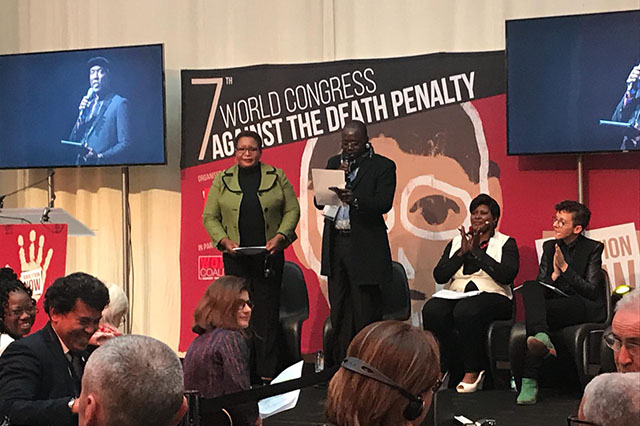
From 26 February to 1 March 2019, Parliamentarians for Global Action (PGA) attended the 7th World Congress against the Death Penalty, organised by its partner organisation Ensemble contre la peine de mort (ECPM, Together Against the Death Penalty).
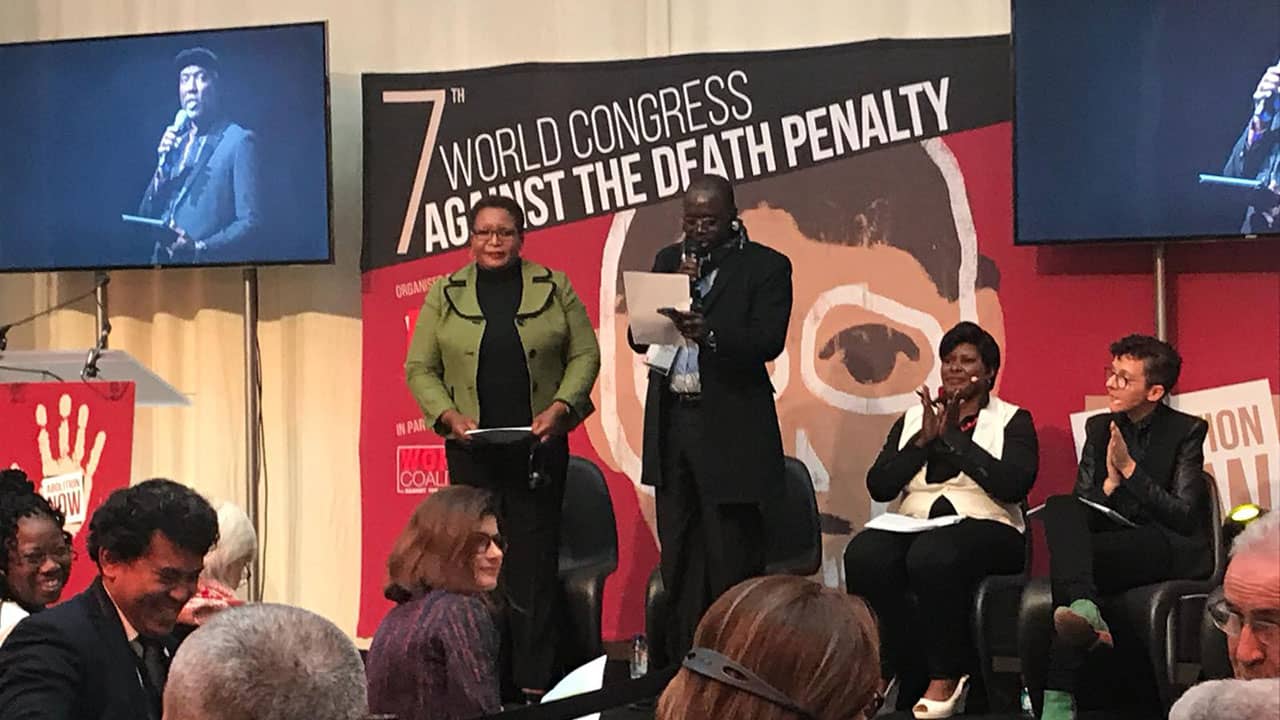
From 26 February to 1 March 2019, Parliamentarians for Global Action (PGA) attended the 7th World Congress against the Death Penalty, organised by its partner organisation Ensemble contre la peine de mort (ECPM, Together Against the Death Penalty).
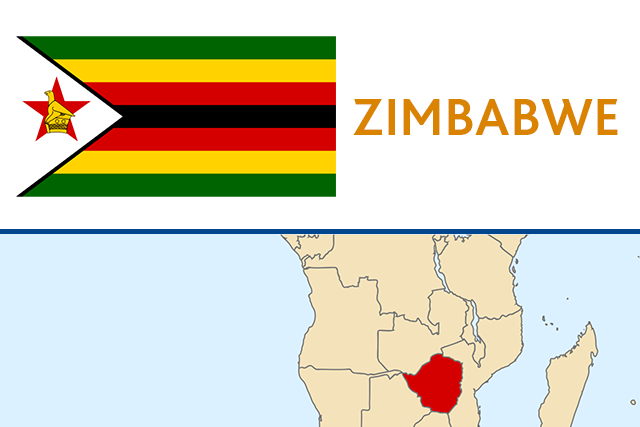
Zimbabwe is de facto abolitionist: although it retains capital punishment in its criminal law, the country has not carried out any execution since 2005.
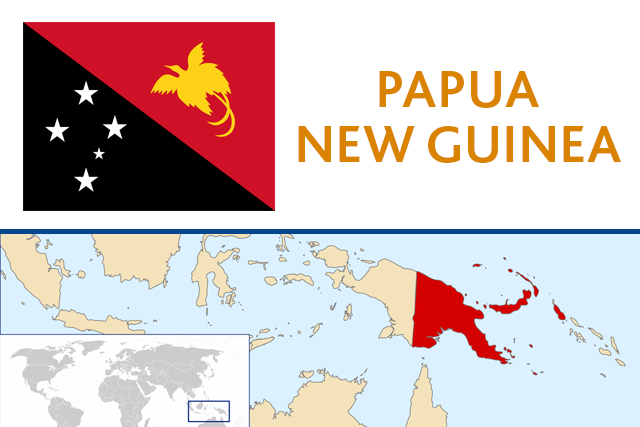
Papua New Guinea is abolitionist in practice since 1950: although it retains the death penalty in law, no execution has taken place since 1954.
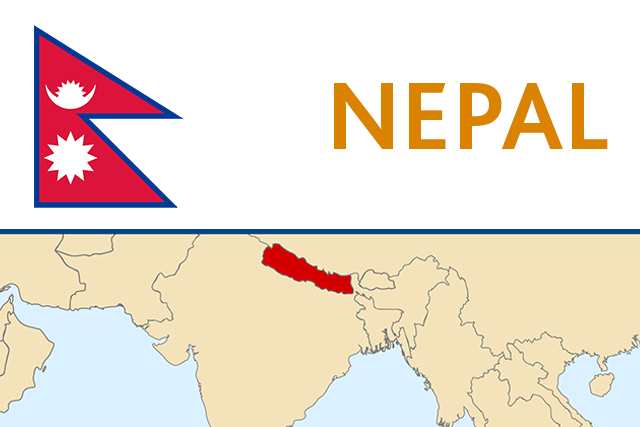
Nepal’s Constitution abolished the capital penalty in 1990 and criminal law was amended to abolish it for all crimes in 1997.

Ecuador is abolitionist since 1906. Ecuador ratified the International Covenant on Civil and Political Rights (ICCPR) in 1969 as well as the Second Optional Protocol to the International Covenant on Civil and Political Rights.
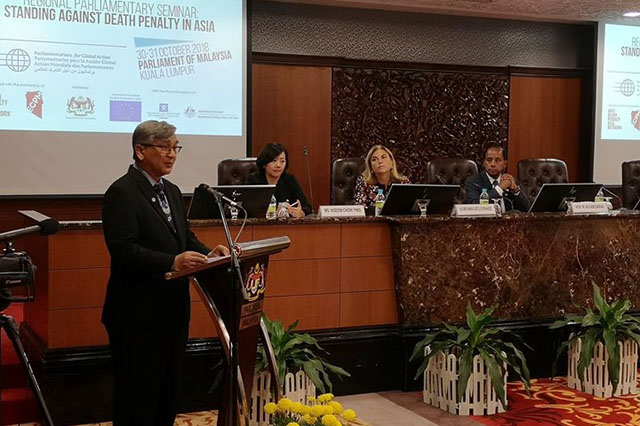
Malaysia’s Minister of Law announces bill abolishing the death penalty for 33 offences.
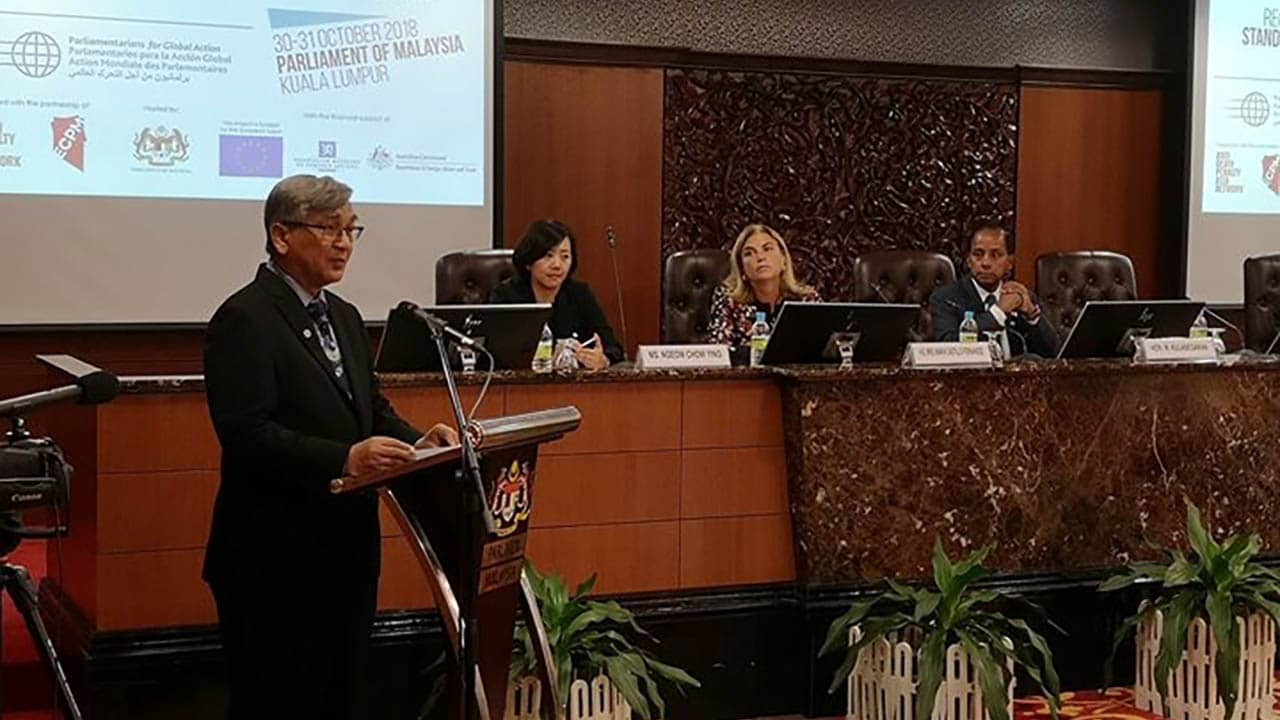
Participants discussed and adopted an Action Plan, calling on the parliamentarians of the region to mobilise their efforts against capital punishment.
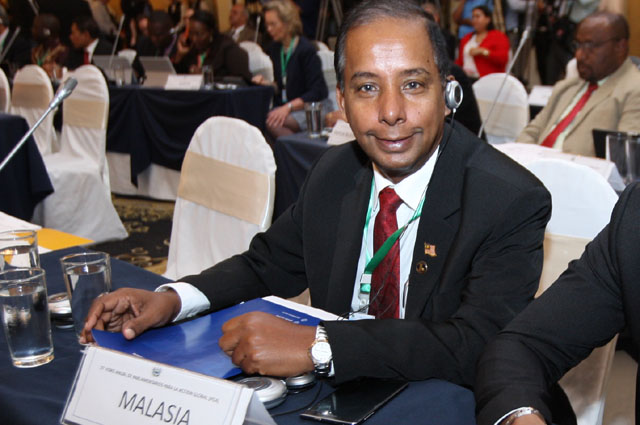
Parliamentarians for Global Action (PGA) Malaysia will work towards the abolition of the death penalty with support from the opposition.
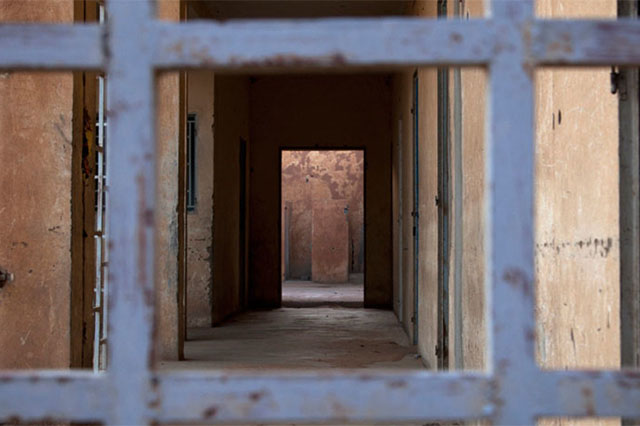
On 10 October, which marks World Day against the Death Penalty, PGA wishes to celebrate the efforts of its members throughout the world to stand against capital punishment.
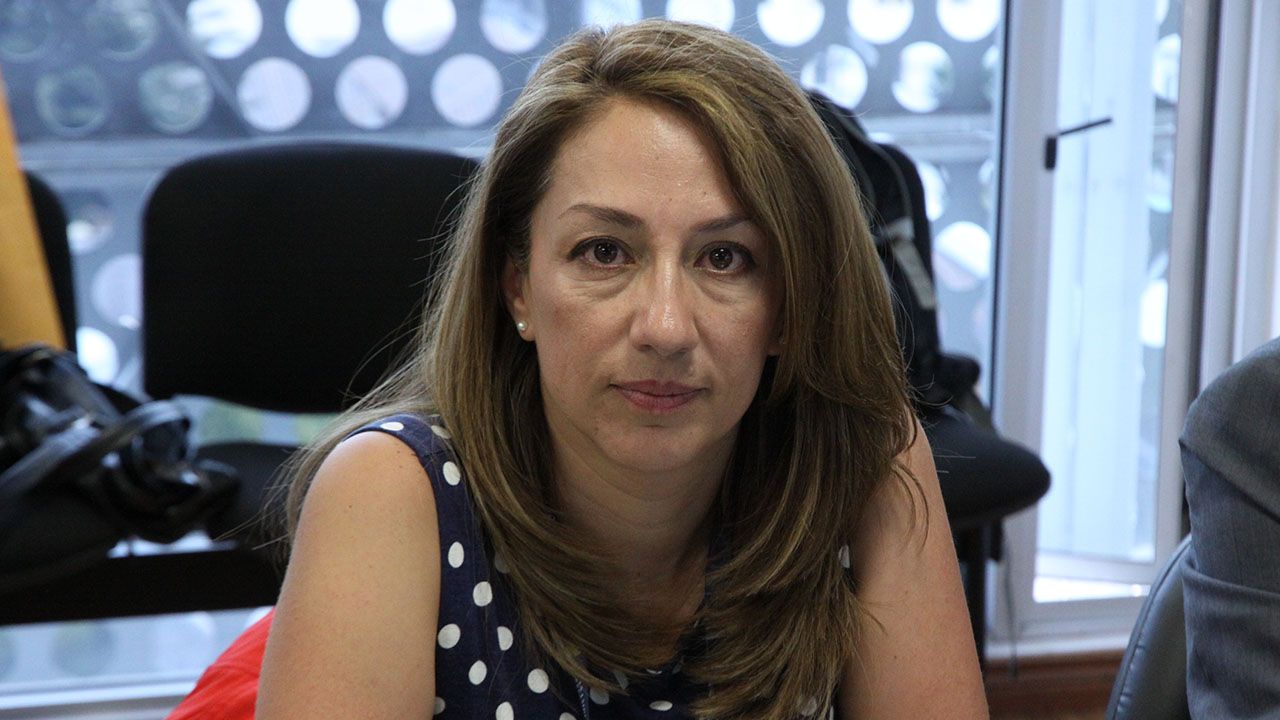
Latin America is the second region in the world with the largest number of states who have abolished the death penalty for all types of crimes.

PGA’s Abolition of the Death Penalty (ADP) team brings you its first quarterly update to keep you informed of the most relevant developments regarding capital punishment worldwide and of PGA’s work on the issue.
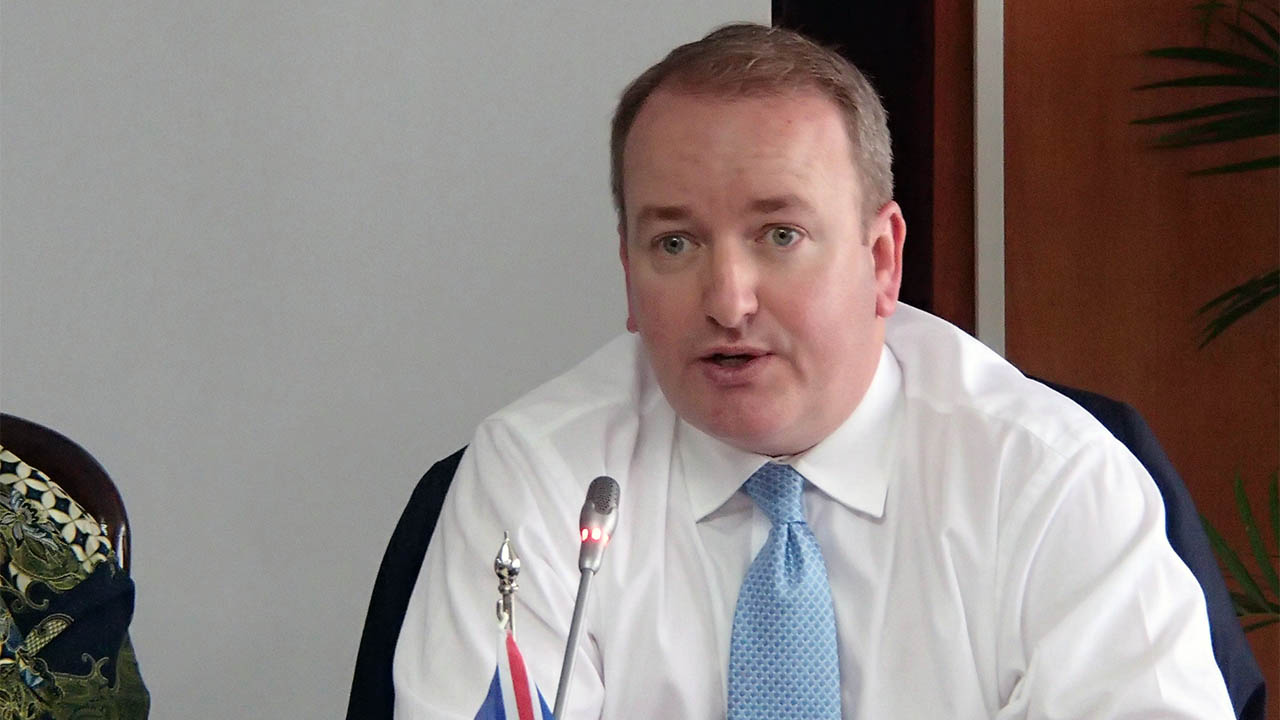
The United Kingdom is an abolitionist country, having carried out its last executions in 1964.
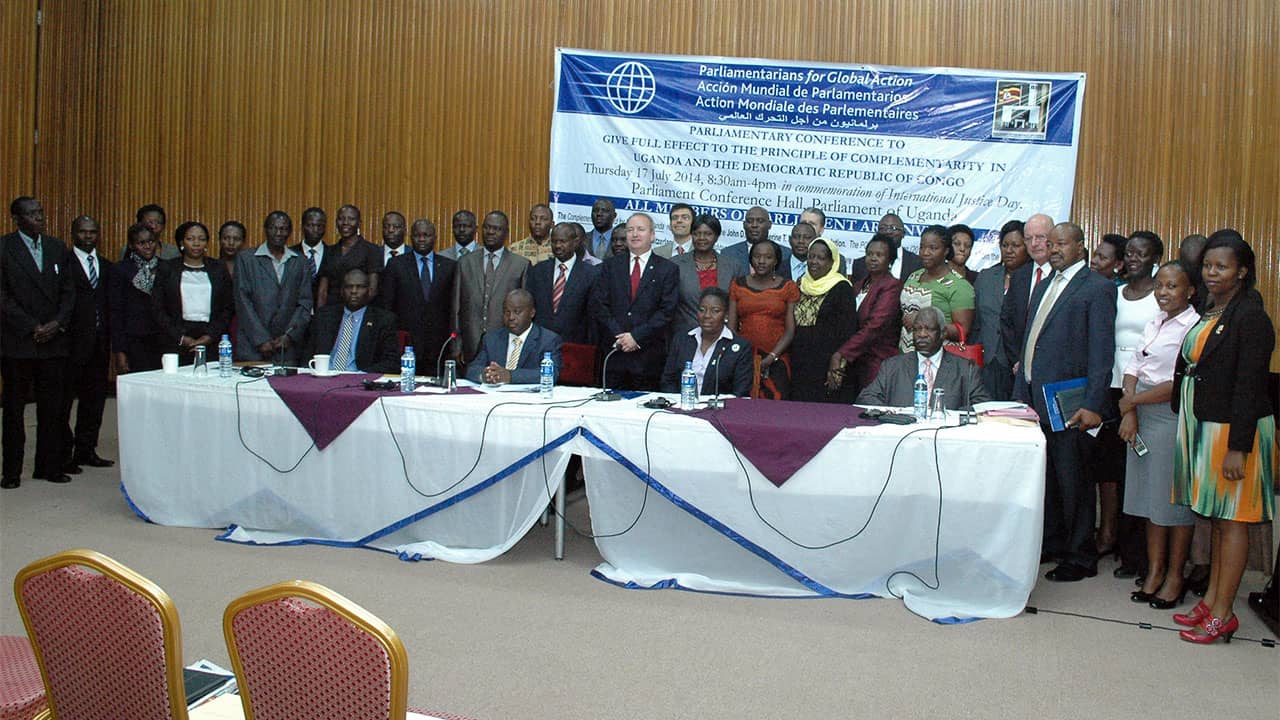
Uganda is de facto abolitionist, as the last execution took place in 2005. However, in 2017, more than 250 people remained on death row.
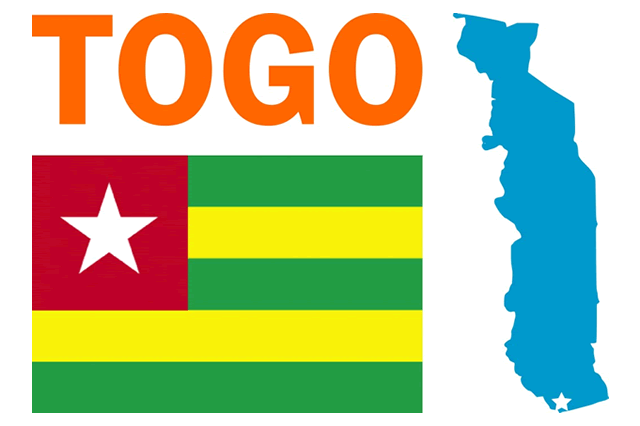
Togo is an abolitionist country since 2009, when the capital punishment was removed from the country’s Criminal Code.
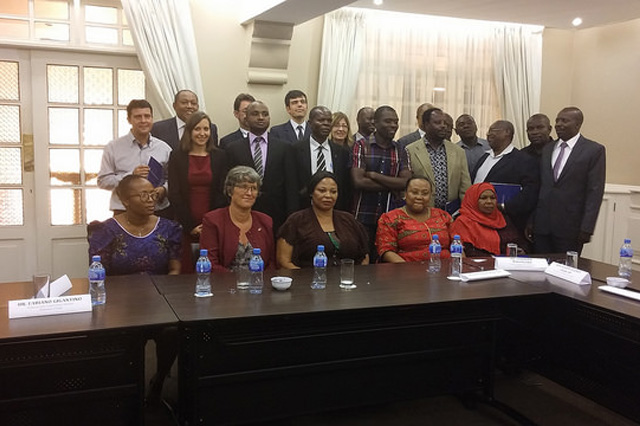
Tanzania is de facto abolitionist, having carried out its last execution in 1994. However, at least 4 individuals were still sentenced to death in 2018 in the country, while more than 500 people remained on death row.
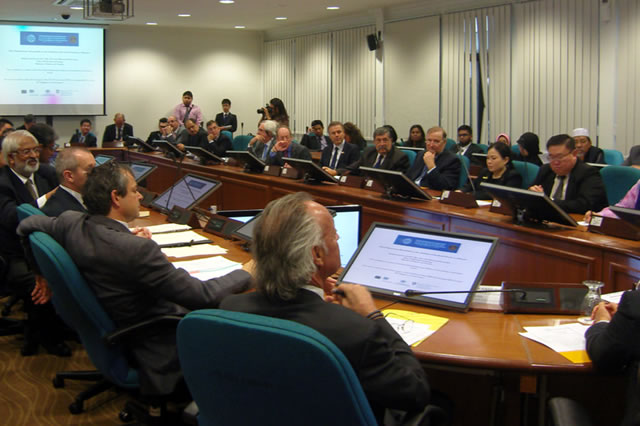
The Swiss Constitution forbids the use of the death penalty. Capital punishment was abolished in civil courts in 1942, and in military courts in 1992.
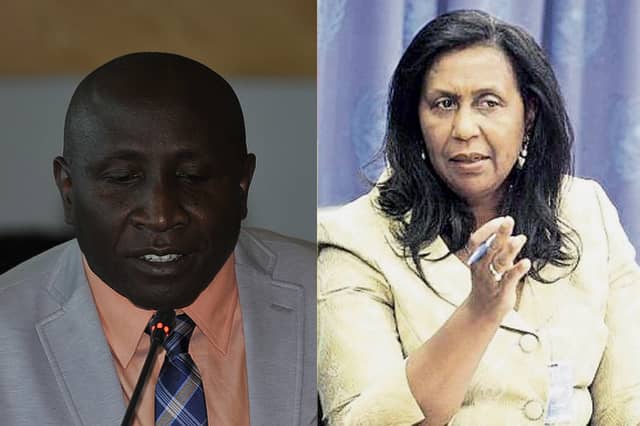
Since March 2015, Suriname is an abolitionist country. No executions had not been carried out in Suriname since 1927.
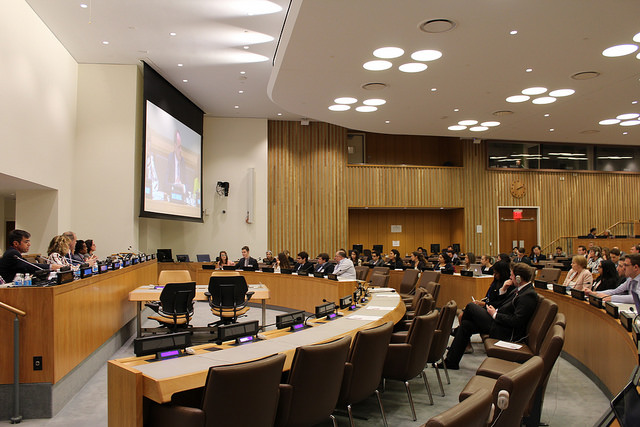
South Korea is a de facto abolitionist state, having carried out its last execution in 1997.
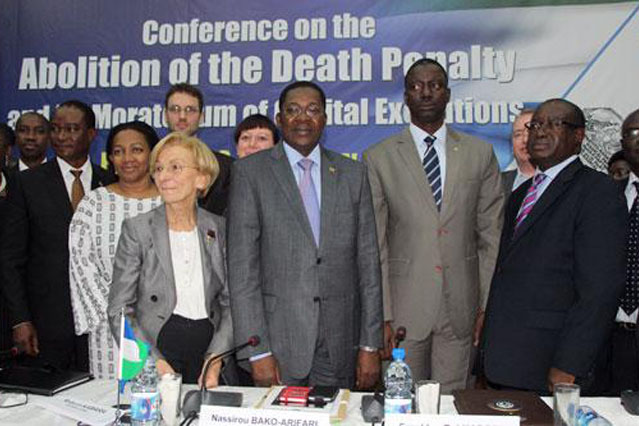
Sierra Leone is a de facto abolitionist country, having carried out its last execution in 1998.
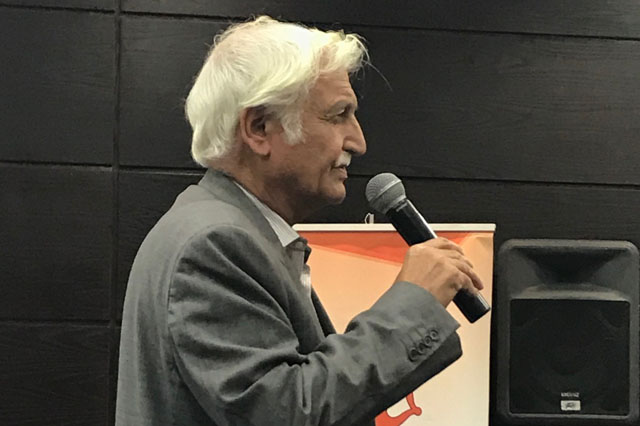
Pakistan remains a retentionist country, after it lifted its moratorium on executions in December 2014. Since then, the country has become one of the biggest executioners, with at least 14 executions carried out...
The capital punishment was fully abolished in Norway in 1979 and its abolitionist status was enshrined in the Constitution in 2014.
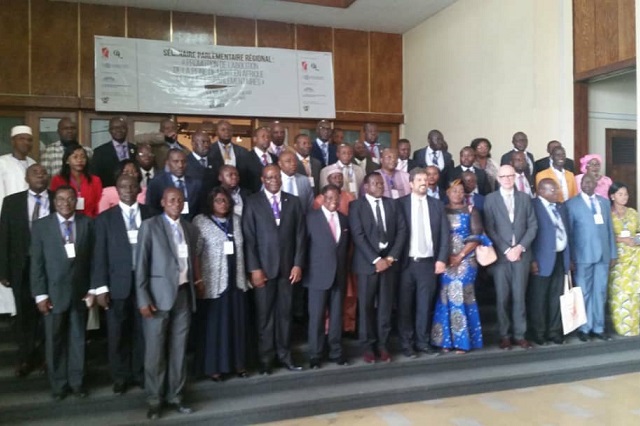
Niger is formally retentionist but has applied a moratorium since 1976. In 2018, no death sentence was handed out and it is unknown how many people remain on death row.
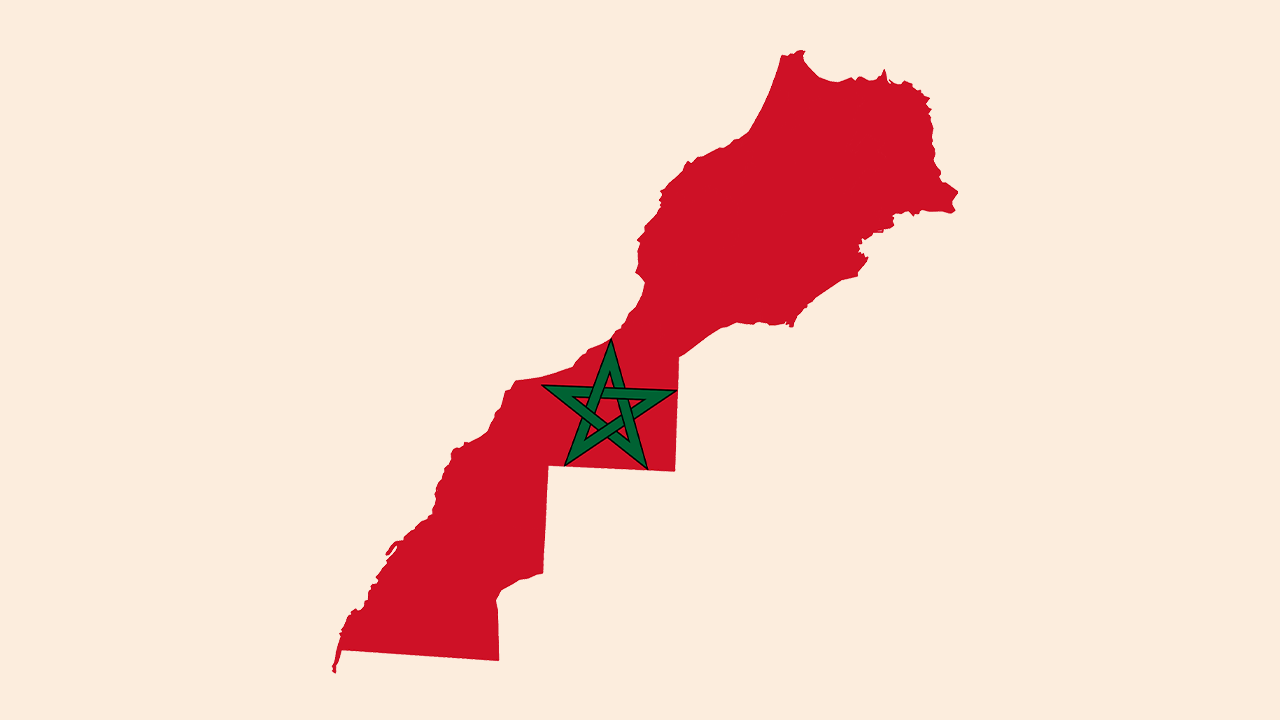
Morocco is a de facto abolitionist country, having not carried out any execution since 1993. However, the country did give out death sentences against at least 10 individuals in 2018 and more than 93 were still on death row.
Mali is formally retentionist but has applied a moratorium since 1980, although executions are reported to have occurred in territories controlled by armed groups during the 2012 crisis.
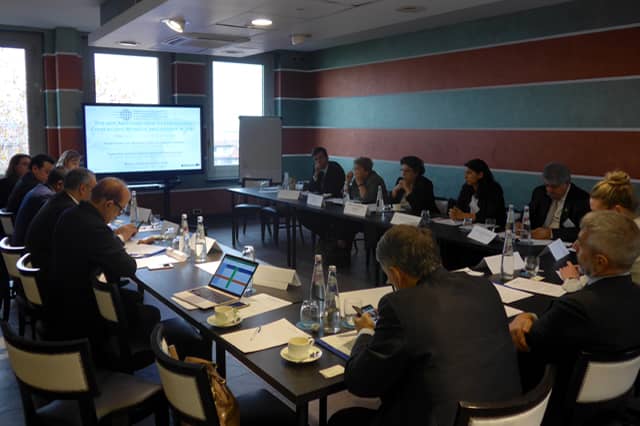
The Maldives is formally retentionist but has applied a moratorium since 1954. In 2018, there were no death sentences imposed, but 15 people remained on death row.
Since the last execution took place in 1967, Australia has officially abolished the death penalty nationwide. By ratifying the ICCPR in 1978, Australia has committed itself to opposing the death penalty.
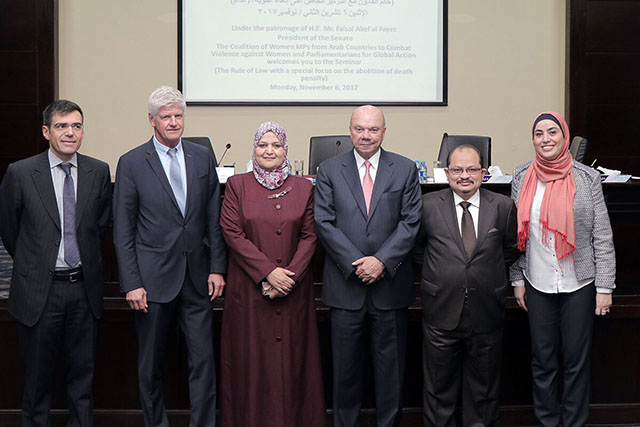
Jordan is a retentionist country. The country sentenced at least 16 individuals to death but carried out no executions in 2018.
Iraq is a retentionist country. In 2018, the number of executions in Iraq decreased by more than 50%, with more than 52 executions carried out and more than 271 death sentences handed out.
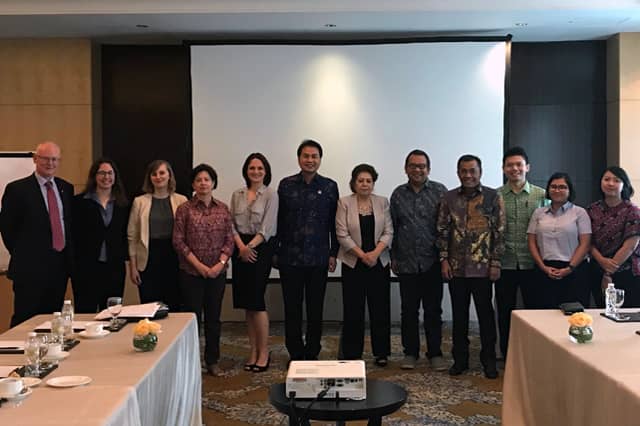
Ending an unofficial five-year moratorium that began in 2008, Indonesia resumed executions in 2013. At least 47 individuals were sentenced to death in 2017 but no execution was carried out.
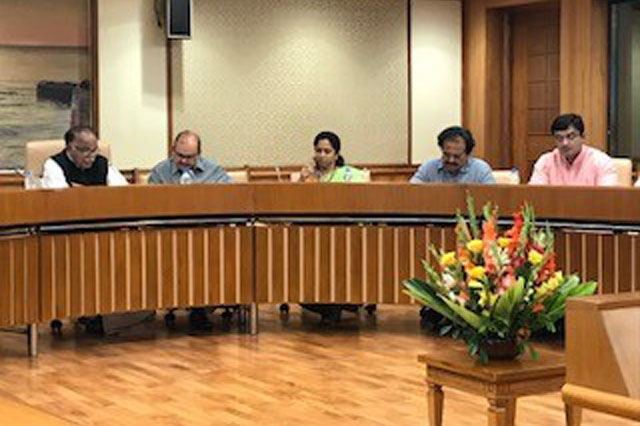
India remains a retentionist country. At least 162 people were sentenced to death in India in 2018, and 371 were reported to be on death row. 2018 was also the third year in a row that the country did not carry out any execution.
Guinea has become abolitionist after the adoption on 4 July 2016 by the Parliament of a law reforming the Criminal Code and removing the death penalty from sentences available to judges.
The DRC is de facto an abolitionist state, having carried out a death sentence for the last time in 2003. However, at least 22 individuals still received death sentences in the country in 2017 and the number of individuals on death row is unknown.
Death Penalty has been successfully abolished in Cote d’Ivoire thanks to PGA’s National Group’s supportive action in favor of the two bills adopted by the Government on 15 February 2015, amending the Criminal and the Criminal Procedure Code to repeal...

In 2015, Chad resumed executions, after a 12 years period without any death sentences being carried out. Indeed, despite the government having announced in 2014 that it would abolish the death penalty, the Chadian Parliament adopted on 30 July 2015 a new
The Central African Republic is formally retentionist but has applied a moratorium since 1981. In 2017, no death sentence was handed out.
Cameroon is an abolitionist de facto state, with the last execution taking place in 1997. However, the Criminal Code adopted in 2016 still upholds the death penalty, especially for terrorism-related offences.
Burkina Faso is abolitionist since 31 May 2018, when the National Assembly adopted a new Criminal Code abolishing the death penalty for all ordinary crimes.
Parliamentarians from West and Central Africa shared their experiences and discussed the future of the abolitionist movement in the region.
On 7 May 2018, parliamentarians and civil society met in Jakarta to consult on the Indonesian Judicial System, Penalties and Human Rights in the Reformed Draft Criminal Code.
On 3 April 2018, parliamentarians and civil society representatives met to discuss Addressing Inequalities of the Criminal Justice System and the Death Penalty.

We, the 40 undersigned organisations are most disturbed and saddened that at least 10 persons have been victims of the mandatory death penalty for drug trafficking despite law abolishing the practice.
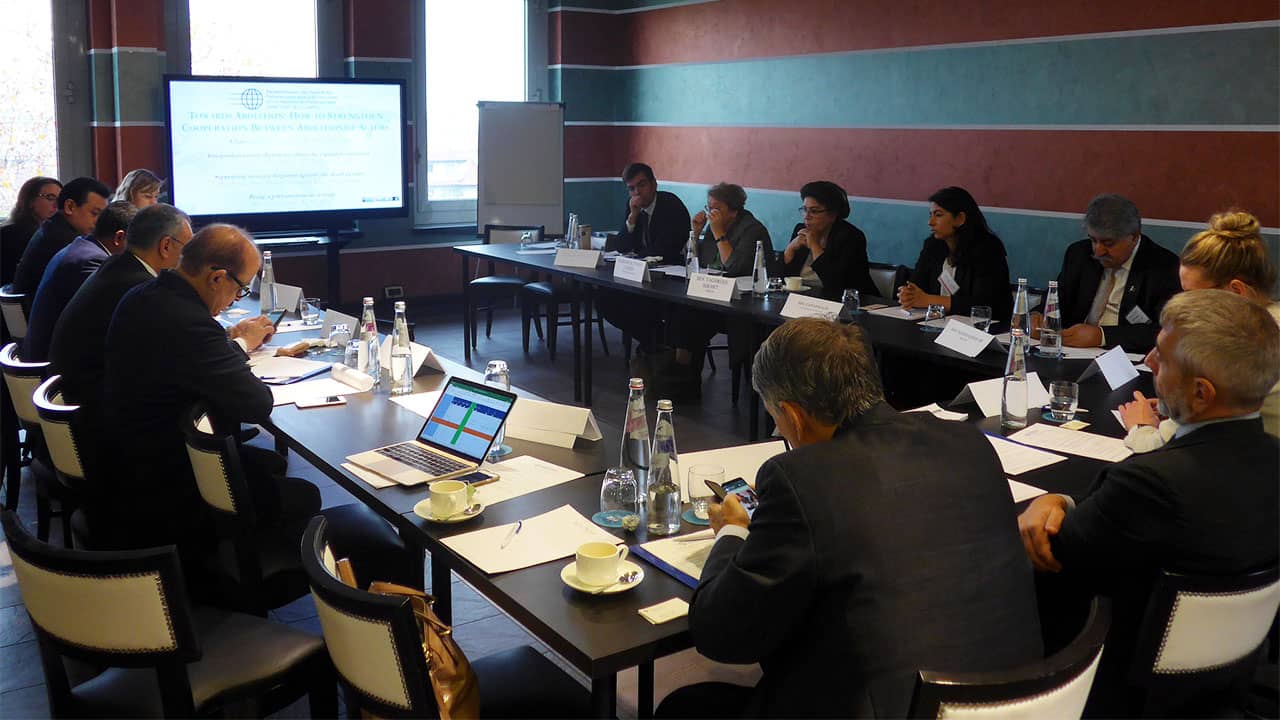
On 29 November 2017, Parliamentarians for Global Action organised a parliamentary roundtable, Entitled “Moving Away from Capital Punishment in Asia”...
Mr. Farhatullah Babar, MP (Pakistan) is a new PGA Member.
On 6 November 2017, Parliamentarians for Global Action convened a Parliamentary Roundtable on Strengthening the Rule of Law, focusing on the issue of capital punishment, in the Senate of the Hashemite Kingdom of Jordan.

PGA welcomes the decision of at least nine of the twenty-four Senators to speak out against the bill reintroducing the death penalty in Filipino law.
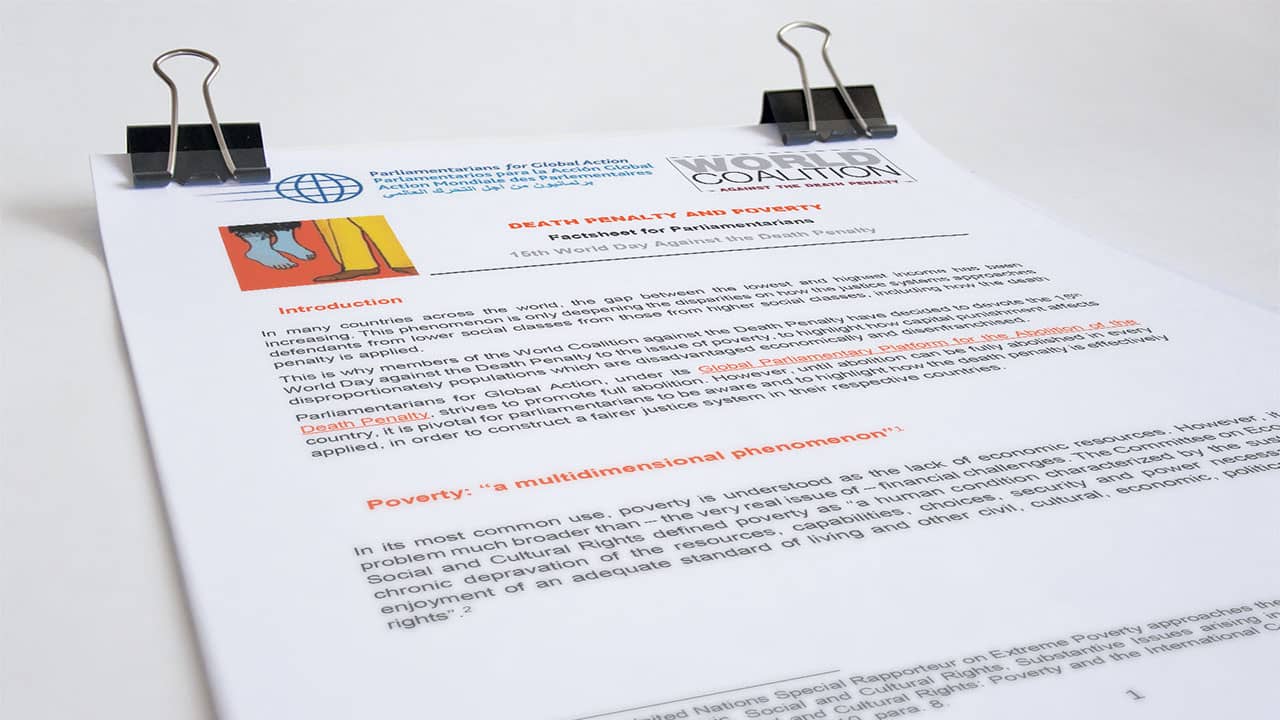
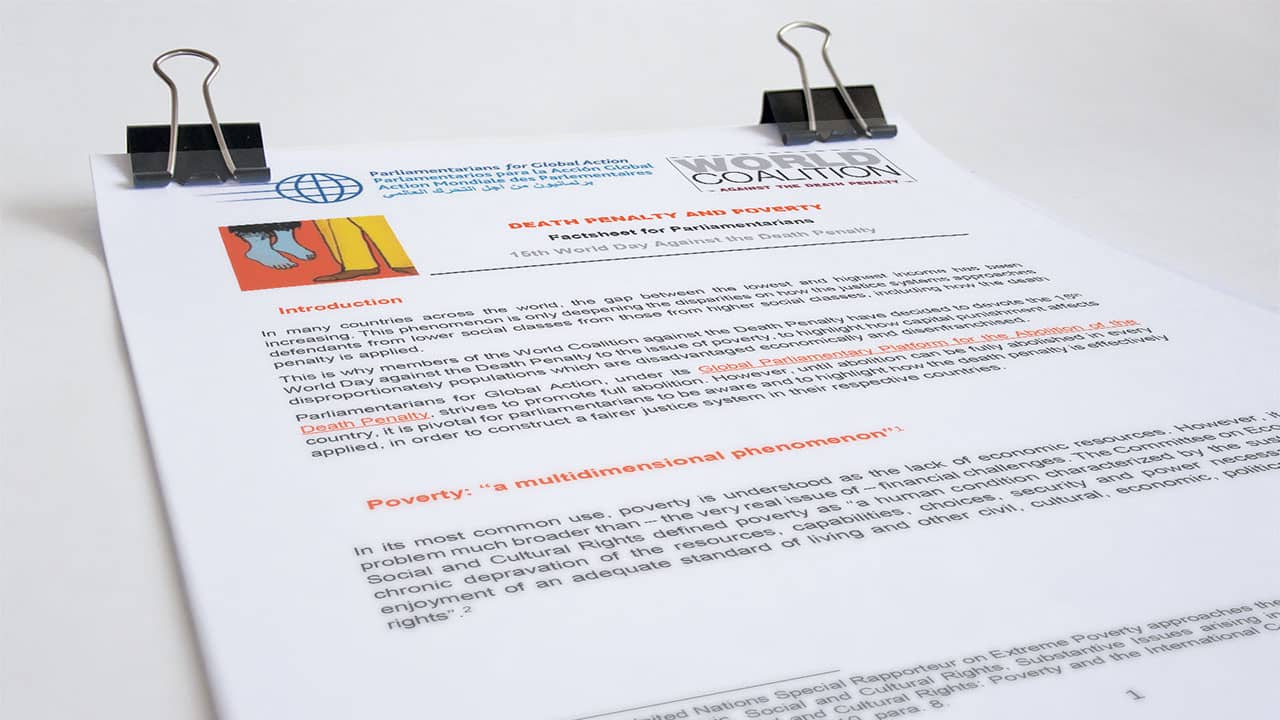
PGA, a member of the World Coalition against the Death Penalty (WCADP), is launching today a Parliamentary Factsheet on Poverty and the Death Penalty.
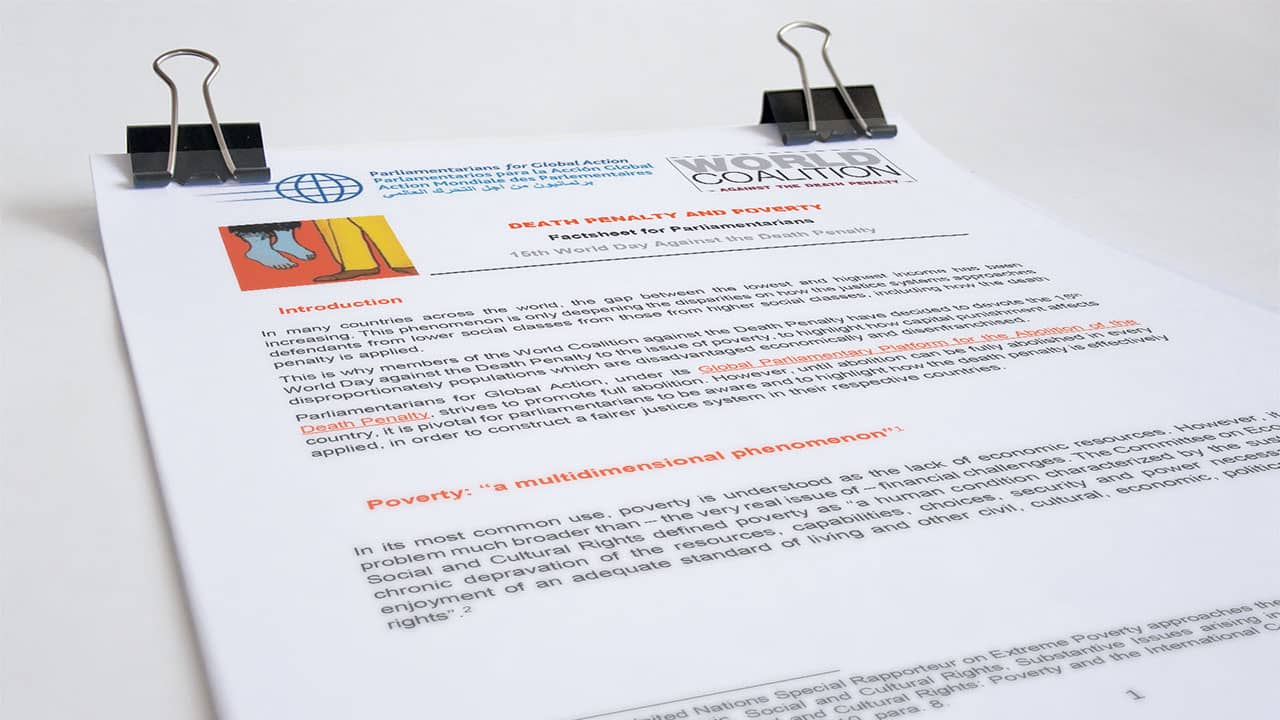
A factsheet highlighting how capital punishment affects economically disadvantaged and disenfranchised communities.
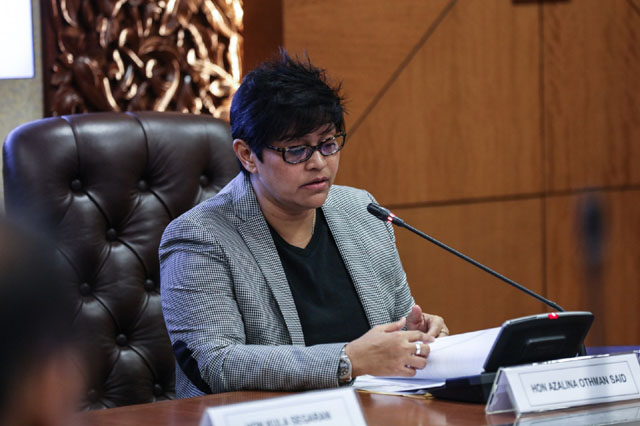
PGA congratulates the government of Malaysia for having announced that the Cabinet had approved a bill that would abolish the mandatory death penalty for drug-related crimes.
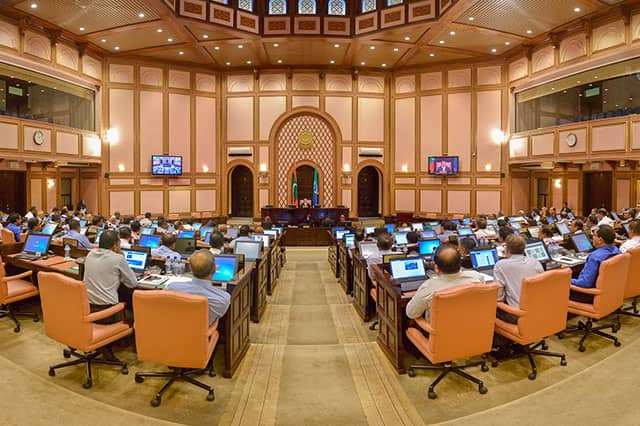
PGA is deeply concerned at reports of severe political repression in the Maldives, including serious violations of the constitutional and democratic processes and the arrest of several opposition Members of Parliament.
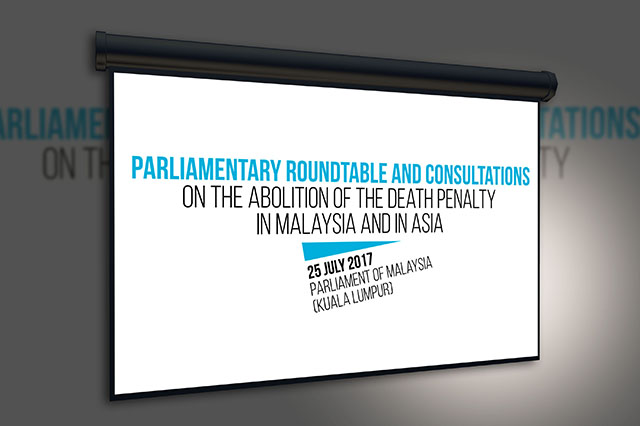
On 25 July 2017, parliamentarians, representatives from civil society and the diplomatic community met in the Parliament of Malaysia, in Kuala Lumpur, to discuss the abolition of the death penalty in the region.
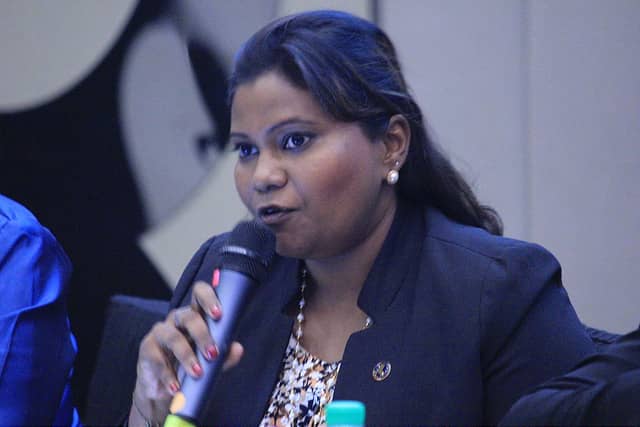
Batu Kawan MP Kasthuri Patto says there is no point talking about respecting human rights without committing to see it through.
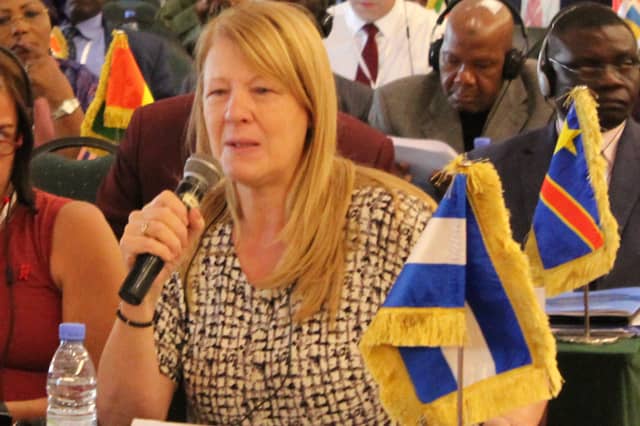
President of Parliamentarians for Global Action (PGA), Dip. Margarita Stolbizer (Argentina), denounces the use of the death penalty by the United States and calls for the commutation of death sentences to life imprisonment.
PGA members attended a workshop on the abollition of the death penalty, held on 19 and 20 December 2016 in Ouagadougou (Burkina Faso).
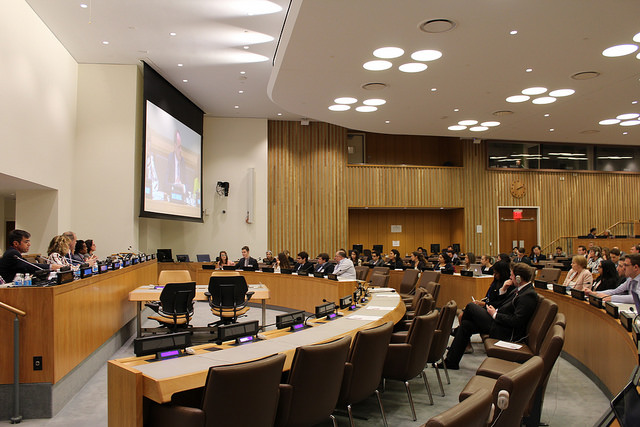
On 20 October 2016, PGA in consultation with the World Coalition against the Death Penalty (WCADP), launched a Parliamentary Factsheet on the Death Penalty and Terrorism-Related Offences
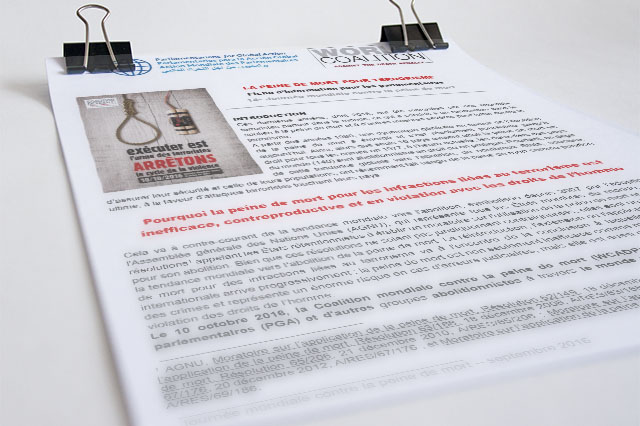
Parliamentarians for Global Action (PGA), in consultation with the World Coalition against the Death Penalty (WCADP), is launching today a Parliamentary Factsheet on the Death Penalty and Terrorism-Related Offences.
Why the Death Penalty for Terrorism-related Offences is Ineffective, Counter-productive and Violates Human Rights
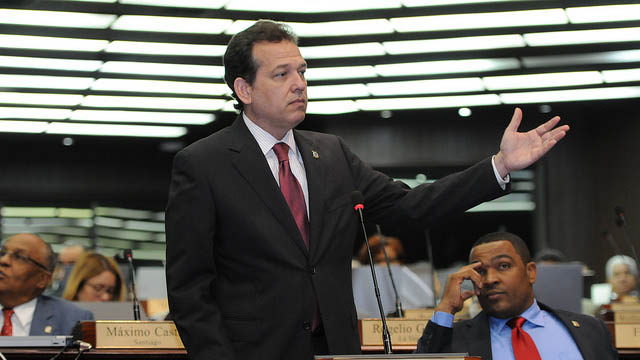
The Dominican Republic has acceded to the Second Optional Protocol to the International Covenant on Civil and Political Right (ICCPR-OP2).

Parliamentarians for Global Action (PGA) welcomes the accession of Togo to the Second Optional Protocol to the International Covenant on Civil and Political Rights, aiming at the abolition of the death penalty (ICCPR-OP2), on 14 September 2016.
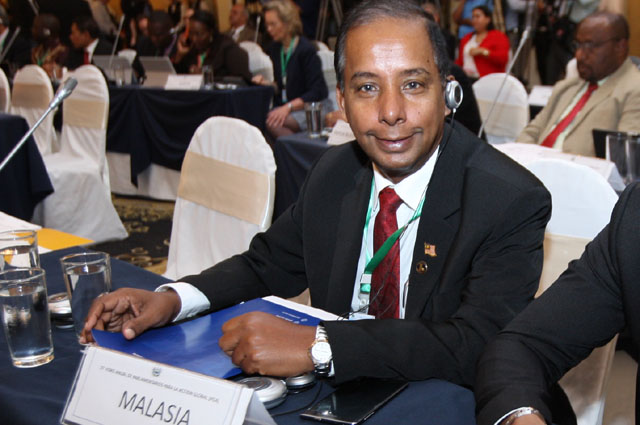
Let’s say no to the death penalty

PGA side-event to the 6th World Congress against the Death Penalty

PGA welcomes the adoption in Conakry on 4 July 2016 of the law reforming the Criminal Code and the Criminal Procedural Code.
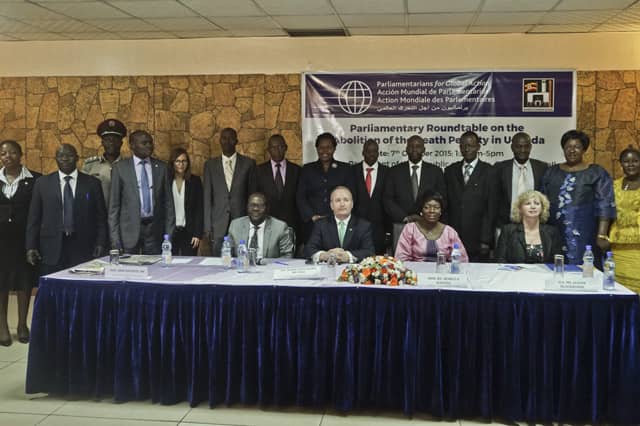
PGA members in Uganda wish to have that bill passed before the end of the current session of parliament, which ends on 16 May 2016.
The world saw the highest number of recorded executions since 1990 and almost 90 percent occurred in Iran, Pakistan and Saudi Arabia, according to a new report.
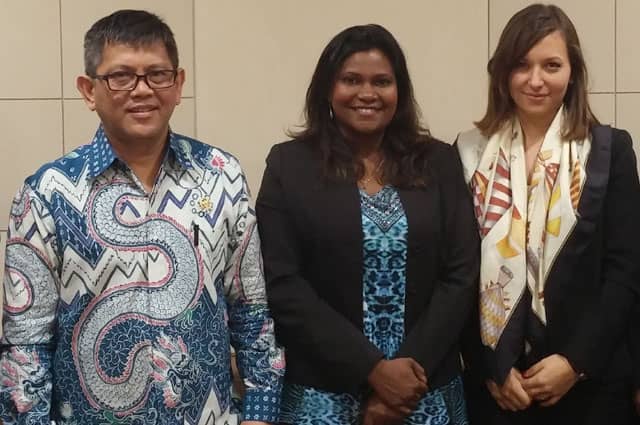
Media statement by PGA members Hon. Kulasegaran, Hon. Dr Siti Mariah, Hon. Thomas Su and Hon. Kashthuri Patto
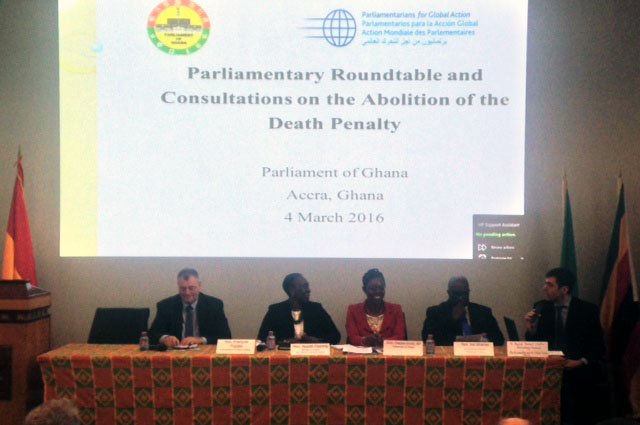
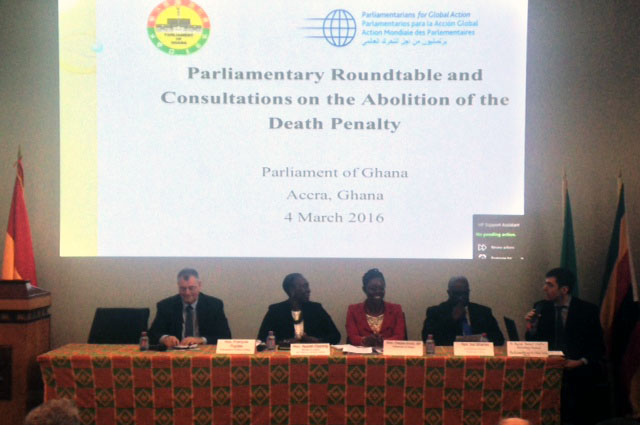
The Roundtable sought to analyse the national and international legal frameworks on the death penalty and address the situation of the death penalty in Ghana to identify the measures to overcome local challenges and obstacles.
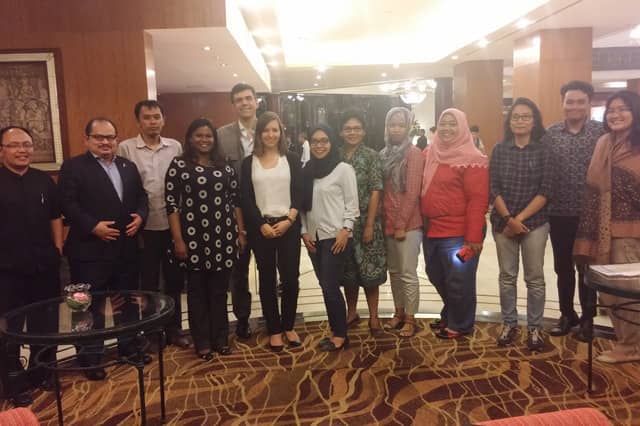
PGA organized a Field Visit to Indonesia on 24-25 February 2016, to hold Consultations on the abolition of the death penalty.
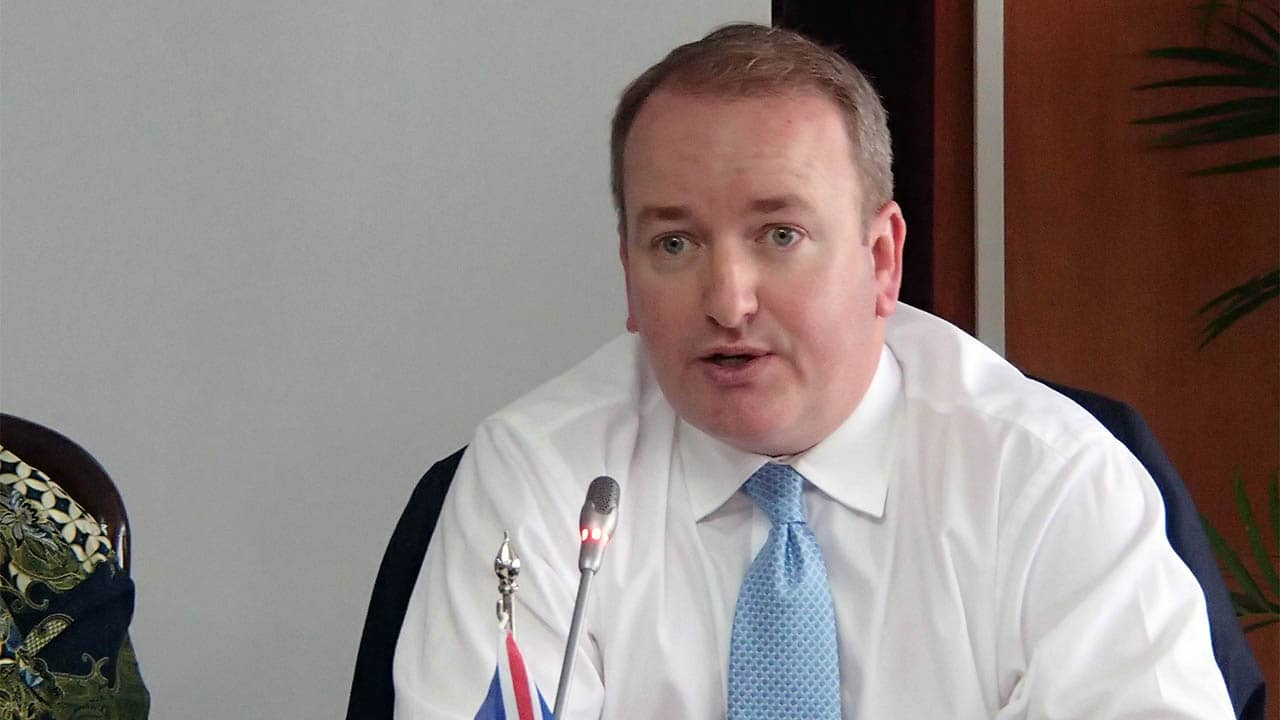
parliamentary question (27318)
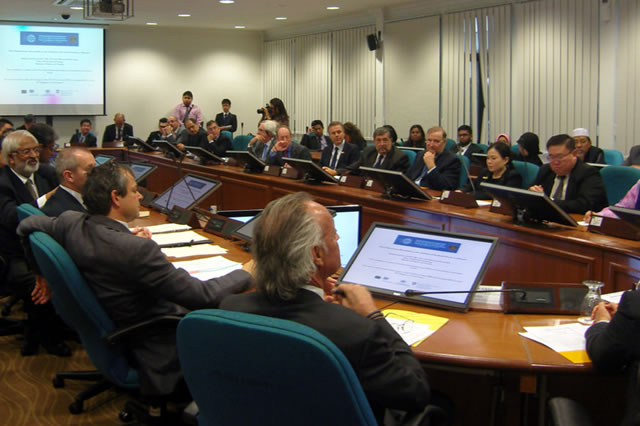
Through the Parliamentary Platform, PGA has launched targeted campaigns in selected countries, including Malaysia, to raise awareness among Parliamentarians, strengthen political will and provide technical assistance for initiatives on this issue.
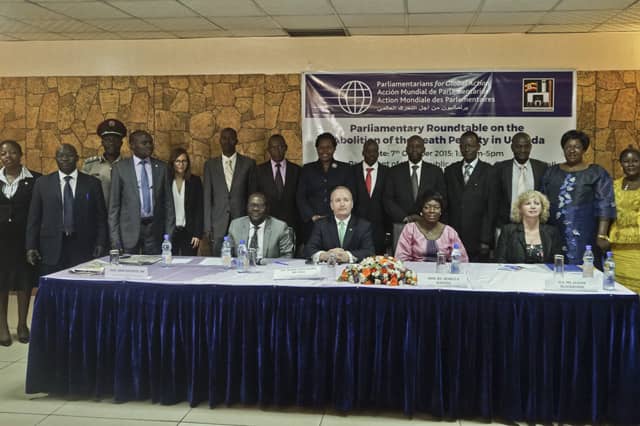
While a relative majority of States have taken abolitionist positions and the number of executions has decreased in 201, 58 States still apply the death penalty
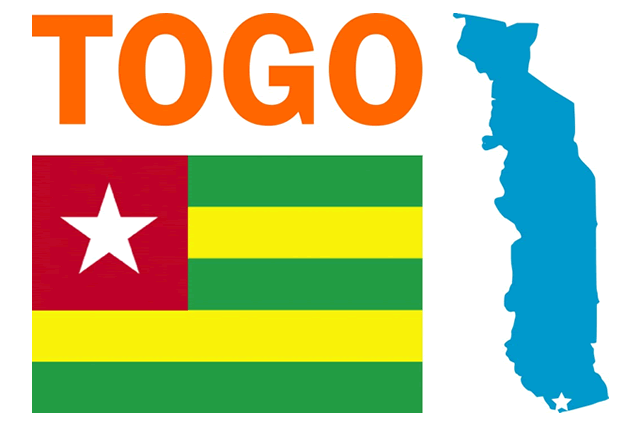
Parliamentarians for Global Action (PGA) welcomes the ratification of the Second Optional Protocol to the International Covenant on Civil and Political Rights (ICCPR) by the Parliament of Togo on 10 July, 2015.
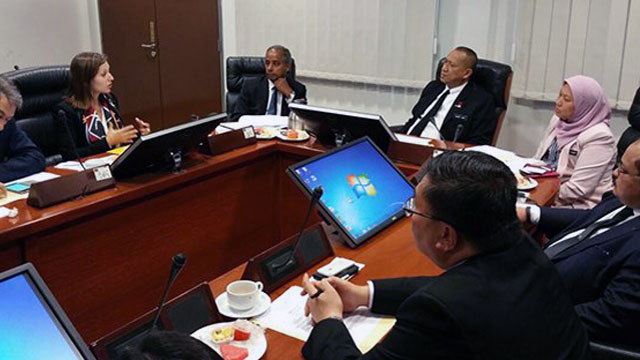
From 10 to 13 June, PGA conducted a field mission on the abolition of the death penalty and the fight against impunity in the margins of the South-East Asia Regional Congress on the abolition of the death penalty organized by Ensemble Contre la Peine de M
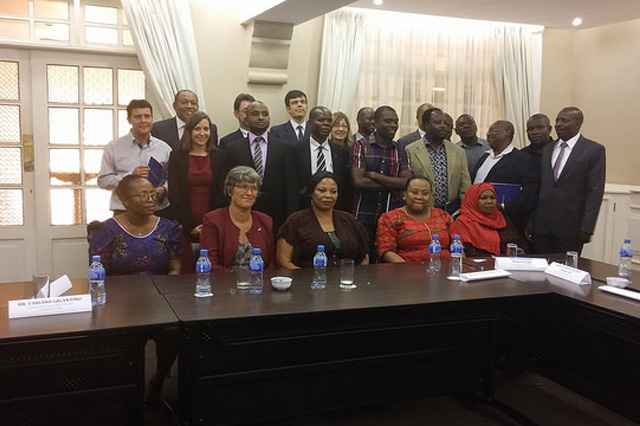
PGA organized on Sunday 3 May a Roundtable meeting on the abolition of the death penalty in Tanzania and Uganda in Dar es Salaam with the participation of Parliamentarians from Tanzania and Uganda
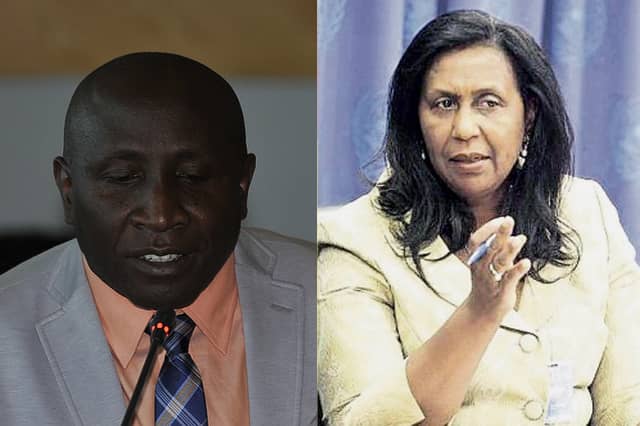
PGA welcomes the abolition of the death penalty by the Parliament of Suriname, in the framework of the discussions regarding the adoption of the new Criminal Co
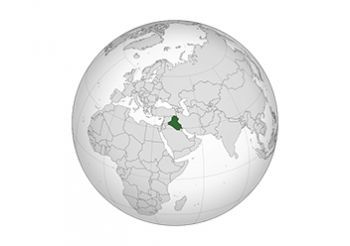
PGA wishes to express its consternation at the decision by an Iraqi Court to sentence to death former Sunni MP Ahmed al-Alwani on 24 November, 2014.
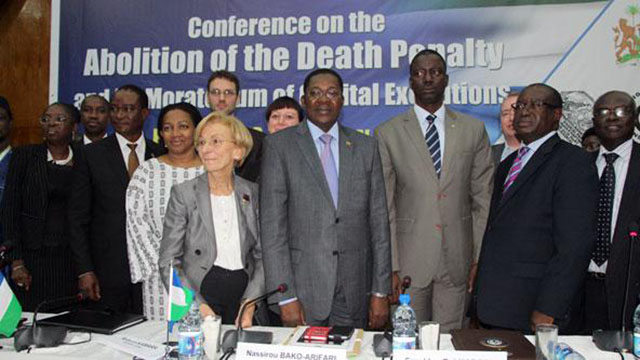
On January 13-14, 2014 PGA Board Member Mr. Mark Pritchard, MP (UK) participated in Regional Conference on the Abolition of the Death Penalty in Freetown, Sierra Leone.
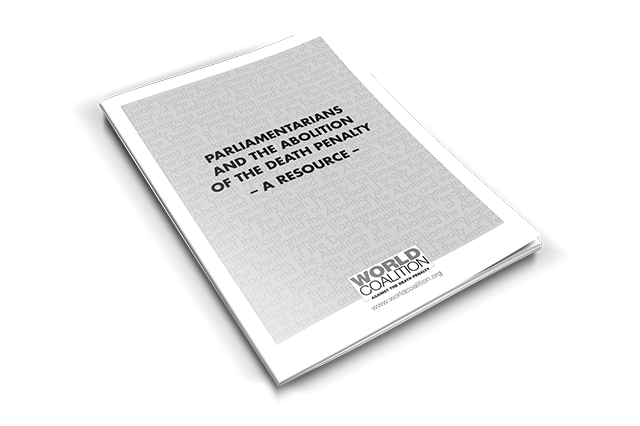
A resource for parliamentarians around the globe, currently working or thinking of working for the abolition of the death penalty.

On July 15, 2013, the PGA Executive Committee together with the PGA International Law and Human Rights Program took the decision to start preparations towards the creation of a Campaign for the Abolition of the Death Penalty.
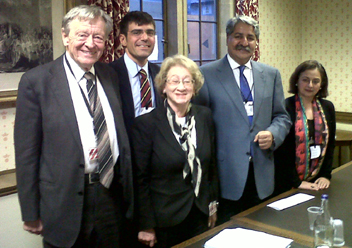
Following an Executive Committee decision in July 2013 Parliamentarians for Global Action (PGA), with the encouragement of the UK All-Party Group on the Abolition of the Death Penalty has started preparations towards the creation of the global parliamenta
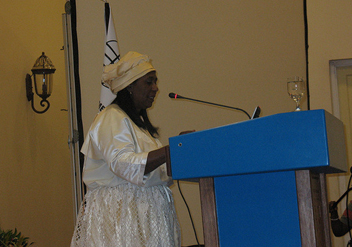
Statement by PGA Board Member Ruth Wijdenbosch for the Abolition of the death Penalty Press Releases News Center

A Campaign for the Abolition of the Death Penalty PGA Activity 2013 Activity