


Background and Context
The Assembly of States Parties is the management oversight and legislative body of the International Criminal Court. It is composed of representatives of the States that have ratified and acceded to the Rome Statute.
Achieving the universal ratification and full implementation of the Rome Statute of the International Criminal Court is pivotal in reaching the goal of putting an end to impunity for the most serious crimes to international concern. In accordance with the principle of complementarity, it is the primary responsibility of national jurisdictions to prosecute the most serious crimes, which requires that appropriate measures established in the Rome Statute, including on international cooperation, to be adopted at the national level.
This may entail a long and complicated process of decision-making, which implies overcoming obstacles at both political and legal level. In this regard, Parliamentarians have already played a crucial role in the advancement of universality and implementation of the Rome Statute system. Nevertheless, in light of the recent criticisms the ICC has been facing and the risks for its integrity and legitimacy, the role of the Parliamentarians has become even more prevalent.
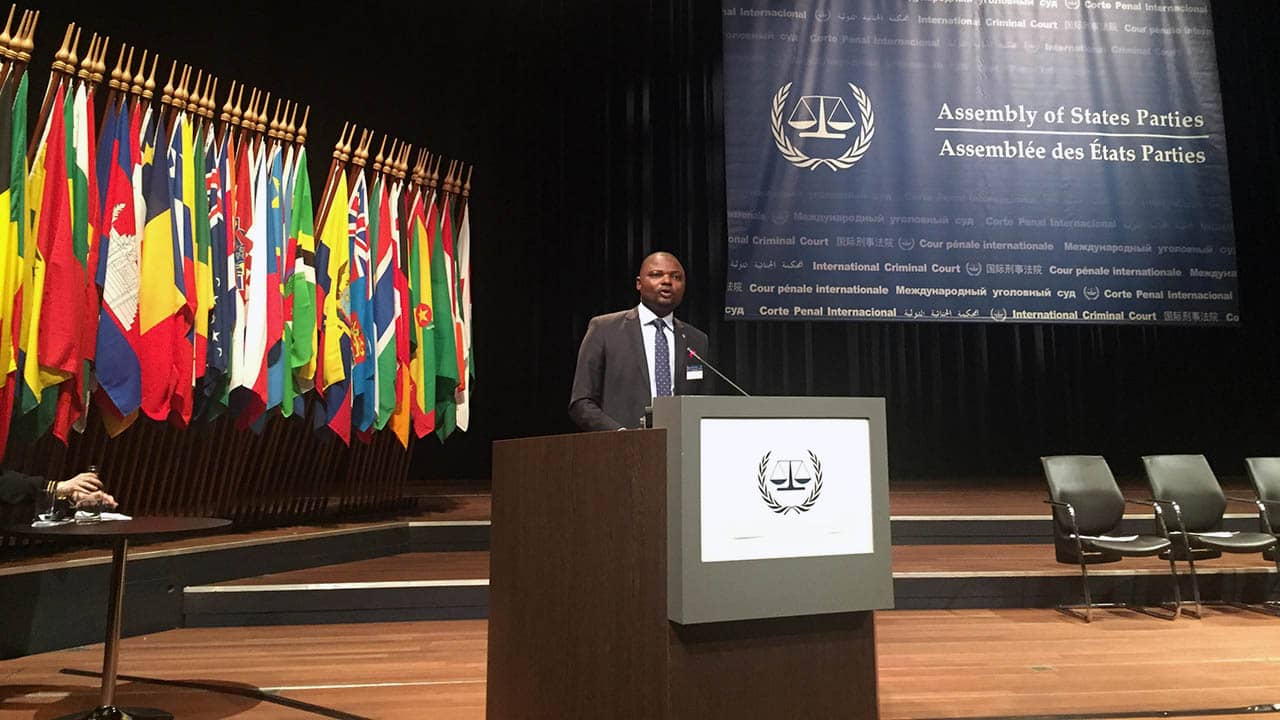
Statement presented by Honorable Emery Okundji, MP (Democratic Republic of Congo) on behalf of PGA at the General Debate of the 15th Assembly of States Parties to the Rome Statute.