


By Asambleísta Soledad Buendía (Ecuador), Chair of PGA’s National Group
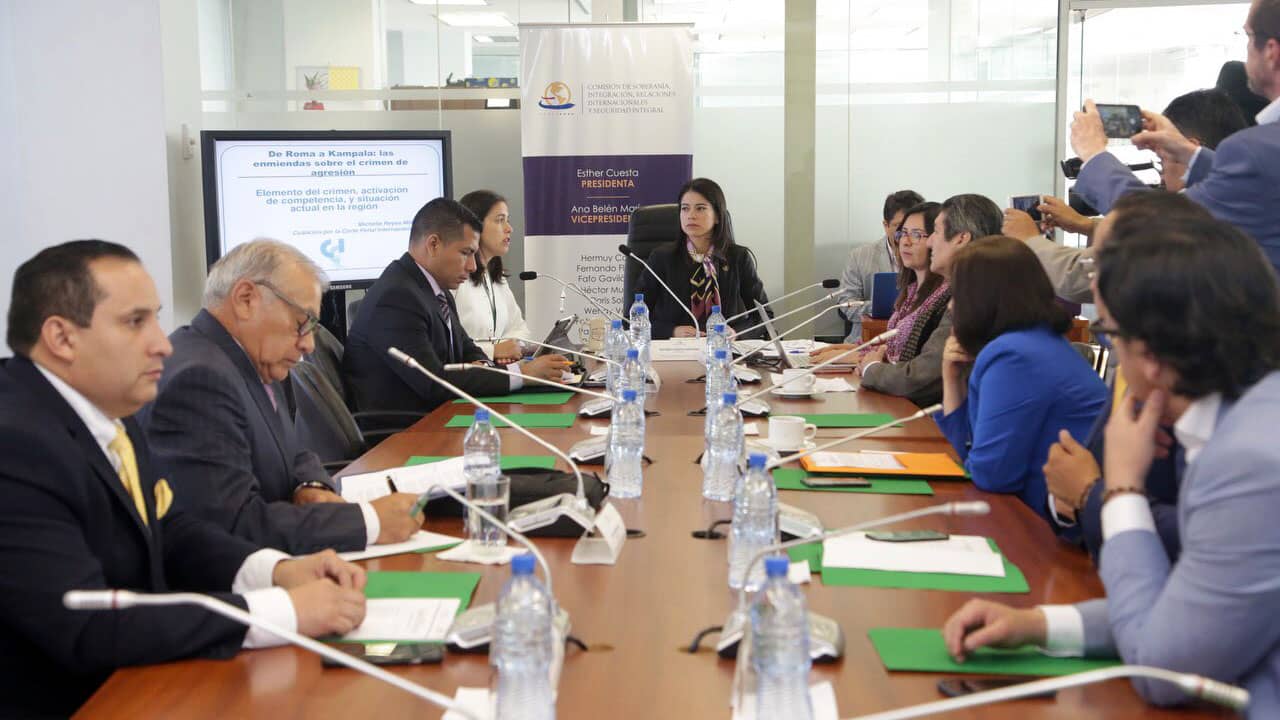
On Tuesday, 19 March 2019, the Commission on Sovereignty, Integration, International Relations and Integral Security of the National Assembly of Ecuador approved the draft report on the ratification of the Kampala Amendments to the Rome Statute of the International Criminal Court (ICC) on the crime of Aggression with 7 votes in favor and unanimously. Ecuador is moving steadily towards the approval of this draft, which will be discussed in the next days in the plenary session of the National Assembly.
The crime of aggression is the supreme violation of jus ad bellum, directly related to the legitimacy of the use of force. The activation of the Court's jurisdiction over this crime will help to deter the illegal use of force, since leaders will have to consider the Court’s competence in their decision-making. In this way, States that ratify will visibly contribute to the rule of law at the international level and to international peace and security, and will do their part to help fulfill the promise of Nuremberg: that those who dare to commit the crime of aggression never do so with impunity.
The Coordinator for the Americas of the Coalition for the International Criminal Court, Michelle Reyes, participated in the debate and mentioned that the act of aggression constitutes the use of force by one State against the sovereignty of another State. Ecuador is one of the countries of Latin America and the Caribbean that is in the process of ratifying the Kampala Amendments on the crime of aggression. However, Reyes said, the term "crime of aggression" has been already included in the Comprehensive Criminal Organic Code in 2014.
The Commission also received Pablo Avilés, director of the United Nations System of the Ministry of Foreign Relations of Ecuador, who said that Ecuador, a State that by constitutional mandate has always remained at the forefront of international organizations to advocate for peace, was among the 60 countries that ratified and gave way to the establishment of the Rome Statute.
Asambleísta Mauricio Zambrano, member of the Parliamentary Caucus of the Citizen Revolution, will submit the report approved by the Commission before the 137 Ecuadorian parliamentarians in the plenary session of the National Assembly for its ratification.