


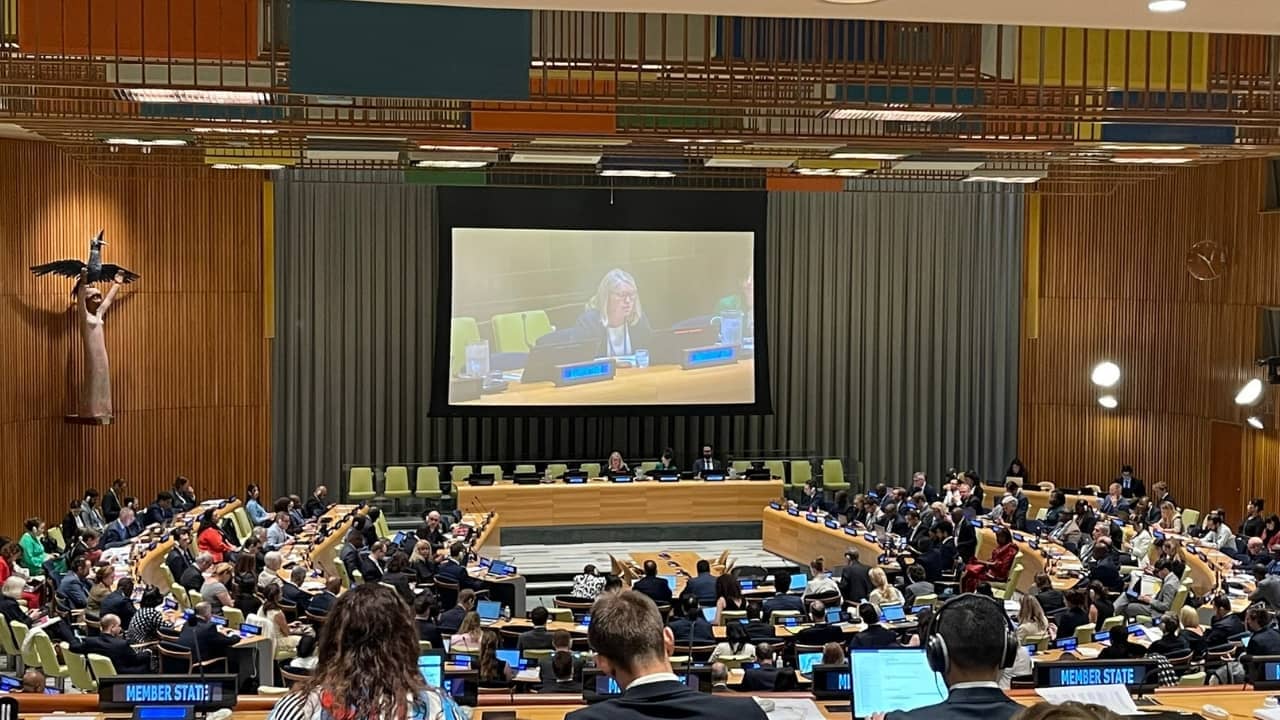
From July 7 to 9, 2025, Parliamentarians for Global Action’s executive committee participated in the special session on the review of the amendments on the crime of aggression of the Assembly of States Parties to the Rome Statute of the International Criminal Court at the United Nations Headquarters in New York. The session offered States Parties the unique opportunity to harmonize the Court’s jurisdiction over the crime of aggression with that of genocide, crimes against humanity, and war crimes — a matter for which PGA has long advocated.
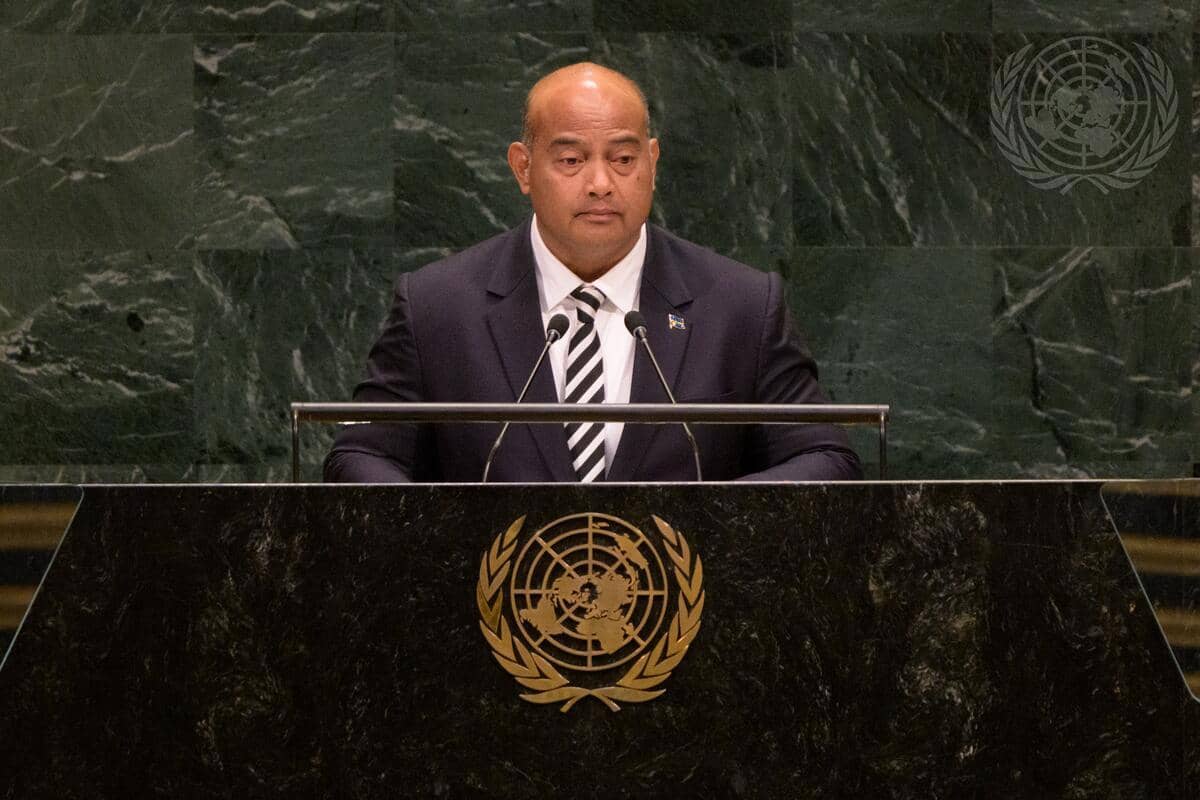
Parliamentarians actively participated throughout the session alongside civil society organizations. Our president, Hon. Syed Naveed Qamar, MP (Pakistan), delivered a statement during the general debate. Hon. Amanza Walton-Desir, former MP (Guyana) intervened during a side event we co-organized. And board members from Austria, Argentina, Cameroon, Pakistan, and Ukraine joined official meetings. The PGA secretariat addressed the plenary with a strong message to harmonize the jurisdiction during informal consultations on behalf of a group of civil society organizations.
Despite strong support and recognition for the urgency of harmonization, the initiative was ultimately stalled by the opposition of a small group of States Parties, including Canada, France, Japan, New Zealand, and the United Kingdom. Due to the lack of consensus, the Assembly of States Parties adopted a resolution to convene another special session in 2029, at which time the proposal of amendment addressing harmonization – and deposited in April 2025 by Costa Rica, Germany, Sierra Leone, Slovenia, and Vanuatu – will be revisited.
The need to close the accountability gap
The Kampala amendments, adopted unanimously by States Parties in June 2010, defined the crime of aggression and established the procedure for the International Criminal Court (ICC) to exercise jurisdiction. These amendments entered into force in 2018, empowering the Court to hold political and military leaders accountable for the most serious forms of unlawful use of force.
However, unlike the three other core crimes under the Rome Statute, the ICC cannot prosecute acts of aggression involving non-party States, or States Parties that have not ratified the amendments. Even when aggression is committed on the territory of a State Party that has accepted the jurisdiction over the crime of aggression, the Court remains blocked from exercising its jurisdiction. These restrictions have created a serious accountability gap for victims of aggressive wars.
As unlawful use of force continues around the world, the need to close this gap by harmonizing the ICC’s jurisdiction over the crime of aggression has become more urgent than ever. Acts of aggression not only violate the international prohibition on the use of force – a fundamental principle of international law enshrined in the U.N. Charter – but also result in grave human rights abuses and atrocity crimes.
Challenges to consensus: addressing key objections
States Parties agreed to review the amendments seven years after their activation, resulting in the July 2025 special session. Throughout the preparatory meetings and the general debate, many countries confirmed their support for accountability and harmonization as the only possible avenue to strengthen the Rome Statute system and advance the fight against impunity. However, several States Parties raised objections, often citing legal and political arguments such as:
- The Role of the U.N. Security Council
Some contend that only the U.N. Security Council has the authority to determine the existence of acts of aggression. While the Council plays a crucial role in maintaining international peace and security, the ICC operates independently and impartially. The Court must be able to make its own legal determinations. Relying solely on a political body undermines the Court’s impartiality and effectiveness, particularly in instances when the U.N. Security Council is deadlocked, as seen with its inaction on the Russian Federation’s aggression against Ukraine.
- Jurisdictional challenges
Critics claim the crime is too complex for the ICC, or that it may be more appropriately addressed by national courts. While many States Parties include the crime of aggression in their criminal codes, domestic prosecutions face significant limits stemming from the status of the crime as a leadership crime and its complexity. A country is unable to undertake such a prosecution against another country’s high-level leaders due to the application of personal immunities. The ICC is the only institution capable of holding States Parties’ leaders accountable.
- The definition of the crime of aggression
Some countries consider the definition of aggression to be too vague, particularly in relation to its potential implications for legitimate self-defense or humanitarian interventions. However, the Rome Statute offers a clear, consensus-based definition of aggression developed through decades of legal deliberation and negotiations. Many States Parties that have already ratified the amendments and incorporated them into their national legislation, providing valuable practices that can guide others in addressing these concerns.
- Lack of ratification by all States Parties
As of today, 49 States Parties have ratified the crime of aggression amendments, making it the most widely ratified amendment to the Rome Statute. Recent ratifications, such as Seychelles on July 1, 2025, show growing momentum as noted by PGA executive member, Hon. Bernard Georges, MP (Seychelles). Parliamentarians can play an active role in this process.
Solidarity with victims of the crime of aggression
Parliamentarians for Global Action stands in solidarity with the victims of the crime of aggression, underscoring the crucial role of parliamentarians in championing accountability. As representatives of citizens who are directly affected by the crime of aggression, parliamentarians’ voices matter in our collective effort to close the accountability gap and ensure equal access to justice for all victims.
PGA Board President Qamar urged states to adopt the proposed amendment under Article 121 (5) of the Rome Statute - the same procedure as the original Kampala amendments. “There is no room for compromises that would betray victims of this atrocity crime,” he said.
To amplify the voices of affected communities, Parliamentarians for Global Action also co-organized a side event on July 7, titled “What’s at stake: the devastating impact on victims of aggression and the case for harmonization from a civil society perspective.” In partnership with the European Center for Constitutional and Human Rights, Global Initiative for the Prevention of Aggression, and Trial International, and hosted by Switzerland, the event brought together diverse perspectives from Armenia, the Democratic Republic of the Congo (DRC), Guyana, and Ukraine.
Drawing from their experiences in their respective countries, speakers from civil society organizations shared harrowing accounts of the devastating impact of the crime of aggression on civilians. Their stark and moving testimonies underscored the wide range of atrocities endured by victims and survivors, including forced displacement, extrajudicial killings, torture, rape and other sexual violence, the destruction of livelihoods, severe humanitarian crises, and profound psychological trauma. Human rights defenders, in their efforts to document and expose these crimes, have also faced abductions and other forms of retaliation. A recurring message throughout their interventions was the urgent need to address the current accountability gap, as the lack of effective prosecution for the crime of aggression only fuels further impunity and the continued commission of atrocity crimes.
Hon. Amanza Walton-Desir, former MP (Guyana) emphasized the political will needed to advance harmonization. Drawing from Guyana’s own experience with territorial tensions, she stressed the importance of harmonizing the jurisdiction, especially for small countries. “This is not an abstract debate […]. When smaller nations are threatened, the effectiveness of international law is our only protection,” she said.
The event concluded with strong remarks underscoring the significance of civil society organizations in voicing their concerns regarding the crime of aggression, particularly from those most affected. Speakers also highlighted the importance of justice in the healing process of victims, and concluded with a strong call to action urging states not to delay reforms that would finally hold perpetrators of aggression accountable.
Parliamentarians for Global Action’s mobilization sent a strong and united message: justice must be consistent, the rights of all victims must be upheld, and the Rome Statute system must be reinforced. In a global context marked by the escalation of aggressive wars, we will continue to work closely with our parliamentary members to ensure that harmonization of the Rome Statute becomes a reality, and that no one affected is left behind in the fight against impunity.