


Lilongwe / The Hague / New York
Parliamentary leaders in Ghana and Zimbabwe have been championing legislative efforts to abolish the death penalty in recent years, becoming the standard bearers of the global abolitionist movement among African countries. Today, 28 out of the 55 African Union Member States have abolished the death penalty in law, while 14 States maintain a moratorium on executions.
The experiences of parliamentarians from these countries offer valuable insights that can inspire and guide further abolition efforts across the African continent — particularly in Malawi, where the death penalty remains part of Malawi’s legal system despite having no executions carried out since 1992.
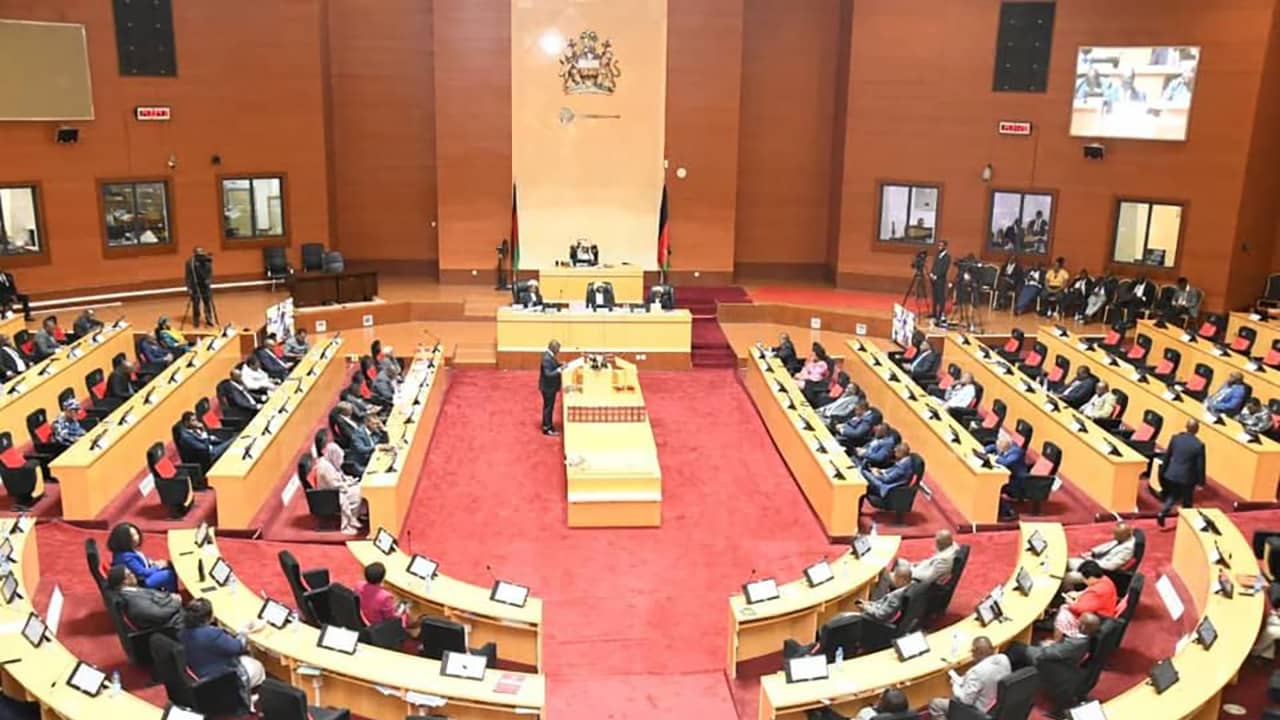
Hon. Yusuf Nthenda, MP (Malawi), PGA Member, is currently championing a private member’s bill appearing on the order paper of the 51st session of the Parliament of Malawi. The bill aims to amend both Malawi’s Penal Code and the Criminal Procedure and Evidence Code by removing all references to death sentences.
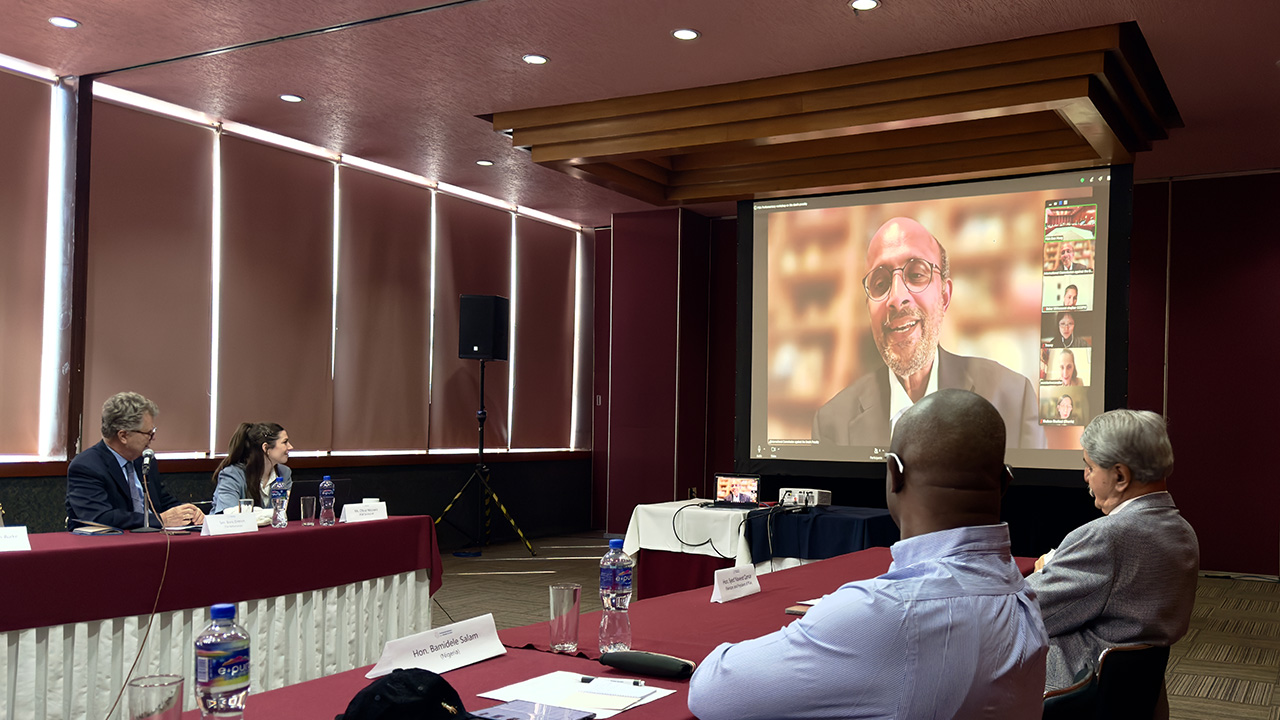
Encouraged by this development and in an effort to build momentum for reform in Malawi, several civil society organizations, together with Parliamentarians for Global Action, hosted a virtual roundtable event on 9 April 2025. The gathering brought together parliamentarians from Malawi, Ghana, and Zimbabwe as well as representatives from Reprieve; the Center for Human Rights Education, Advice and Assistance (CHREAA); the World Coalition Against the Death Penalty (WCADP) to share experiences and exchange legislative strategies aimed at ending the use of capital punishment.
Learning from Recent Abolition Successes
Hon. Kwame Anyimadu-Antwi, MP (Ghana) and PGA Member, explained how Ghana passed a private member bill in 2023 to replace the death penalty with life imprisonment. As the former Chair of the Constitutional, Legal, and Parliamentary Affairs Committee, he led inclusive public consultations and participated in the legislative review process to achieve consensus, engaging religious leaders, civil society, and the broader public. One of the most persuasive arguments was the irreversible risk of executing innocent people. The financial burden of keeping death row inmates and the conditions of detention in prisons were also important arguments for abolishing the death penalty.
While building consensus was challenging, reasoned debates and careful engagement led to the introduction and adoption of the bill resulting in the abolition of the death penalty for ordinary crimes. Since Ghana’s constitution still includes provisions related to capital punishment, the ongoing constitutional review presents more opportunities for parliamentarians to fully remove all references to the death penalty.
Hon. Edwin Mushoriwa, MP (Zimbabwe), shared his country’s path to abolition, driven by the conviction that the death penalty was a relic of colonial rule and did not reflect Zimbabwean values. He championed Zimbabwe’s abolition through a private member bill, adopted by the National Assembly and the Senate just days before its promulgation by the President on 31 December 2024. This road has been long, despite no executions taking place since 1995. In the absence of consensus on abolition, incremental steps were taken, such as reducing the scope of application of the death penalty in 2013, when the new constitution outlawed death penalty for women and individuals under 21 or over 70 years old.
Hon. Mushoriwa emphasized the unwavering support of civil society organizations, including Veritas Zimbabwe, Amnesty International, and Death Penalty Project, which conducted public awareness campaigns and demonstrated that constitutional reform was not necessary to abolish the death penalty for ordinary crimes. This helped pave the way for swift legislative action. These concerted actions helped build consensus within the opposition and members of the ruling party, leading to this historic vote.
As the law is being implemented, national courts are currently resentencing all individuals who were on death row. Hon. Mushoriwa concluded his intervention by underlining that, from a Southern African point of view, abolition in Malawi will be an extremely important step for the region and indicated that Zimbabwean parliamentarians stand ready to assist their Malawian peers, including from a technical point of view, to support their efforts in moving in the same direction.
A Critical Moment for Malawi
Hon. Yusuf Nthenda, MP (Malawi) and PGA member, has introduced a private member bill to abolish the death penalty through the amendment of the Penal Code and Criminal Procedure and Evidence Codes. Given these bills are listed in the order paper for the 51st session of Malawi’s parliament, there is a critical opportunity to advance national debate and legislative reform. In this context, several Malawian parliamentarians joined the roundtable and affirmed their support for reform.
- Hon. Roseby Gadama, MP (Malawi) and PGA member, highlighted the moratorium in place since 1992, but pointed out the lack of political will to definitely abolish this practice from the legislative texts. She highlighted support from the NGO Reprieve, which organized an exchange in 2023 between Zambian and Malawi officials, and the Malawi’s Parliamentary Women’s Caucus (as Zambia just abolished the death penalty in 2022). This experience strengthened the Caucus’ commitment to abolition. Hon. Gadama expressed her continued strong support towards efforts led by Hon. Nthenda, the champion of the private member’s bill.
- Hon. Mary Mpanga, MP (Malawi), representing the Catholic members of parliament in Malawi, spoke from a religious perspective. She underlined her commitment to respecting and protecting life, which the use of the death penalty violates. Learning from the experiences of Ghana and Zimbabwe parliamentarians, she voiced her support for the abolition of the death penalty by law.
- Hon. Ephraim Kayembe Abelle, MP (Malawi) and PGA Member, acknowledged the challenge ahead and the need for a strategy to engage legislators from both sides of the political spectrum in order to build consensus and move toward eliminating the death penalty from the statute books. With additional technical support and consultations, he is confident that Malawi will have the opportunity to amend its legislation.
- Hon. Susan Dossi, MP (Malawi) and PGA Member, also expressed her commitment to abolish the death penalty, stressing the willingness of Malawian parliamentarians to leave a positive legacy for future generations. She underlined the value of learning from their peers in neighboring countries and other African countries, which can help overcoming challenges and facilitate progress.
While Malawi citizens have voiced growing support for abolition, as reflected in parliamentary and the Ministry of Justice processes (respectively in 2022 and 2023), participants in the roundtable event agreed that Malawi still needs a clear cross-party strategy to ensure political will.
Civil Society Recommendations
Mr. Victor Mhango, Executive Director of the CHREAA, urged the parliament to act without delay. With elections scheduled in September 2025, and the private member bill still pending in the parliamentary agenda, the window for reform may be narrowing. Yet, pushing for debate on the abolition of the death penalty within parliament will allow elected representatives to reflect the will of Malawian citizens and address the broader human rights concerns related to the criminal justice system.
He outlined four main recommendations for Malawian parliamentarians:
- Seize the legislative moment and ensure the timely debate of the bills aiming at abolishing the death penalty (amendment to the Penal Code and amendment to the Criminal Procedure and Evidence Code), as delays risk the loss of political momentum<
- Demonstrate cross-party support to show unified national commitment to human rights
- Create a legacy for future generations by ending an outdated and inhumane punishment
- Engage with civil society to foster transparency, inclusion, and public trust throughout the process.
Malawi has the opportunity to join the growing number of African countries that have shown the political courage to end capital punishment. Through cross-party political commitment, public engagement, and principled leadership, Malawi can forge its place as a leader in criminal justice reform on the African continent and allow the country to join neighbors who have taken the path towards abolition of the death penalty.
PGA opposes capital punishment in all circumstances. Parliamentarians have a crucial role to play in the movement to restrict the use of the death penalty and ultimately abolish it through drafting legislation, deliberating on national policies, and enlightening public opinion. Find out more about our Campaign on the Abolishment of the Death Penalty