



22 May 2026 — Ahead of the European Union Day Against Impunity, the Global Initiative Against Impunity: Making Justice Work (GIAI) calls on the European Union and its Member States to reinvigorate their commitment to ending impunity for the gravest crimes under international law and to stand firmly with survivors and affected communities.
The past year has seen the continued escalation of armed conflicts, democratic backsliding, double standards, attacks on international courts and accountability mechanisms, rollback of transitional justice and gender justice gains, undermining of women's and LGBTIQ+ rights, and shrinking resources for human rights work. Together, these developments pose growing threats to accountability for serious human rights violations and to the international justice system itself.
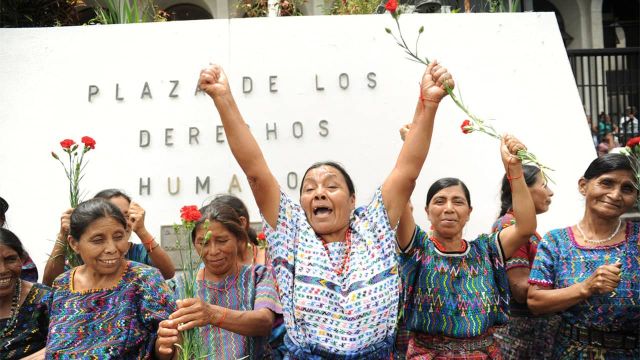
Survivors and civil society organisations, including members of the GIAI, have responded to these threats with determination and innovative solutions, demonstrating that strong collective action grounded in survivor-centred approaches can help counter these trends and advance justice.
The GIAI's mobilisation against sanctions imposed on the International Criminal Court (ICC) demonstrates the importance of collective action in preserving the integrity of the Court against political efforts aimed at weakening survivors' access to justice worldwide. Efforts to support survivors' access to international and domestic justice mechanisms through legal representation, documentation, accompaniment, and survivor-led advocacy, have also highlighted the key role survivors play as agents of change. The GIAI has further drawn attention to the essential role of transitional justice in addressing the root causes of violence and long-term consequences of atrocity crimes through support for survivor-led and grassroots initiatives advancing truth-seeking, reparation, memorialisation, and guarantees of non-recurrence.
As perpetrators move across borders, hide assets, and exploit political protection, the GIAI has emphasised the need to adapt accountability strategies beyond traditional courtroom approaches, including tracking suspects, challenging immunities, and advancing the use of universal and extraterritorial jurisdiction to hold perpetrators accountable. Against shrinking funding for human rights, it has also shown how financial investigations, asset recovery, and penalties linked to sanctions violations can support reparative efforts for survivors and affected communities. To make justice more meaningful, accessible, and credible, the GIAI has promoted survivor-centred standards for ethical, trauma-informed, and gender-sensitive engagement with survivors.
At the same time, the GIAI has continued to contribute to shaping legal and policy frameworks that make accountability possible, from efforts to strengthen standards on crimes against humanity and immunities to engagement with the European Union on victims' rights, participation, and reparation.
This moment demands political courage, sustained investment, and genuine partnership with civil society, survivors, and affected communities.
The European Union and its Member States have a particular responsibility to defend the international justice system they helped build and uphold the rule of law, peace, and human dignity. They must use all tools at their disposal to support survivors and strengthen collective efforts to secure accountability for the gravest crimes. Europe's commitment to justice cannot be selective. The credibility of the EU's human rights policy depends on its consistent and unequivocal support for accountability everywhere.
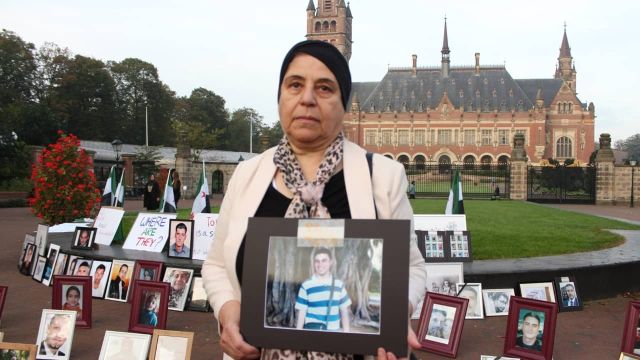
“We don’t want to worry about religious rites or about skeletons... What we really want is accountability,” said the mother of a disappeared person from Sri Lanka.
When States undermine the ICC, they do not simply weaken an institution; they harm us, making the possibility of accountability fragile and conditional. States Parties have both the authority and the responsibility to strengthen and defend the Court, so that it can protect every individual who has become a victim of atrocity crimes. Lala Abgaryan, an Armenian victim.
On this EU Day Against Impunity, the GIAI calls on the European Union and its Member States to:
- Defend the independence of the ICC, the European Court of Human Rights and other regional courts and accountability mechanisms, and oppose all forms of political interference and intimidation, including sanctions, as well as any attempt to undermine their authority and independence and the international and regional instruments they are meant to enforce;
- Strengthen national capacities to investigate and prosecute international crimes, including through universal jurisdiction and the promotion and ratification of the Ljubljana-The Hague Convention;
- Ensure survivor-centred, trauma-responsive, gender-sensitive, and intersectional approaches across all accountability, reparation, and transitional justice processes;
- Strengthen and operationalise the EU Transitional Justice Policy through sustained political and financial support for survivor-led, grassroots, and locally owned initiatives promoting truth, reparation, memorialisation, institutional reform, and guarantees of non-recurrence;
- Safeguard past and ongoing transitional justice gains by supporting memorialisation, truth-seeking, reparation, and institutional reform processes, and by opposing efforts to deny, revise, or legitimise atrocity crimes and their perpetrators;
- Expand support for reparation, including through the responsible use of individual targeted sanctions and asset recovery measures linked to international crimes;
- Protect civil society organisations, human rights defenders, and survivor-led initiatives working on accountability, including by providing sustainable funding;
- Guarantee long-term political and financial support for international justice and human rights institutions and mechanisms.
The GIAI remains committed to ensuring that international justice delivers to those who need it most: survivors, affected communities, and future generations.