



Parliamentarians for Global Action notes with great concern the deposit of the instrument of withdrawal from the Rome Statute by Chad, as notified to the United Nations Secretary General on 27 July 2026. This decision significantly undermines the considerable efforts of parliamentarians in Chad and globally to raise awareness of the Rome Statute system and promote its implementation at the national level.
The Government of Chad has justified its withdrawal on the grounds that the “Court’s judicial activity […] is being used for political purposes,” resulting in what it describes as selectivity and “inconsistent effectiveness.”
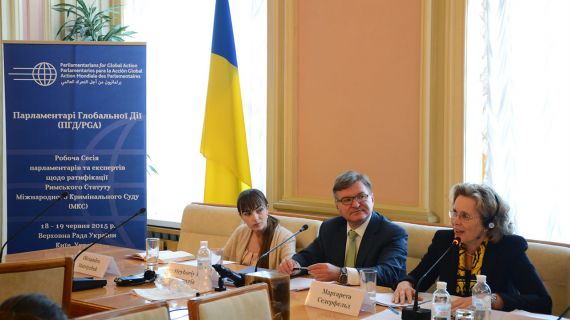
Parliamentarians for Global Action regularly engages in dialogue with parliamentarians worldwide to address precisely these criticisms and misconceptions:
- The Court operates under the principle of complementarity: it does not displace national jurisdictions but intervenes only where States are unwilling - or genuinely unable - to investigate and prosecute, or to complement domestic efforts in the most complex cases.
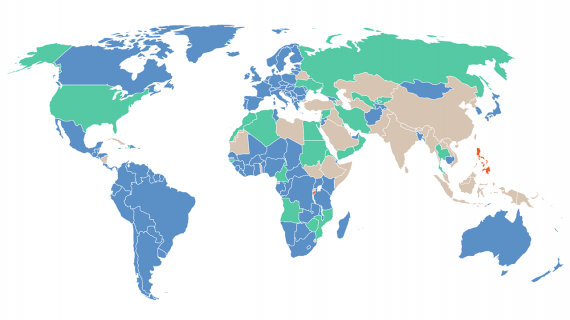
- Far from retreating, the Court has never been more active, with 13 ongoing investigations on all continents (one in the Americas, six in Africa, three in Asia, and two in Europe). States Parties themselves referred a majority of the investigations under Article 14 of the Rome Statute, demonstrating the confidence they place in the Court’s mandate and the need for accountability that they themselves have identified.
Recent months have witnessed substantial progress in ICC cases and investigations, including the issuance of reparations orders for victims, the conclusion of confirmation of charges, the conclusion of preliminary examinations, and the issuance of arrest warrants (the majority of which are under seal).
Chad’s ratification of the Rome Statute has been pivotal to uphold accountability both nationally and regionally. Chad’s cooperation with the Court has been instrumental in enabling Sudanese survivors to pursue justice, and it is crucial that communities of victims retain access to these mechanisms. At a time of rising global impunity, I am deeply concerned that my country is choosing to isolate itself from the international justice community. I urge members of the National Assembly to call on the government to reverse its decision, for Chadians, and for the cause of justice. Hon. Théophile Yombombe, former parliamentarian (Chad) and former PGA member
This decision also comes in a context of unprecedented pressure against the Court, including recent calls by the U.S. administration to “dismantle the ICC,” and a series of withdrawals from and Venezuela, threatening to erode the universal framework essential for ending impunity. The effectiveness of the Rome Statute system relies fundamentally on progress towards universality— ratifications that extend the Court's jurisdictional reach — and the cooperation of States Parties (mandatory under the Rome Statute, Article 86). Such withdrawals therefore risk perpetuating impunity and leaving communities of victims without recourse.
Equally important, in a context where the quality of democracy and the human rights situations are deteriorating globally, including in Chad, withdrawing from the Rome Statute raises deep concerns about respect for the rule of law at national and international levels, and ultimately, accountability.
Nevertheless, as provided by the Rome Statute, the withdrawal will only become effective in one year, namely on 27 July 2027. Until then, Chad remains bound by all its international obligations under the Rome Statute.
Parliamentarians for Global Action urges:
- Members of the National Assembly to engage in a national dialogue, involving national civil society organizations and national and international experts, to reassess this decision and work with its government to reverse the withdrawal notification and preserve Chad’s commitment to international justice.
- Members of parliaments worldwide to engage with Chad representatives, raising awareness about the Rome Statute system and the role of the Court, and encouraging Chad to remain a State Party.