


Afghanistan’s Human Rights Crisis: Afghan Women MPs Address the European Parliament
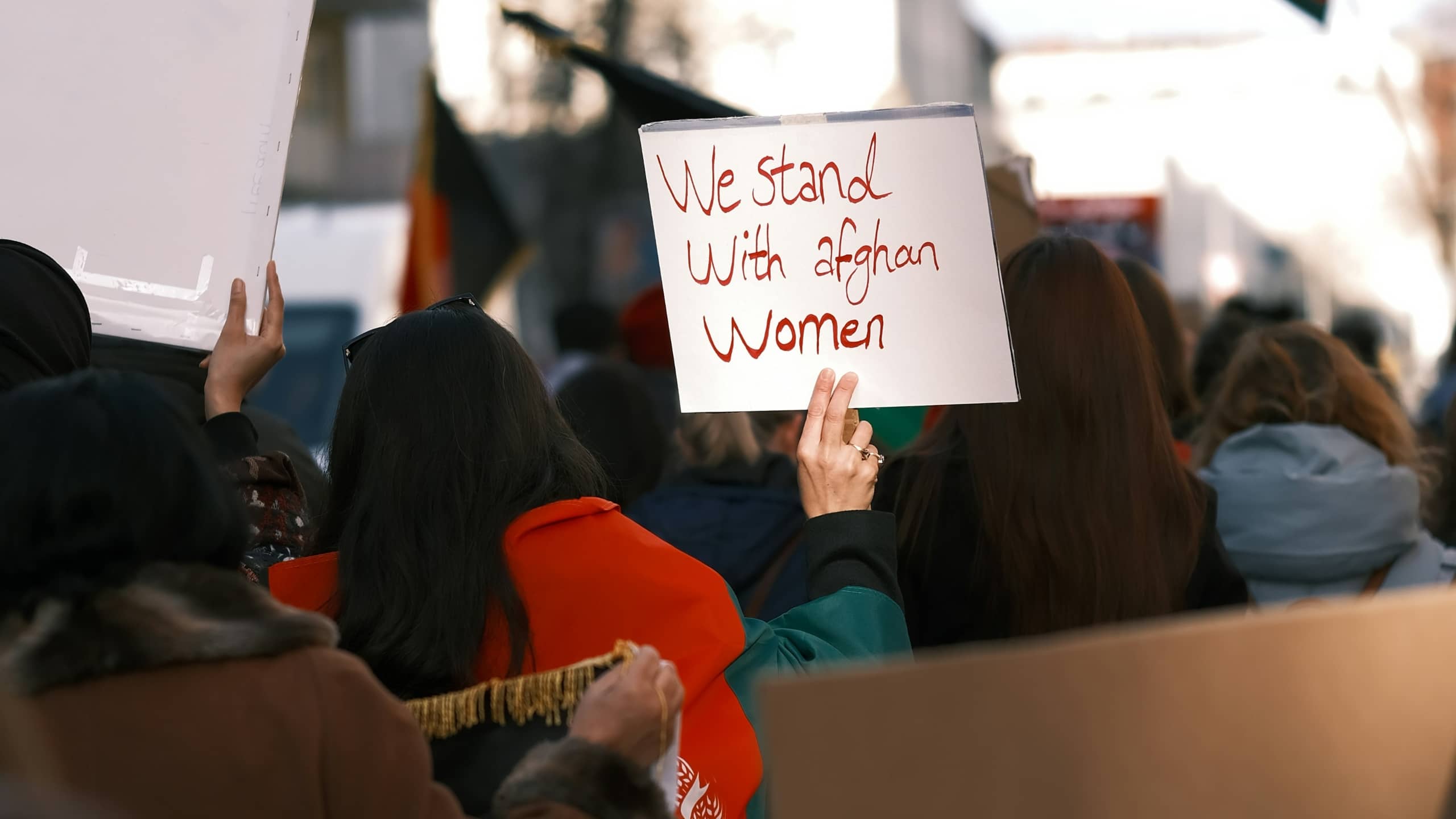
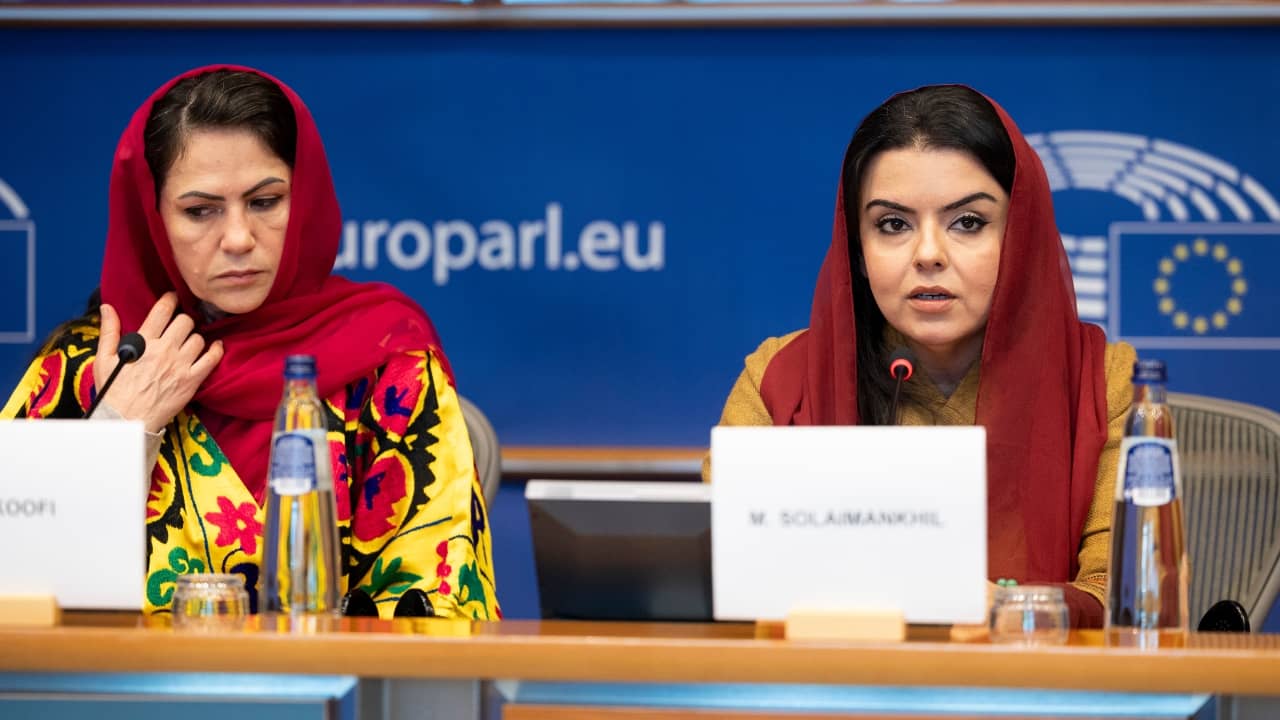
On 18 March 2026, Afghan women parliamentarians, forced into exile since the Taliban’s takeover in August 2021, spoke at a session of the European Parliament’s Subcommittee on Human Rights (DROI). The event was organized in partnership with Parliamentarians for Global Action (PGA) and focused on the increasingly alarming and ongoing worsening of human rights and the humanitarian situation in Afghanistan. Through poignant testimonies, Hon. Fawzia Koofi and Hon. Mariam Solaimankhil, PGA member, demanded justice for Afghanistan and called on the international community to stand with Afghan civilians, especially women and girls who have been banned from public life since the Taliban’s return to power.
Women’s Rights as First Priority
Since August 2021, the Taliban have issued over 100 decrees establishing a systematic oppression of women and girls in their daily lives. While 21 March traditionally marks the start of the education year in Afghanistan, Hon. Fawzia Koofi solemnly highlighted that this date marks the fifth anniversary of the ban of girls from secondary schools and universities. This prolonged deprivation of their right to education has had devastating consequences, both in their overall development and their health, including mental health. Furthermore, the shortage of female doctors, in a country where the health system is already on the brink of collapse, coupled with the institutionalized system of gender-based oppression and violence, poses grave risks to the lives of Afghan women and girls.
The latest Taliban measure, Decree No. 12, further diminishes their rights by legitimizing psychological and sexual violence, criminalizing severe domestic violence. When seeking justice, the decree places serious obstacles on women, such as the requirement to be accompanied by a male guardian (who could as well be the perpetrator of the crime). Women who visit a relative’s home without the permission of their husbands may face jail, as well as relatives who shelter them. “The Taliban question the very existence of women as a gender, as human beings,” said Hon. Koofi.
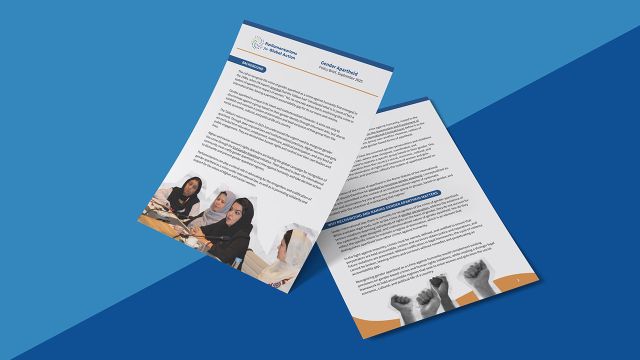
She cautioned the international community against normalizing gender apartheid and letting the Taliban use women’s rights as a bargaining chip in negotiations. “Let’s not normalize this reality (...) we must hold them accountable.”
Demanding Accountability and a Democratic Future
The visit of Hon. Koofi and Hon. Solaimankhil to Brussels is marked by the intensification of geopolitical crises, including the recent declaration of open war between Afghanistan and Pakistan, as well as in Iran, where Afghan refugees face increasingly precarious conditions. The delegates condemned recent attacks and violations of international humanitarian law, especially regarding civilian casualties, which they attribute to the absence of a legitimate government and the Taliban’s policies. Pointing at the devastating airstrike on a rehabilitation center in Kabul, which killed more than 400 people on 16 March 2026, Hon. Solaimankhil reminded that civilians consistently bear the brunt of violence and instability: “When instability spreads, when borders become battlefields, when governments collapse, it is always the ordinary people who suffer first.”
Addressing members of the European Parliament, she emphasized the urgent need to effectively focus on the situation in Afghanistan to avoid spillover effects in the region. “The world must begin preparing for a future beyond the Taliban,” she stated, outlining three foundations for the country’s future: legitimacy (a democratic government through free and fair elections), inclusion (of all communities, especially women), and rights (girls returning to school, women returning to public life).
Hon. Koofi and Hon. Solaimankhil welcomed recent progress on international accountability, expressing gratitude to the European Union for sponsoring the investigative mechanism for Afghanistan in October 2025, which now requires sufficient funding and support from UN Member States to become operational. They emphasized the importance of such developments for Afghans, whose demands for justice remain strong, as evidenced by the widespread anticipation generated by arrest warrants for two senior Taliban leaders, issued by the International Criminal Court (ICC). Meanwhile, they urged the international community to accelerate efforts for a potential case at the International Court of Justice (ICJ) to hold Afghanistan accountable under the Convention on the Elimination of All Forms of Discrimination against Women. “We must use these institutions to protect us,” Hon. Koofi stated.
EU Support for Afghanistan
Members of the European Parliament reaffirmed Europe’s support for Afghanistan, where more than 22 million people currently need humanitarian assistance. Visibly moved, they reiterated their solidarity, committing to keep Afghanistan at the forefront of the international agenda and asserting that the situation, especially that of women and girls, will never be normalized. The EU Special Envoy for Afghanistan, Mr. Gilles Bertrand, indicated that the EU has provided over €1 billion in humanitarian and development aid to Afghanistan, following a “for women, by women” approach that particularly supports women-led businesses. He confirmed the EU’s commitment to sustain its engagement, including through its presence in the country. “We cannot forget what is happening in Afghanistan," he said, underlining that the EU follows a principled approach, centered on the Afghans’ human needs.
Call to Action
Afghan parliamentarians in exile stressed that Afghanistan has become a test case for the international community’s commitment to fundamental human rights principles. They urged the European Parliament, EU member states, and parliamentarians to translate their words of solidarity into concrete action:
- Uphold a principled stance on women’s and girls' rights: make women's rights a non-negotiable agenda item in any engagement with Afghanistan’s de facto authorities.
- Strengthen accountability and justice processes, including by supporting the recognition and codification of gender apartheid, ensuring funding for the accountability mechanism for Afghanistan, supporting ongoing investigations at the ICC, and advancing accountability efforts before the ICJ.
- Guarantee humanitarian assistance that benefits women and girls equally.
- Support Afghans, including women parliamentarians and human rights defenders.
- Adopt policies that reflect the severity of the human rights crisis in Afghanistan, avoiding any measures that could be interpreted as suggesting that the country is safe for returns, especially for women and girls.
“Women's rights in Afghanistan and human rights are directly linked to a legitimate government that embraces the diversity of Afghanistan. Afghanistan is one of the most diverse countries in the world, with 29 languages and many ethnic and religious groups. We all must work for a government that is representative of that diversity and inclusive of women,” Hon. Koofi concluded.
Examples of recent parliamentary actions taken by members of the European Parliament:
- Resolution on the Situation in Afghanistan: supporting women and communities affected by the recent earthquakes (9 October 2025)
- Resolution on The deteriorating situation of women in Afghanistan due to the recent adoption of the law on the “Promotion of Virtue and Prevention of Vice” (19 September 2024)
- Resolution on The repressive environment in Afghanistan, including public executions and violence against women (14 March 2024)
Examples of parliamentary questions asked by members of the European Parliament:
- Forced returns of Afghan women to Afghanistan under Taliban rule (11 November 2025)
- EU evacuations of Afghans at risk (24 March 2025)
- New Afghan morality law or law of silence, the culmination of a regime of ‘gender apartheid’ (5 September 2024)