


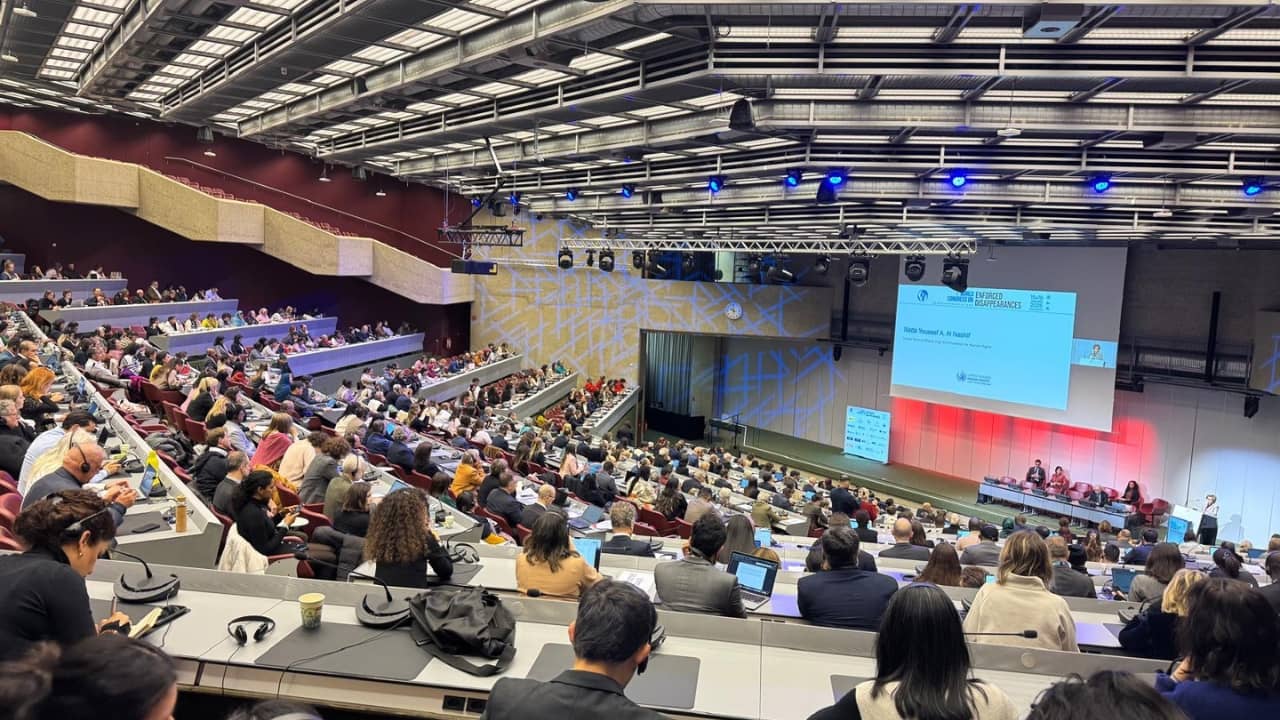
On 15 and 16 January 2025, Geneva hosted the first World Congress on Enforced Disappearances, convening survivors, civil society organizations, States, international bodies, and experts to discuss concrete steps to promote the universal ratification of the International Convention for the Protection of All Persons from Enforced Disappearance. Ratified by only 77 UN Member States, the Congress highlighted the urgent need to intensify efforts to promote the ratification of this crucial instrument, which prevents and combats impunity for the crime of enforced disappearance, protects the rights of victims, and strengthens the rule of law.
Enforced disappearance is defined in Article 2 of the Convention as “arrest, detention, abduction or any other form of deprivation of liberty by agents of the State or by persons or groups of persons acting with the authorization, support or acquiescence of the State, followed by a refusal to acknowledge the deprivation of liberty or by concealment of the fate or whereabouts of the disappeared person, which place such a person outside the protection of the law.” This grave violation of human rights, which persists globally, can amount to crimes against humanity when carried out systematically or on a large scale (Article 5 of the Convention).
In its continued fight against impunity, reinforced by its involvement in the CSO-led Global Initiative Against Impunity – Making Justice Work, PGA’s Rome Statute Campaign reaffirms its support for the message the World Congress conveys: enforced disappearances are unacceptable under any circumstances.
On this occasion, PGA was represented by two of its distinguished members, Mr. Vladimir Vardanyan, MP (Armenia), and Senator Boris Dittrich (the Netherlands), underscoring the crucial role parliamentarians play in driving positive change.
During the session titled “Advocacy Towards Universal Ratification: Successful Strategies,” panelists shared experiences and best practices from promoting key international human rights treaties, such as the Convention Against Torture and the Second Optional Protocol to the International Covenant on Civil and Political Rights (ICCPR), aiming at the abolition of the death penalty. Ms. Mary Aileen Diez-Bacalso, Honorary President of the International Coalition Against Enforced Disappearances and Executive Director of Forum-Asia, emphasized the indispensable role of survivors and human rights defenders, noting that their narratives form the backbone of advocacy efforts for ratification. Contributing to the discussion, Mr. Vladimir Vardanyan highlighted the importance of political will in advancing human rights treaty ratifications. Drawing on Armenia’s recent ratification of the Second Optional Protocol to the ICCPR, he advocated for incentivizing States to ratify the Convention on Enforced Disappearance through strategic mechanisms. He cited the connection between Armenia’s ratification and its Council of Europe membership, which was conditioned on the abolition of the death penalty, as an example of leveraging political and institutional advantages to encourage commitments to international treaties.
The session on “The Case for Ratification and Implementation of the Convention: Why All States are Concerned – A Learning Exchange” provided a platform for States to convey their experiences and best practices in ratifying and implementing the Convention at the domestic level. Representatives from Argentina, Bangladesh, Belgium, Denmark, France, the Gambia, Mauritania, Mexico, Morocco, Samoa, South Africa, and Spain informed the audience about their respective journeys to ratification and underscored the need for collective efforts to achieve universal ratification. In this session, Senator Boris Dittrich stressed the importance of collaboration in addressing enforced disappearances and standing in solidarity with survivors and communities of victims alongside civil society organizations. He also shared insights into his country’s legislative processes for ratifying international treaties, and emphasized that parliamentarians can play a pivotal role by introducing resolutions or motions to prioritize and ensure parliamentary support, thereby upholding international human rights.
The first World Congress on Enforced Disappearance marked a critical step in the collective efforts to combat this crime. The insights, strategies, and recommendations shared during the sessions underscore the need to mobilize political will and relevant stakeholders, including parliamentarians, to foster global solidarity and ensure justice.