


We, the undersigned national and international civil society organisations and human rights defenders, express our grave concerns regarding reports of a possible official visit of representatives of the Taliban to Brussels in June 2026.
It is important to recall that the Taliban do not represent the people of Afghanistan, as they lack domestic democratic legitimacy. Their authority has not been established through any participatory, inclusive, representative, or constitutional process.
Two senior Taliban leaders are currently subject to arrest warrants issued by the International Criminal Court for the crime against humanity of persecution on gender grounds, and multiple individuals associated with the Taliban remain listed under international sanctions regimes, including those of the European Union.
In this context, any official engagement with Taliban representatives, particularly on European soil, carries significant legal, political, and symbolic implications. It risks being perceived as a form of normalisation or implicit recognition.
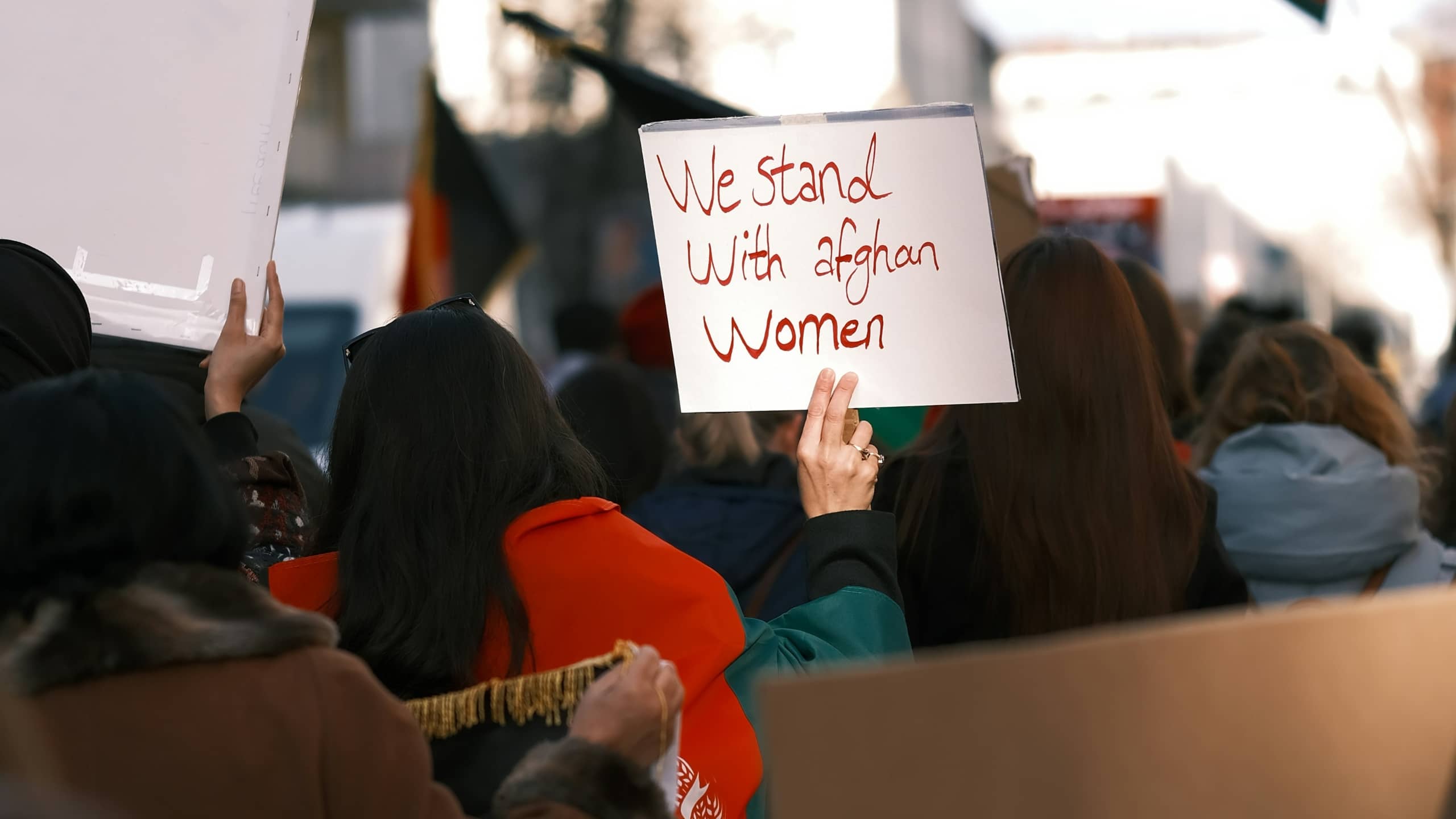
Since August 2021, the Taliban have implemented a wide range of policies, decrees, and institutional measures that have resulted in the systematic dismantling of fundamental rights and freedoms. Women and girls have been almost entirely excluded from public life, including through bans on secondary and higher education, and severe restrictions on employment, freedom of movement, and participation in civic and political spaces.
These measures, when viewed collectively, have been assessed, in addition to the International Criminal Court, by various United Nations human rights experts and legal scholars as potentially amounting to gender persecution as a crime against humanity under international law.
In addition, there have been consistent reports of serious human rights violations, including: arbitrary detention; enforced disappearance; extrajudicial killings; torture and ill-treatment; and reprisals against human rights defenders, journalists, and former public officials. The lack of transparency and independent monitoring mechanisms makes the full scale of these violations difficult to verify, yet available evidence indicates a deeply concerning and ongoing pattern. What is certain is that there has been no accountability for the victims and survivors of the above-referenced serious human rights violations and potential international crimes.
Recent legal and judicial frameworks introduced under Taliban rule have further restricted access to justice, undermined due process guarantees, and institutionalised discriminatory practices, particularly against women and girls.
We are also deeply concerned about ongoing and proposed policies related to the forced return of Afghanistan asylum seekers from EU member states. Any forced returns of individuals to Afghanistan under the current conditions would raise serious concerns under international law, including the principle of non-refoulement. This concern is particularly acute for women and girls, whose lives, safety, and fundamental rights are at immediate and systemic risk under Taliban rule. Afghanistan is currently one of the most dangerous places in the world to be a woman, and forced return would expose many to persecution, violence, and severe deprivation of rights.
We, therefore, call on the European Union and its member states to:
- Refrain from engaging with Taliban representatives at political or diplomatic levels under current conditions, as such engagement risks contributing to the normalisation and implicit legitimisation of a situation marked by ongoing serious human rights violations, including the systematic oppression of women and girls;
- Recognise that the minimum conditions often cited by the EU for engagement — including respect for fundamental rights, particularly women's rights — are not currently met, and that proceeding despite this would undermine the European Union's human rights commitments;
- Actively support international justice efforts addressing serious human rights violations and potential international crimes, in particular gender persecution, including through effective cooperation with the International Criminal Court in its Afghanistan investigation, to ensure that accountability is not sidelined in favour of political or migration-related considerations;
- Publicly and unequivocally affirm that the rights of Afghan women and girls are non-negotiable, and cannot be compromised or used as a bargaining chip in the context of diplomatic engagement or migration policy;
- Actively support strategic litigation avenues, including through universal and extraterritorial jurisdiction mechanisms, to strengthen victims' access to effective remedies for serious international crimes and to contribute to the judicial accountability of alleged perpetrators;
- Immediately halt any forced returns of Afghanistan asylum seekers, in full compliance with the principle of non-refoulement, recognising that return under current conditions would expose individuals — particularly women and girls — to persecution and serious harm;
- Ensure that no individual associated with the Taliban authorities, or any individual against whom credible allegations of serious human rights violations have been made, is received, hosted, or engaged in any form of cooperation or consultation;
- Engage in structured and meaningful consultation with Afghan civil society, victims, and women human rights defenders, to ensure that their perspectives directly inform EU policy decisions.
Failure to uphold these principles risks further entrenching impunity, undermining the credibility of the European Union's commitment to human rights and gender justice, and abandoning Afghan victims and survivors at a critical moment.
We stand ready to engage constructively with European and international partners to ensure that any response to the situation in Afghanistan is grounded in accountability, justice, and the protection of fundamental rights.
- Afghanistan Canada Culture (ACC)
- Afghanistan Cinema House
- Afghanistan Civil Society Forum Organization (ACSFo)
- Afghanistan Community Foundation (ACF)
- Afghanistan Democracy and Development Organization (ADDO)
- Afghanistan Freedom Struggle Network
- Afghanistan Service, Cultural and Rehabilitation Organization
- Afghanistan Sociological Association
- Afghanistan Transitional Justice Coordination Group (ATJCG)
- Afghanistan Women's Light Freedom Movement
- Afghanistan Women's New Future Movement
- Afghanistan Women's Political Participation Network
- Afghanistan Women's Solidarity Movement
- Afghanistan's Powerful Women's Movement
- Afghan Canadian Civil Society Forum (ACCSF)
- Afghan Human Rights Defenders in Exile (AHRDE)
- Afghan Women Education and Vocational Services Organization (AWEVSO)
- Afghan Women News Agency (AWNA)
- Afghan Youth in New Era Organization (AYNEO)
- Alternative Links for Training and Development
- Armanshahr / OPEN ASIA
- Assembly of Scientists and Experts of Afghanistan (ASEA)
- Association of Women in Radio and Television (AWRT-K)
- AWA Legal and Social Foundation
- AWPPN
- Balkh Women's Movement
- Borderless Amu Movement (BAM)
- Civil Society and Human Rights Activists Network
- Civil Society and Human Rights Network (CSHRN)
- Development and Support of Afghan Women and Children Organization (DSAWCO)
- Dialogue Hub for Common Ground
- Digital Civil Society Institute (AZADY)
- Equality Social and Cultural Organization (ESCO)
- Ertebat Organization
- EU Hope
- EVE: Voice for Women's Rights
- Fatema Foundation
- FARAGEER (Women Global Forum for Afghanistan)
- FARKHUNDA MOVEMENT
- Fekresabz Organization (FSO)
- Feminine Solidarity for Justice Org (FSJO)
- Free People Movement in Exile
- Free Watch Afghanistan Organization (FWA)
- G+ Generation Positive Organization
- Generation of Peace Society (GPS)
- Global Campaign Against Gender Apartheid
- Herat Citizens' Social Association
- Human Rights Defenders Plus (HRD+)
- Incident Prevention & Assist the People Organization (IPAPO)
- Independent Coalition of Afghanistan Women's Protest Movement
- Independent Cooperation for Change Organization (ICCO)
- Mawoud Academy
- Movement's Yell Movement
- National Anti-Discrimination Process (NADP)
- Network of Afghan Women in Urban Governance
- New Generation Network for Change (NGNFC)
- No to Rigor Organization (NRO)
- Paikan TV
- Peace & Sport Organization
- Peace and Human Rights Dialogue Center
- Radio Nehad Network (RNN)
- Rawzana Omid Social Organization
- Shahrvand Social and Legal Research Organization (SSLO)
- Stichting voor Afghanistan (SVA)
- Sunrise of Freedom
- Tabesom Cultural and Social Services Institute
- Together for Equality Organization
- Tolo Social and Civic Organization (TSCO)
- Wahaj Welfare Organization for Afghanistan
- Women Media Advocacy Group
- Women Organization for Rights, Dignity and Speech (WORDS)
- World Council of Panjshirians
- Women's Freedom Organization
- Women's Justice Movement
- Women's Motion Network (WMN)
- Youth and Children Development Program (YCDP)
- International Federation for Human Rights (FIDH)
- Aide aux Personnes Déplacées
- Civil Rights Defenders (CRD)
- Global Initiative Against Impunity (GIAI)
- Human Rights Activist Union (HRAU)
- Parliamentarians for Global Action (PGA)
- Women's Initiative for Gender Justice (WIGJ)