


Centering survivors and strengthening justice: The GIAI's global impact
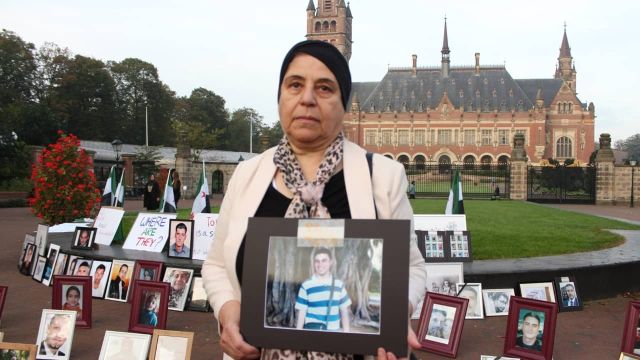
17 July 2026 — When national systems cannot or will not investigate the gravest crimes, international justice helps ensure that no one is beyond the reach of the law. For many victims and survivors who have been denied justice for years, sometimes decades, it provides a pathway to truth, recognition and accountability. International justice is not a political preference; it is a cornerstone of peace, human dignity and the rule of law. It requires sustained commitment and protection to counteract a growing global culture of impunity.
On the Day of International Criminal Justice, the Global Initiative Against Impunity (GIAI) is highlighting the impact of its work across 28 priority country situations, advancing accountability for international crimes while placing victims and survivors at the centre of these efforts.
GIAI brings together a civil society-led consortium spanning Africa, the Americas, Asia, Europe and MENA, connecting survivors and local organisations to justice and accountability mechanisms at every level. The work runs from psychosocial and non-legal support through to strategic litigation, documentation, advocacy and direct financial support to frontline organisations.
The numbers tell part of the story:
- More than 2,000 victims and survivors supported
- 186 local civil society organisations collaborating with the programme
- 990 serious human rights violations documented in 2025 alone
- 53 complaints and communications filed
- 80+ locally-driven grants delivered across Africa, the Americas, Asia, Europe and MENA
Each of these figures is driven by movements on the ground.
Indigenous Maya Achi women secured convictions against three additional perpetrators in 2025 for crimes against humanity and sexual violence and 19 total reparations measures before Guatemala's highest court, after decades of mobilisation. Following sustained advocacy and technical support, Ukraine and Armenia successfully ratified the Rome Statute. The Lumbala trial in France marked the country's first universal jurisdiction case relating to events in the DRC, featuring more than 65 testimonies and 35 civil parties and challenging decades of long-standing impunity. The French Supreme Court issued a landmark 2025 ruling rebuking functional immunities in international crimes cases.
Across the consortium's work, GIAI members submitted 63 recommendations to justice providers and policymakers, helped advance 12 European Parliament resolutions, and shaped 16 laws and policies on gender-based violence and gender-transformative justice. The Consortium further expanded access to international justice knowledge through nearly 500 resources on MakingJusticeWork.org, now serving more than 2,500 registered users across the accountability field.
The GIAI shows what civil society can achieve when survivors are placed at the centre, and it lays the groundwork for the justice still to come.
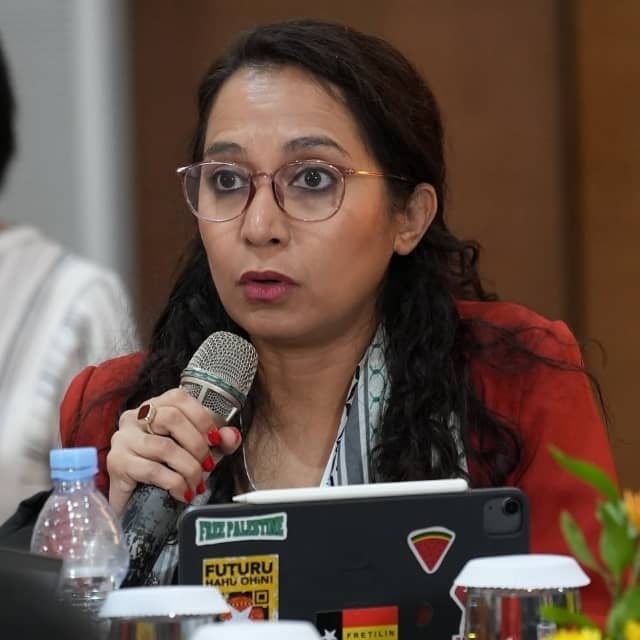
“On International Criminal Justice Day, we reaffirm our commitment to the principles that inspired the Rome Statute: accountability, the rule of law, and the conviction that no individual or State should stand above international law.
For countries such as Timor-Leste, whose people have endured the devastating consequences of conflict and impunity, international criminal justice is not an abstract legal concept. It is rooted in our own history and in our continuing belief that lasting peace can only be built upon truth, justice, and accountability.
Timor-Leste’s ratification of the Kampala Amendments on the crime of aggression represents an important contribution to strengthening the international legal order. It reflects our belief that acts of aggression—the gravest violations of the United Nations Charter—must never go unpunished. We encourage all States that have not yet done so to ratify the Kampala Amendments and support efforts to ensure that the International Criminal Court can exercise its jurisdiction over the crime of aggression on a footing consistent with the other core crimes under the Rome Statute.
The international community must continue working to close the accountability gap that still leaves too many victims and survivors of aggressive wars without effective justice. A stronger, more coherent system of international criminal justice is essential not only for accountability but also for the prevention of future conflicts.
On this International Criminal Justice Day, let us renew our collective commitment to defending international law, protecting human dignity, and ensuring that justice is never determined by power, but by principle. Only through genuine international cooperation and unwavering support for accountability can we build a more peaceful and just world."
Hon. Nurima Ribeiro Alkatiri, Member of Parliament of Timor-Leste, Member of Parliamentarians for Global Action