


Loading...

Ukraine and the Rome Statute

Signature, Ratification of/Accession to the Rome Statute of the ICC
Signature Date: 20 January 2000
Ratification Date: 25 October 2024
Amendments to the Rome Statute
Ratification of the Kampala Amendment to Article 8 of the Rome Statute on war crimes [poison and expanding bullets in NIAC] (2010): No
Ratification of the Kampala Amendment to the Rome Statute on the crime of aggression reflected in Article 8 bis (2010): No
Ratification of the Amendment to Article 124 of the Rome Statute (2015): No
Ratification of the Amendment to Article 8 of the Rome Statute on war crimes [biological weapons] (2017): No
Ratification of the Amendment to Article 8 of the Rome Statute on war crimes [blinding laser weapons] (2017): No
Ratification of the Amendment to Article 8 of the Rome Statute on war crimes [non-detectable fragments] (2017): No
Ratification of the Amendments to Article 8 of the Rome Statute on war crimes [starvation as a war crime in NIAC] (2019): No
Adoption of implementation legislation of the Rome Statute of the ICC

On 20 May 2021, the Verkhovna Rada (Parliament of Ukraine) adopted the Bill no. 2689 “On amendments to certain legislative acts on the Enforcement of International Criminal and Humanitarian Law”, with 248 votes in favour out of 363 Members present. The law has yet to be signed by the President.

Cooperation Agreements
Ratification of Agreement on Privileges and Immunities of the Court (APIC): Yes. Ukraine acceded to the Agreement on Privileges and Immunities of the Court (APIC) on 29 January 2007, becoming the first and only, non-party state to the RS to do so.
Signature of Agreement of Enforcement Sentences with the ICC: No.
Signature of Agreement of Interim and Final Release with the ICC: No.
Signature of Bilateral Immunity Agreement with the USA: No.

Ratification of the Rome Statute:

As per a decision by the Constitutional Court of 2001, the Rome Statute was found to be in compliance with the Constitution of Ukraine with the exception of provisions according to which the International Criminal Court (ICC) jurisdiction is complementary to the national system (para. 10 of the preamble and Art. 17 of the RS). As such, a constitutional amendment on the complementary jurisdiction of the ICC was necessary for Ukraine to ratify the Rome Statute.

In 2016, the Parliament of Ukraine – with PGA’s involvement - amended the Ukrainian Constitution to recognize the jurisdiction of the ICC, thus removing all legal obstacles to ratification of the Rome Statute. A transitional provision was added to the amendment to article 124 of the Constitution so that such modification was due to enter into force 3 years after the publication of the law ie on 30 June 2019.

Since 30 June 2019, with all remaining constitutional obstacles removed, the Ukrainian parliament may ratify the Rome Statute. The formal ratification of the RS is subject to an active act of approval, through a law adopted by the Verkhovna Rada and signed by the President, followed by a deposit of the instrument of ratification at the UN Secretary General.

A large majority of Ukrainian officials, including the Ministry of Foreign Affairs and of Justice fully support the ratification and have expressed informally several times to civil society and EU officials that the delay was a decision of the former President of Ukraine, Petro Poroschenko. In August 2019, then Deputy Head of President Zelenskyi’s Office, Ruslan Ryaboshapka, said that one of the President’s priorities would be to ratify the ICC Rome Statute. The Ministry of Justice was ready to submit an existing draft law to the Parliament for the ratification of the RS. Such draft has been transmitted to the Office of the President in September 2019. However, it was withdrawn a year later.

Complementarity – adoption of implementing legislation

Despite the ongoing armed conflicts between (i) Ukraine and Russia and (ii) Ukrainian government forces and pro-Russian separatists in the Eastern Ukraine, triggered by the Euromaidan protests in 2014, Ukraine still lacks comprehensive legal instruments to ensure criminal accountability for the crimes committed. The current criminal code of Ukraine lacks provisions on crimes against humanity and the definition of war crimes does not fully meet the requirements of international law. Recognising the legal gap, the Chair of the Law Enforcement Committee of the Parliament of Ukraine authored draft law no. 2689 “On amendments to certain legislative acts on the Enforcement of International Criminal and Humanitarian Law”, which has been co-authored by PGA secretariat (Dr. David Donat Cattin and Ms. Frederika Schweighoferova).

On 17 September 2020, the Bill passed in its first reading by the Parliament of Ukraine. On 20 May 2021, the Verkhovna Rada (Parliament of Ukraine) adopted the Bill no. 2689 “On amendments to certain legislative acts on the Enforcement of International Criminal and Humanitarian Law”, with 248 votes in favour out of 363 Members present. However, months after its adoption, the law has yet to be signed and promulgated by the President of Ukraine in order to enter into force, or it will remain inoperative.

Under Article 94 of the Constitution of Ukraine, the President should sign the Law within 15 days from its receipt or return it to parliament for reconsideration. In the absence of action by the President in that timeframe, the Law should be considered approved and must be signed and officially promulgated. However, the effects of this article have not been triggered and the law continues being inoperative.

Cooperation legislation

Despite having ratified the APIC, and cooperating with the Office of the Prosecutor, Ukraine still lacks a set of detailed provisions allowing authorities to cooperate promptly and fully with the ICC (Rome Statute Part IX on International cooperation and judicial assistance).

In 2016, the Ukrainian Ministry of Justice, assisted by Ukrainian experts who were also engaged in the draft of the “complementarity” bill, prepared a “Draft Law on Amendments to the Criminal Procedural Code of Ukraine on Cooperation with the International Criminal Court”. After approval by the Cabinet of Ministers, the draft law was submitted to the Rada in May 2017. It was circulated to the relevant Parliamentary committees for their consideration in September 2017,  and submitted to a Committee for analysis in April 2018. However, it has not been given any consideration since, and plans from the Executive in this regard remain unclear.

ICC Preliminary investigation

On 17 April 2014 and 8 September 2015, Ukraine lodged two ‘ad hoc’ declarations under Art. 12.3 of the Rome Statute, accepting the jurisdiction of the ICC over alleged crimes committed on its territory from 21 November 2013 onwards, without ratifying the Statute, however.

On 25 April 2014, the Office of the Prosecutor of the ICC opened a preliminary examination of the situation in Ukraine. On 11 December 2020, the ICC Prosecutor announced the completion of her preliminary examination of the situation in Ukraine, having concluded that there was a reasonable basis to believe that war crimes and crimes against humanity were committed and moving forward to requesting authorisation from the Judges of the Pre-Trial Chamber of the ICC to open an investigation.

International obligations

European Union-Ukraine Association Agreement
After the Euromaidan protest movement lasting from 21 November 2013 to 22 February 2014, Ukraine and the EU entered into an Association Agreement. The Agreement imposes the obligation on Ukraine to ratify the Rome Statute through its Art. 8 which reads: “The Parties shall cooperate in promoting peace and international justice by ratifying and implementing the Rome Statute of the International Criminal Court (ICC) of 1998 and its related instruments.”

Nuremberg principles
Many of these provisions have also been long established in the Nuremberg principles (1947 United Nations General Assembly Resolution 177).

Parliamentary Assembly of Council of Europe:
PACE has called on Ukraine to ratify and implement the RS in several of its resolutions, including Resolution 2134 (2016) on Co-operation with the International Criminal Court: towards a concrete and expanded commitment; resolution on “Humanitarian consequences of the war in Ukraine” (Res. No 2198 (2018), the Parliamentary Assembly urged the Ukrainian authorities to "bring the Criminal and Criminal Procedure Codes in line with international humanitarian and international criminal law."
Status of the Rome Statute System as of October 2024:

 
States that have ratified the Rome Statute [125]
 
States that have signed the Rome Statute but have not ratified it yet [29]
 
States that have withdrawn from the Rome Statute [2]
 
States that have neither signed nor ratified the Rome Statute
 

125 countries are States Parties to the Rome Statute of the International Criminal Court. Of these, 33 are African States, 19 are Asia-Pacific States, 20 are from Eastern Europe, 28 are from Latin American and Caribbean States, and 25 are from Western European and other States.

Work of PGA in this Country:

Photo: Parliamentarians for Global Action

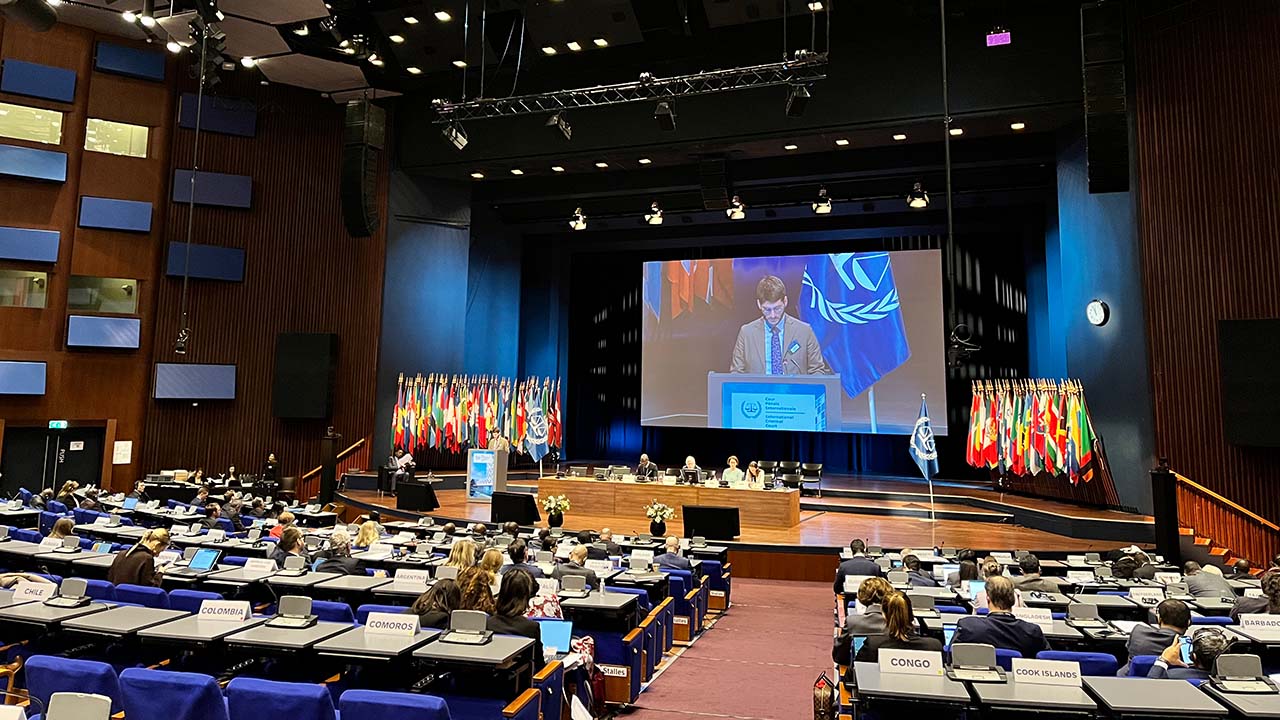
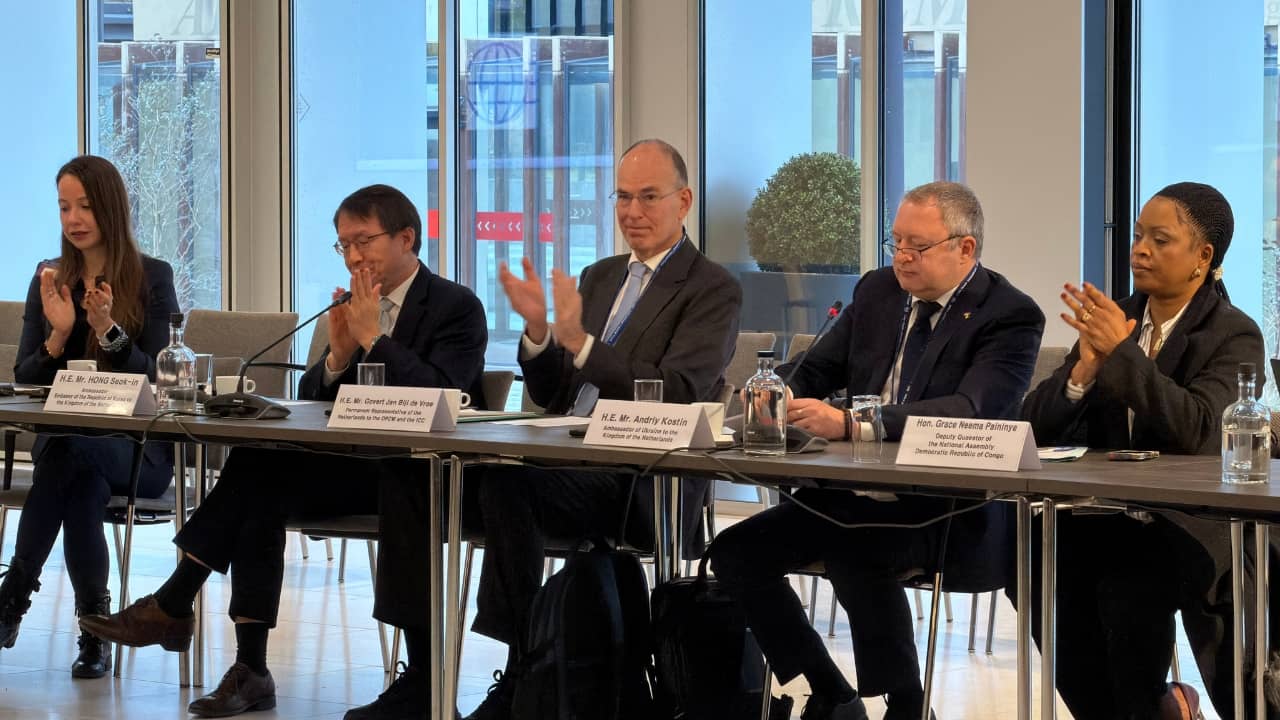
From 1 to 5 December 2025, representatives of countries who are States Parties to the Rome Statute, international organizations, and civil society met in The Hague, The Netherlands, for the 24th session of the Assembly of States Parties to the International Criminal Court.

 Photo: Pavlo Petrov / the Collection of war.ukraine.ua

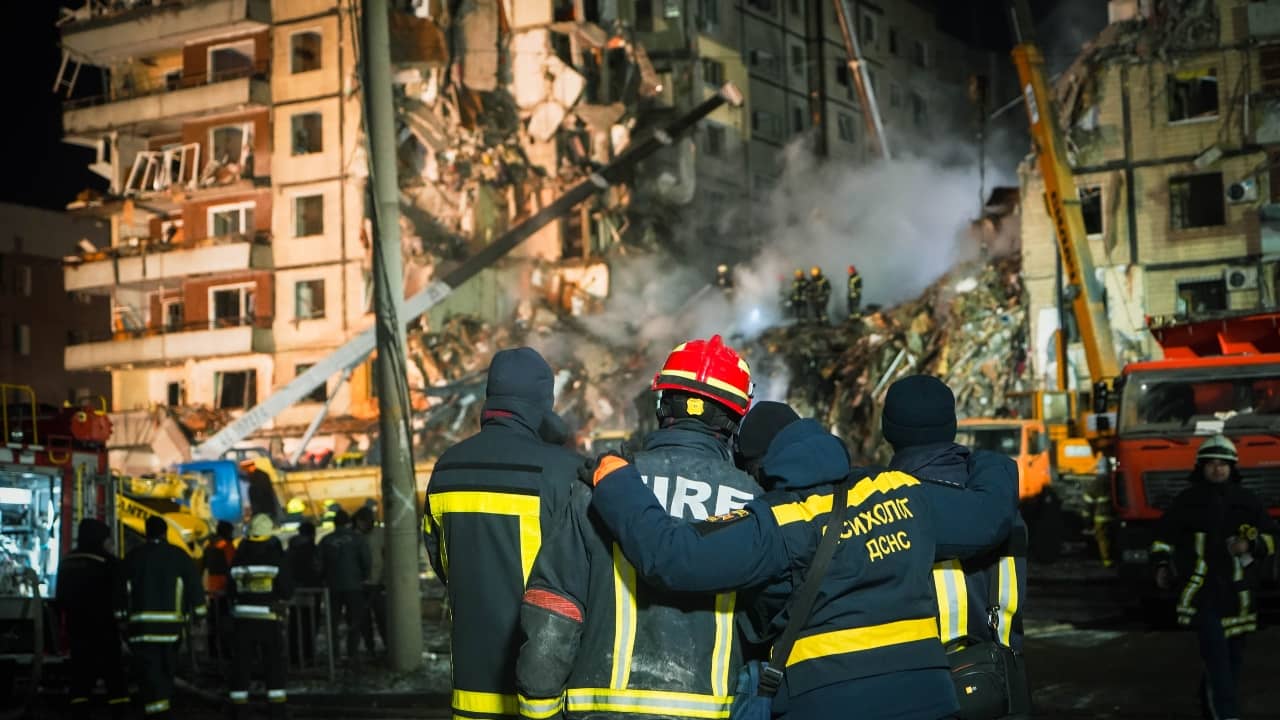
For three years now, the suffering of the Ukrainian population has reverberated far beyond the country’s borders.

Meeting of the PGA United Nations Advisory Committee and PGA Executive Committee

Highlighting progress made and remaining challenges regarding the implementation of PGA Programs

"No to War in Ukraine - 28" by garryknight is marked with CC0 1.0. To view the terms, visit https://creativecommons.org/publicdomain/zero/1.0/?ref=openverse.

On 24 February 2022, when the Russian Federation declared to the world the launch of its full-scale invasion against Ukraine. This grim date marks the beginning of a war that has actually been ongoing for a decade.

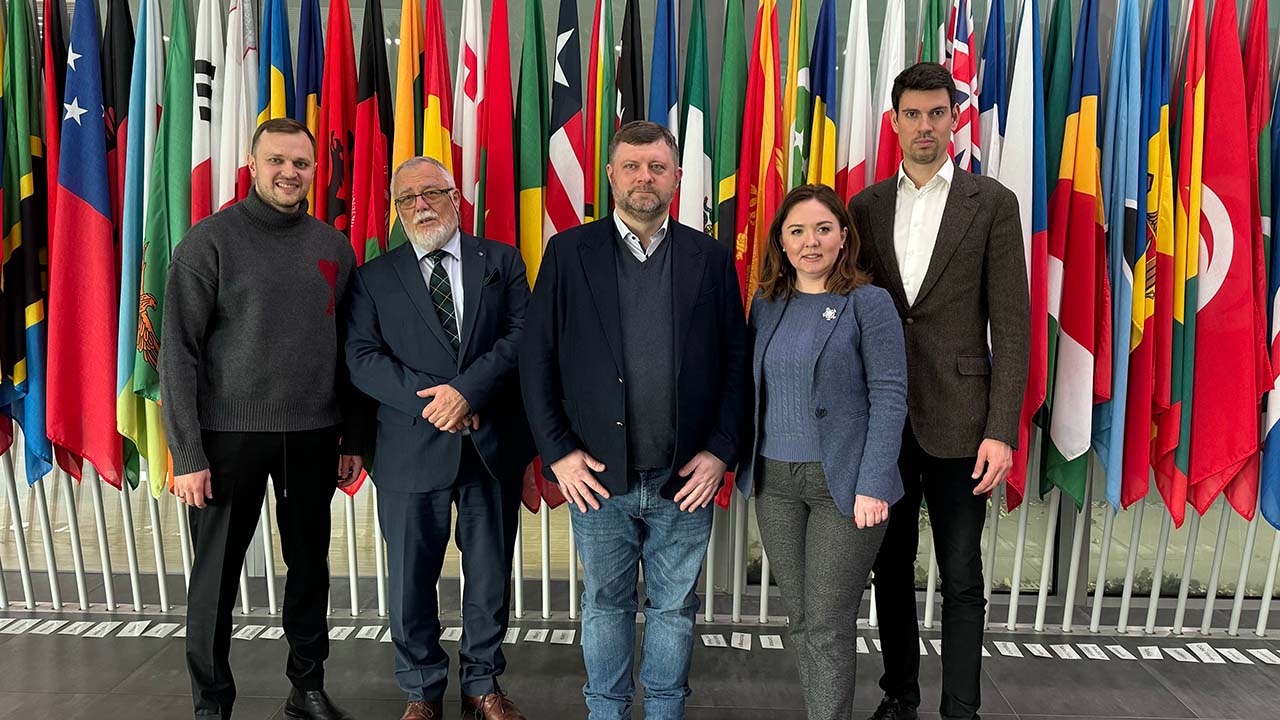
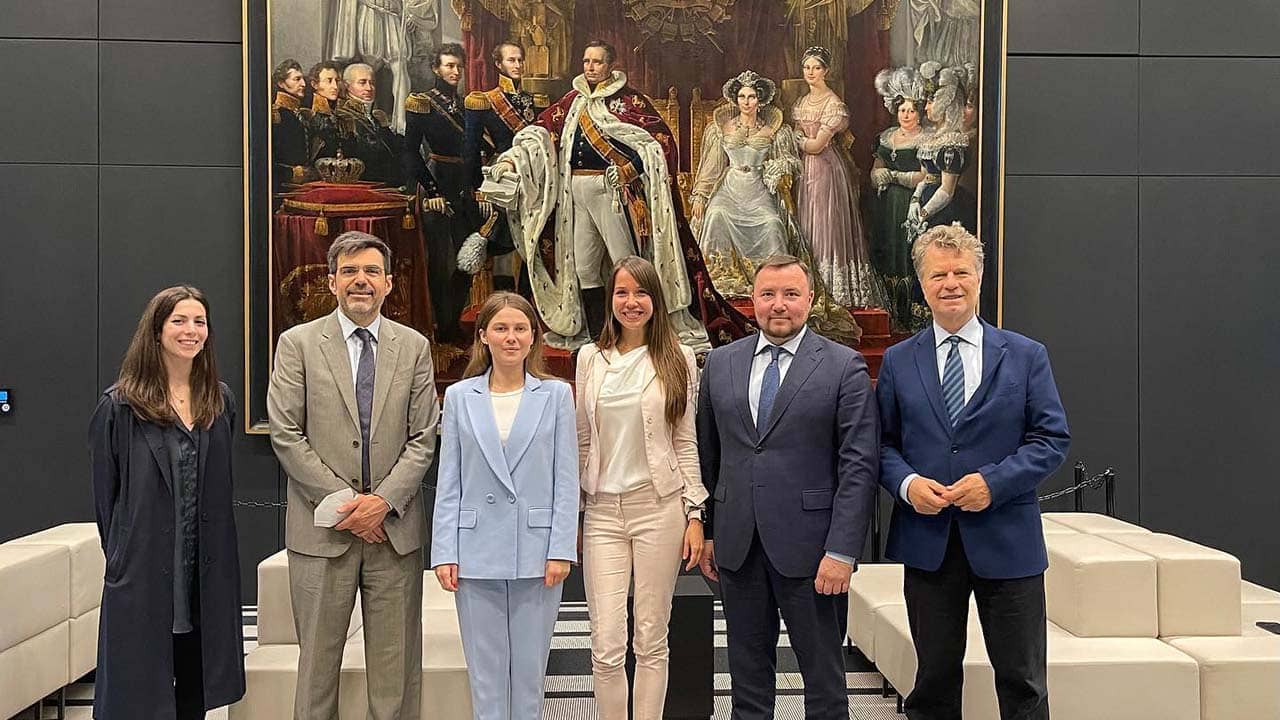
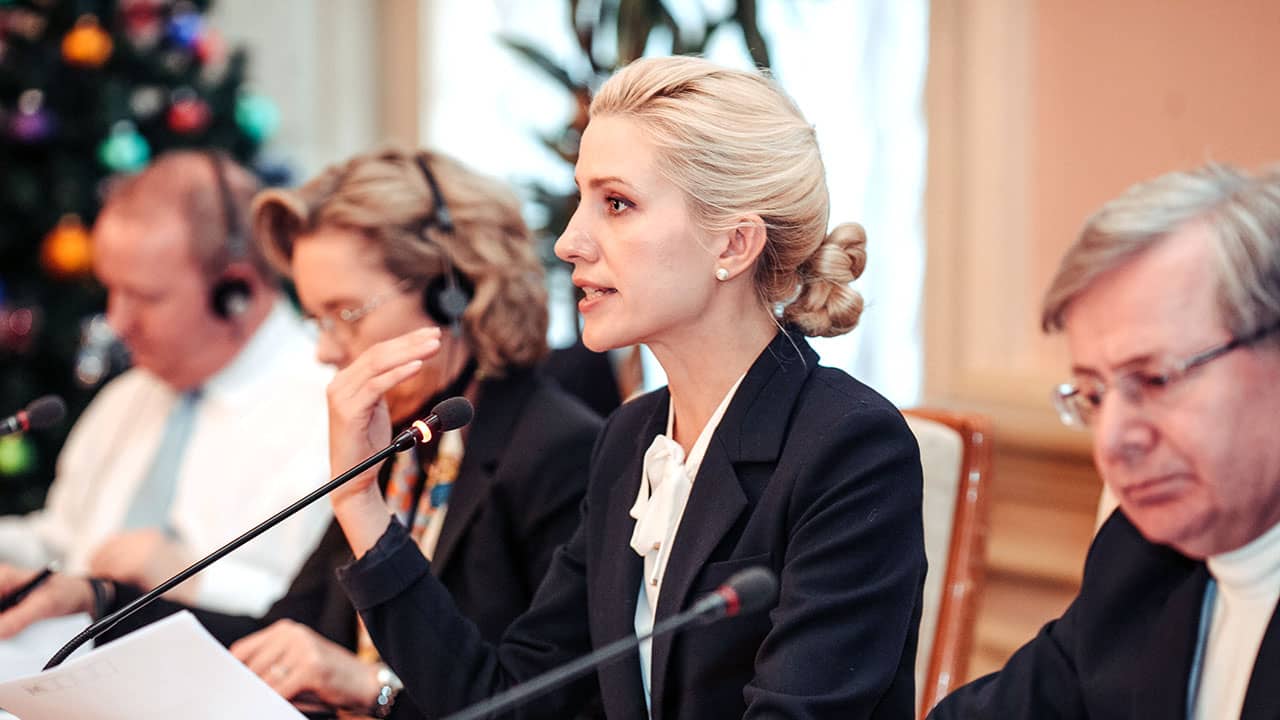
On 31 January- 1 February 2024, Parliamentarians for Global Action (PGA) facilitated a visit of a Ukrainian parliamentary delegation to the Hague

The purpose of the visit was two-fold: to advance the Rome Statute ratification and implementation process, as well as assist the Ukrainian parliamentarians in their advocacy for political support with the legislators of the Netherlands.

UN Ambassadors and Officials gather for the Strategic Meeting of the PGA United Nations Advisory Committee

– The Permanent Mission of Liechtenstein to the United Nations (UN) generously hosted the first 2023 strategic meeting of the PGA UN Advisory Committee. This informal encounter counted on the participation of UN Ambassadors and officials to discuss pressing issues for the international community.

On 5-9 December, Parliamentarians for Global Action (PGA) participated in the 21st session of the Assembly of States Parties (ASP) of the International Criminal Court

PGA organized two critical side events on 8 December, which provided concrete reflections on serious issues faced by the Rome Statute system. Both events gathered high-level participation from the ICC and States representatives, as well as other civil society organizations.

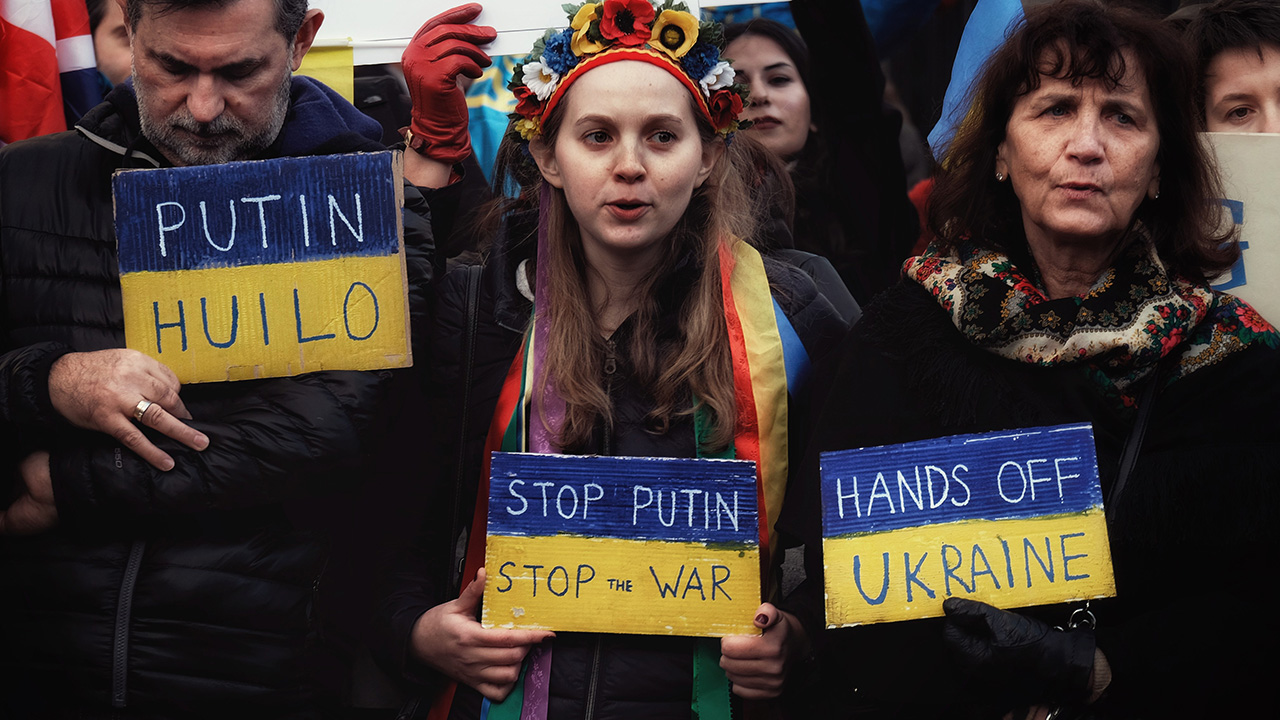
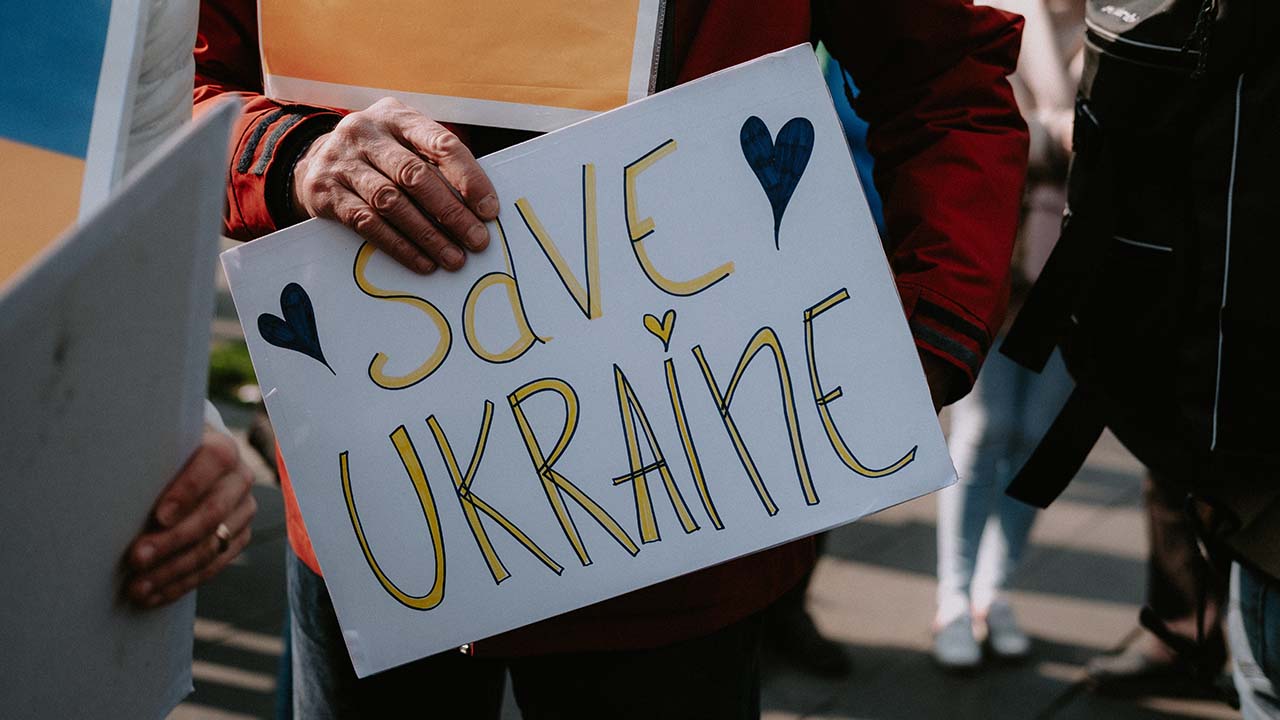
Photo by Mathias Reding: https://www.pexels.com/photo/sign-save-ukraine-on-protest-against-war-in-ukraine-11421084/

PGA reiterates the importance of holding accountable perpetrators of the gravest crimes, including leaders responsible for the crime of aggression.

Advocating for justice in Ukraine: PGA members from the Verkhovna Rada visit The Hague

PGA has been further intensifying the efforts aimed at delivering accountability to Ukraine since the beginning of the war of aggression launched on 24 February 2022 by the Russian Federation against Ukraine.

Photo by Max Kukurudziak on Unsplash

PGA joins the forceful statement issued today in Kyiv by the Euromaidan SOS coalition calling for the President of Ukraine to sign into law Act of Parliament No. 2689

Image: 5 February 2020, the Committee on Legislative Support of Law Enforcement of the Verkhovna Rada

Bill no. 2689 harmonizes the criminal code of Ukraine with international criminal law and international humanitarian law.

Nuremberg Prosecutor Ben Ferencz, 100 years' old, addressing the 17 July 2020 event on International Justice Day hosted by PGA UN Committee Chair Ambassador Christian Wenaweser (Liechtenstein).

On 17 July, international community commemorates the International Justice Day, this year marking the 22nd anniversary of the adoption of the Rome Statute of the International Criminal Court (ICC).

Bill no. 2689 harmonizes the criminal code of Ukraine with international criminal law and international humanitarian law.

On 5 February 2020, the Committee on Legislative Support of Law Enforcement of the Verkhovna Rada resolutely approved Bill no. 2689...

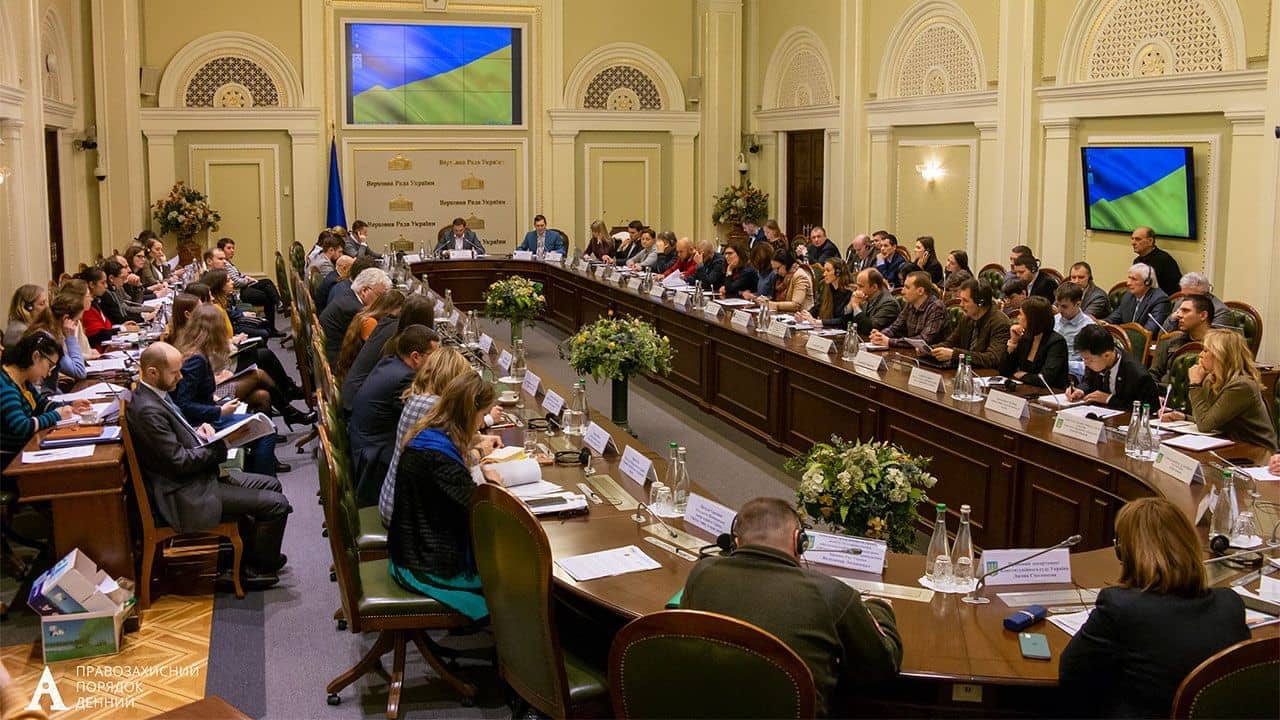
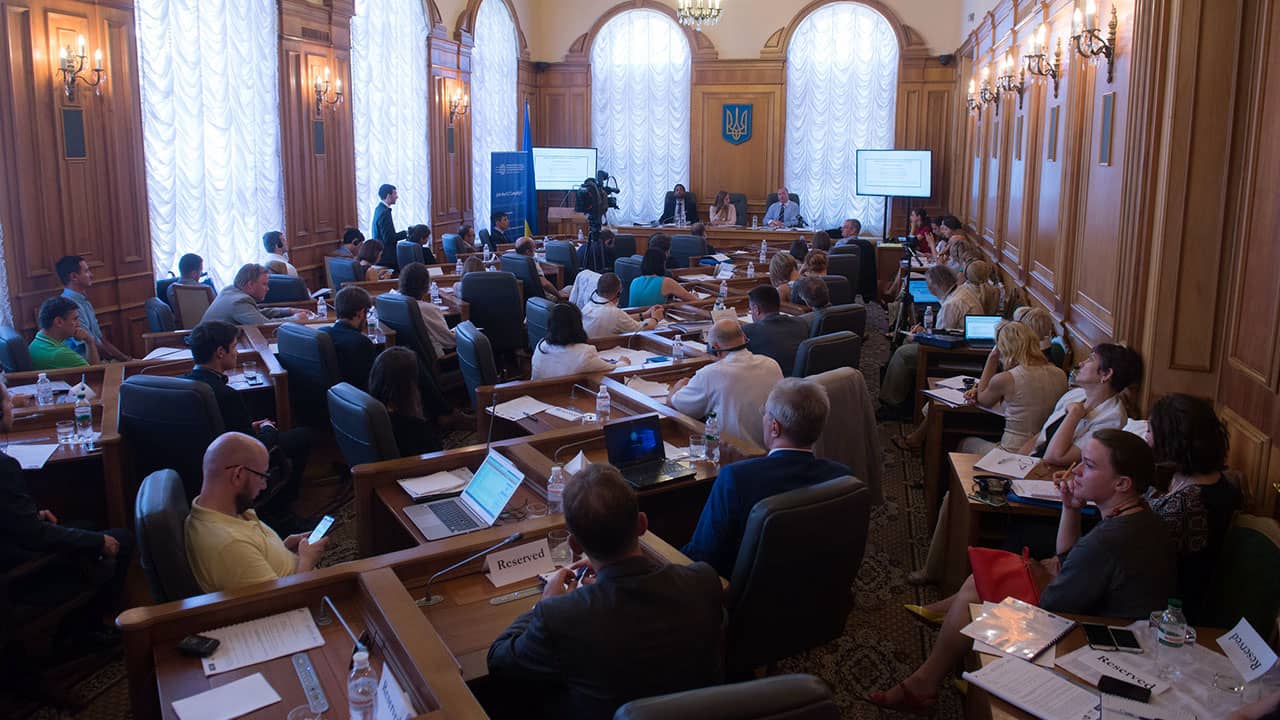
The Roundtable took place on 24 April 2018 at the Verkhovna Rada in Kyiv.

Participants included members of Verkhovna Rada, representatives of government bodies, NGOs and international organizations.

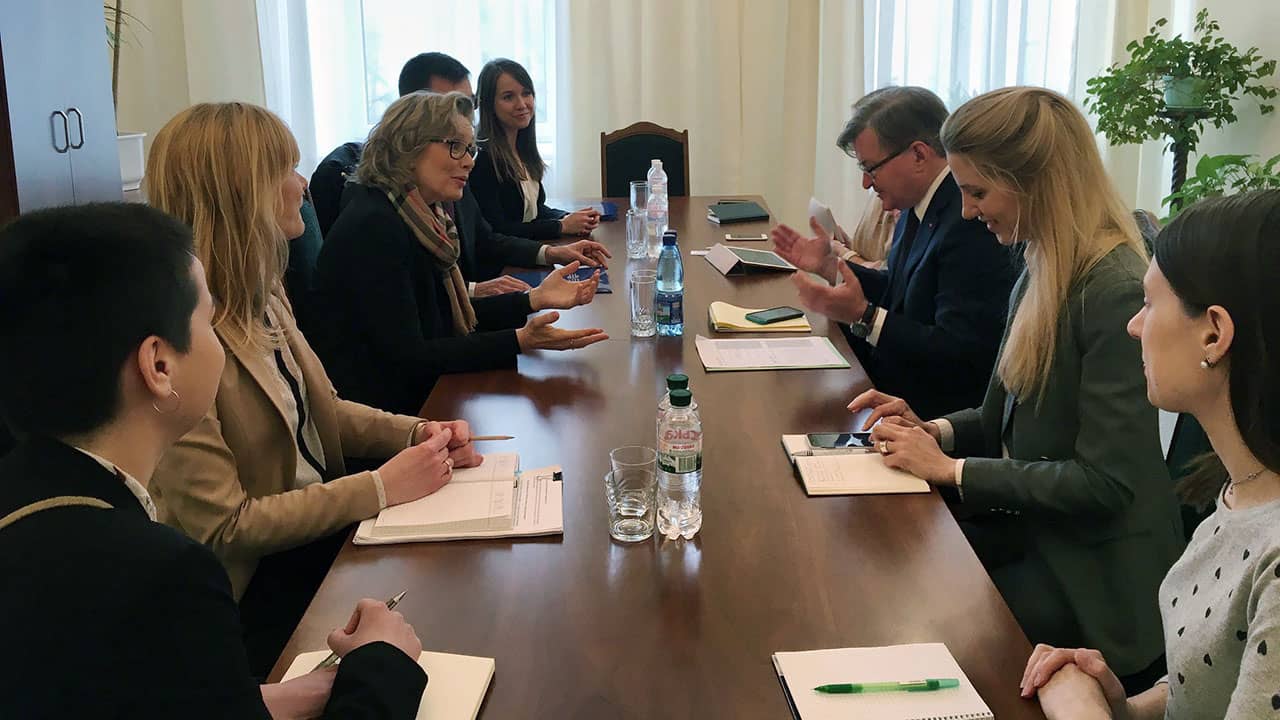
Meeting of PGA President with Speaker of Parliament of Ukraine and Members of PGA National Group

The parties discussed the situation in Ukraine and the issue of inter-parliamentary cooperation.

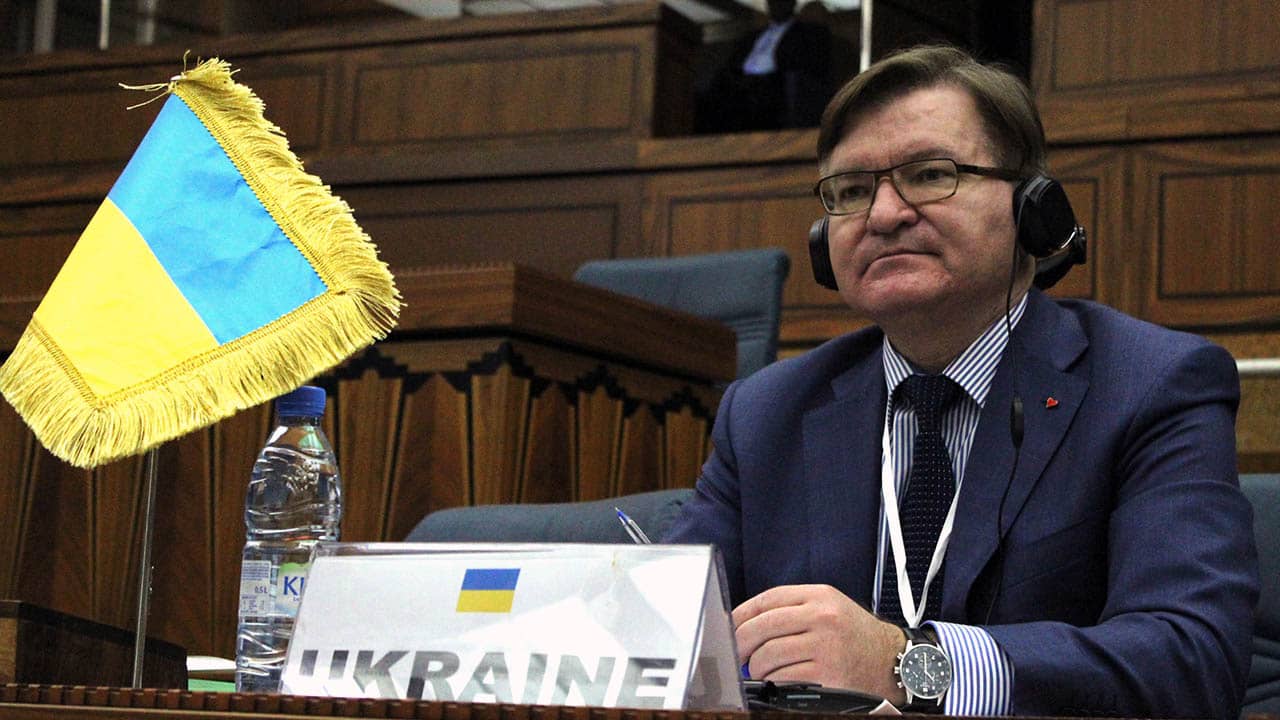
Mr. Hryhoriy Nemyria, MP (Ukraine), Chair of the Ukrainian PGA National Group

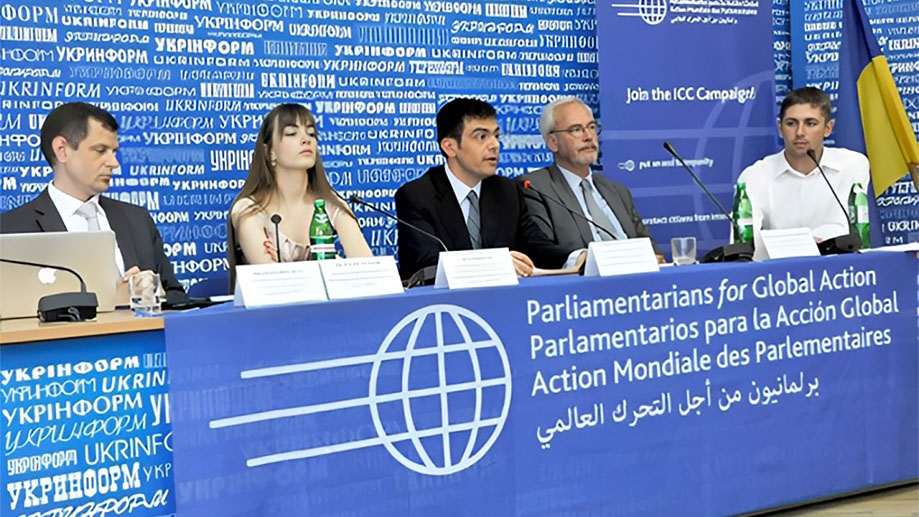
The Roundtable was held on 19 December 2016 and hosted by Hon. Hryhoriy Nemyria, MP, Chair of the Committee on Human Rights, National Minorities and Interethnic Relations of the Parliament of Ukraine

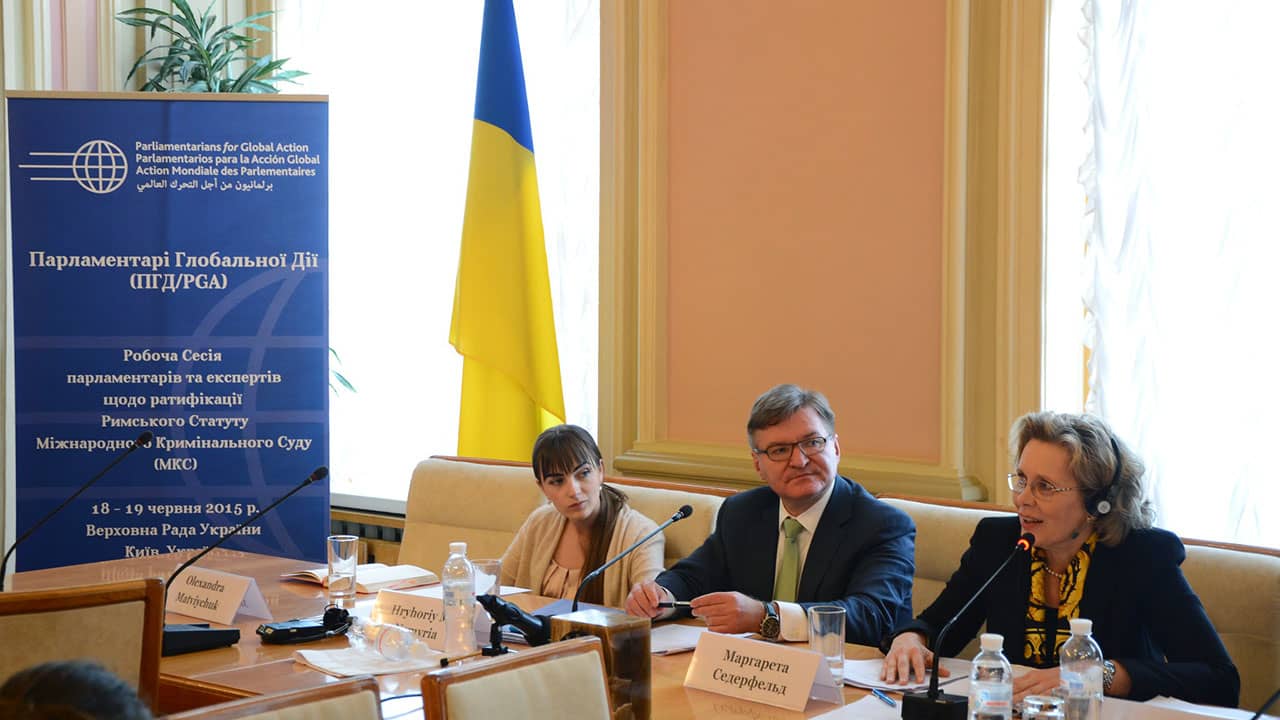
Parliamentary Roundtable on Ratification and Implementation of the Rome Statute of the ICC

The purpose of the mission, conducted on the occasion of International Justice Day, 17 July, was to assess and overcome the obstacles in the existing Ukrainian legislation that hinder accountability for perpetrators of international crimes.

The visit fell during a pivotal moment in the Verkhovna Rada with respect to Ukraine’s ratification of the Rome Statute of the ICC.

The visit fell during a pivotal moment in the Verkhovna Rada with respect to Ukraine’s ratification of the Rome Statute of the ICC.

A Parliamentary Seminar on the International Criminal Court (ICC) and the Protection of Civilians was held by PGA in the Verkhovna Rada on 15 December 2015.

Parliamentary Seminar on ICC in Ukraine, under high patronage of Chairman of Verkhovna Rada, received multi-party support for Rome Statute ratification

Seminar to support the ratification of the Rome Statute of the ICC in Ukraine

Are further delays in ratification of the Rome Statute presenting a lost opportunity to provide for justice in Ukraine? Can Rome Statute ratification in fact help the high-level peace negotiations? Will the ICC replace national Ukrainian courts?

Publication

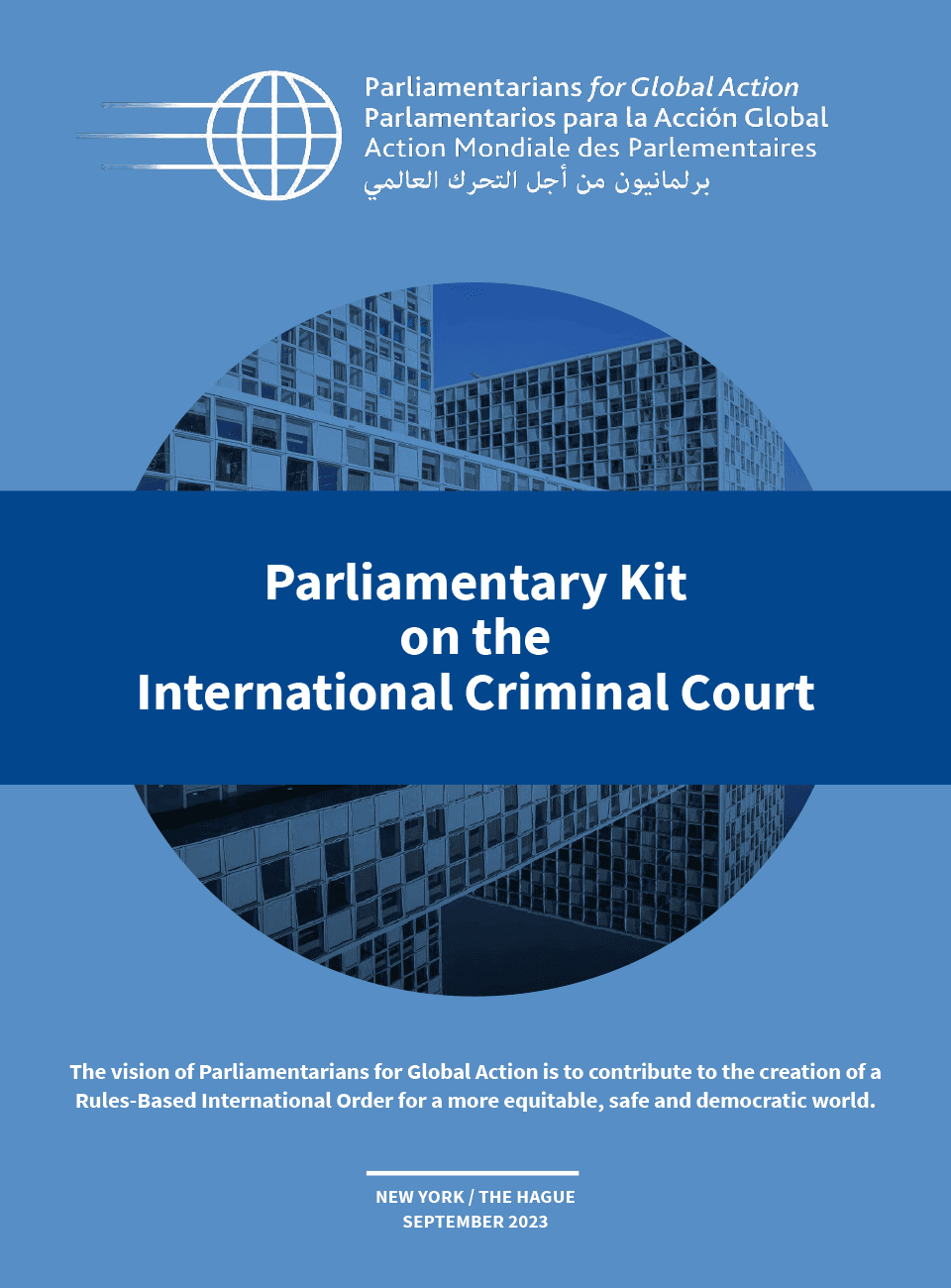
Parliamentary Kit on the International Criminal Court

Parliamentary Kit on the International Criminal Court

It is imperative that the Rome Statute be ratified universally for the successful functioning of the Court. Parliamentarians should ensure that the ICC is truly universal.

Description

Created by the Rome Statute, the International Criminal Court (ICC) is the first permanent and independent international court capable of investigating and bringing to justice individuals who commit the most serious violations of international criminal law, international humanitarian law, and human rights.

The Rome Statute defines the crimes under the Court’s jurisdiction and provides the general principles and procedures for the operation of the Court. It also outlines the cooperation obligations of its State Parties. It is imperative that the Rome Statute be ratified universally for the successful functioning of the Court. Parliamentarians should ensure that the ICC is truly universal.

PDF(s)

Additional Details

  • Publication Type: Toolkit
  • Author(s): Parliamentarians for Global Action

Publication

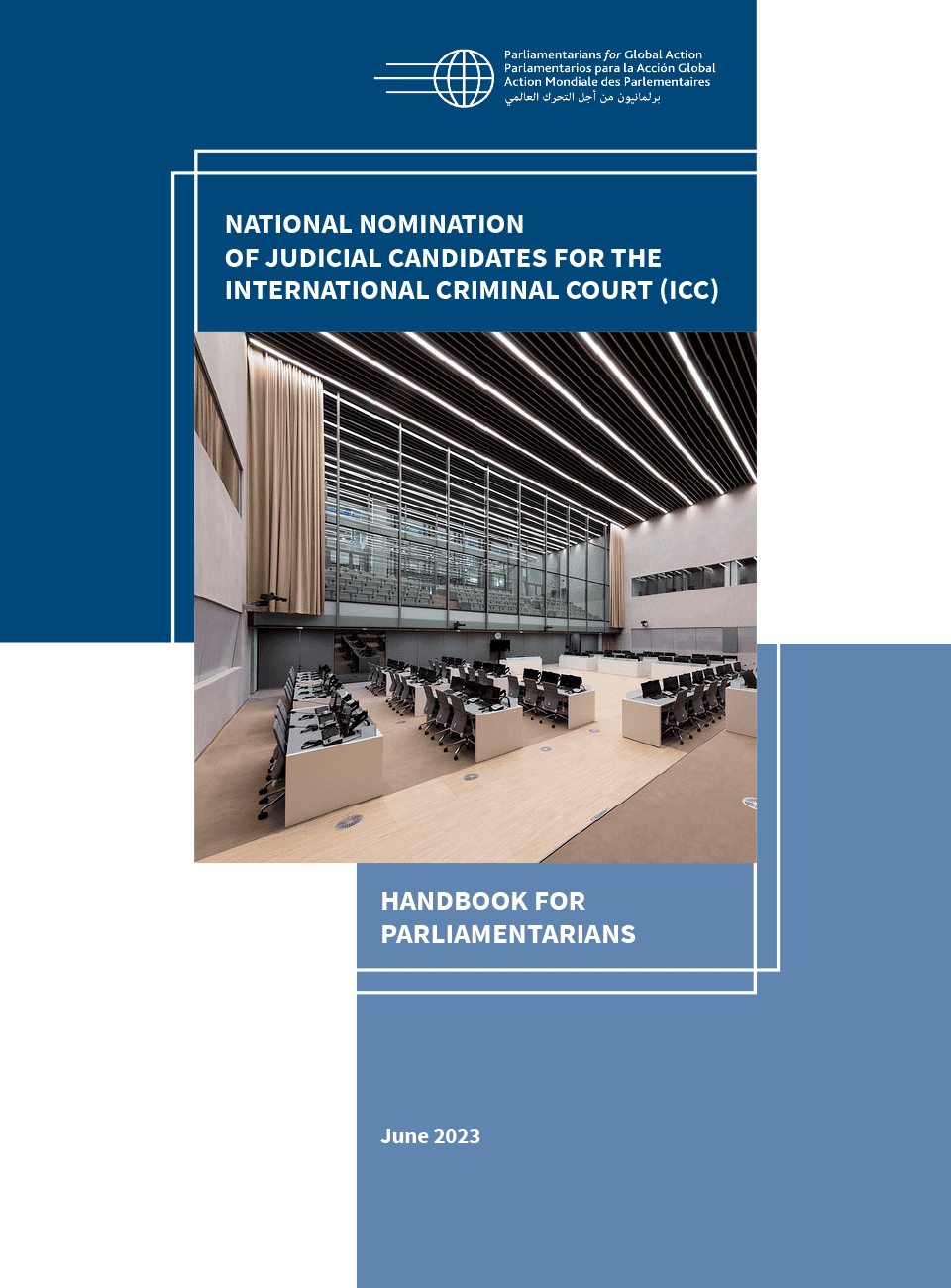
National Nomination of Judicial Candidates for the International Criminal Court

National Nomination of Judicial Candidates for the International Criminal Court

Criteria and recommendations for parliamentarians to improve national nomination procedures for International Criminal Court judicial candidates.

Description

The ICC is the first and only permanent independent court with the mandate to investigate and prosecute individuals responsible for committing international crimes, namely genocide, crimes against humanity, war crimes, and the crime of aggression. Its 18 judges from around the world, elected for a nine-year term, play a key role in ensuring this expectation is lived up to through their primary mandate to render authoritative and high-quality jurisprudence and guarantee fair trials.

Therefore, the quality of the judges has fundamental importance to the performance, efficiency, and effectiveness of the ICC, which is at the heart of the long-term success of the ICC and the Rome Statute system as a whole. In this handbook, PGA sets forth specific criteria and recommendations for Parliamentarians to encourage their governments to improve national nomination procedures for ICC judicial candidates and adopt good practices and requirements to ensure these processes are fair, transparent, and merit-based. The goal of robust nomination procedures is to ensure that only candidate judges or jurists of the highest caliber make it on the ballot.

PDF(s)

Additional Details

  • Publication Type: Handbook
  • Author(s): Parliamentarians for Global Action

Publication

Ratification and Implementation of the Kampala Amendments on the Crime of Aggression to the Rome Statute of the International Criminal Court

Ratification and Implementation of the Kampala Amendments on the Crime of Aggression to the Rome Statute of the International Criminal Court

A handbook aimed at assisting States in ratifying the Kampala Amendments, helping criminalize the most serious forms of the illegal use of force.

Description

It is our honor and privilege to present to you the Third Edition of the Handbook on the Ratification and Implementation of the Kampala Amendments on the Crime of Aggression to the Rome Statute of the ICC.

It is the product of our collaborative effort aimed at assisting States in ratifying the amendments adopted by consensus in Kampala and helping criminalize the most serious forms of the illegal use of force.

PDF(s)

Additional Details

  • Publication Type: Handbook
  • Author(s): Permanent Mission of the Principality of Liechtenstein to the United Nations; Global Institute for the Prevention of Aggression; Liechtenstein Institute on Self-Determination at Princeton University (LISD); (Drafting Assistance by PGA)