



Loading...

Pan-African Parliament

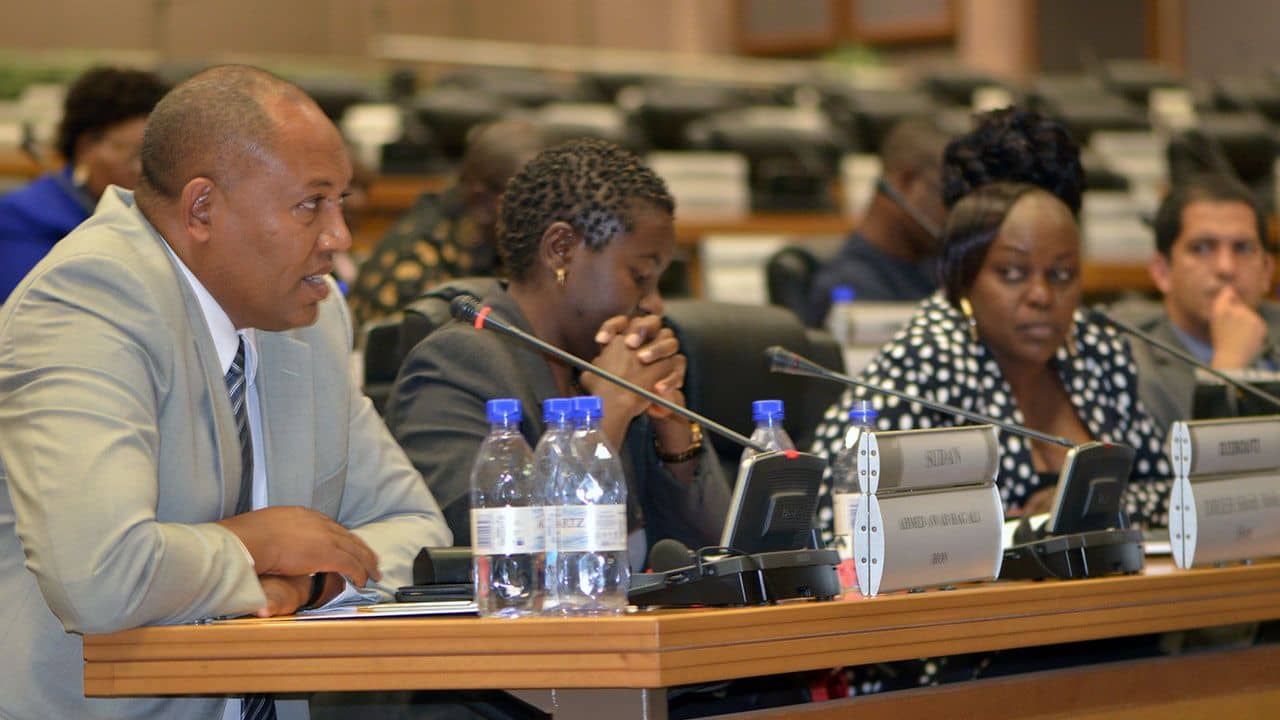
Hon. Yusuph Abdallah Nassir MP (Tanzania) at the Pan-African Parliament Joint Committee Session on the Arms Trade Treaty.

What is the PAP?

The Pan-African Parliament (PAP), also known as the African Parliament, was established in 2004. It is the legislative body of the African Union. The PAP is at present composed of 229 Members of Parliament representing 52 African countries. It exercises oversight and has advisory and consultative powers, lasting for the first five years. The ultimate aim of the Pan-African Parliament is to evolve into an institution with full legislative powers, whose members are elected by universal adult suffrage. Initially, the seat of the Pan-African Parliament was in Addis Ababa, Ethiopia but it was later moved to Midrand, Johannesburg, South Africa.

PGA’s Work

Since the issuance of arrest warrants for crimes against humanity, war crimes and genocide against the sitting President of Sudan by the ICC in 2009-10, PGA members played an active role for almost a decade in opposing and blocking the introduction of resolutions within the PAP that were aimed at support certain AU policies calling African States to withdraw from the Rome Statute.

Latest News: ROME STATUTE CAMPAIGN

Photo: Parliamentarians for Global Action

From 1 to 5 December 2025, representatives of countries who are States Parties to the Rome Statute, international organizations, and civil society met in The Hague, The Netherlands, for the 24th session of the Assembly of States Parties to the International Criminal Court.

Photo credit: Parliamentarians for Global Action.

From July 7 to 9, 2025, Parliamentarians for Global Action’s executive committee participated in the special session on the review of the amendments on the crime of aggression of the Assembly of States Parties to the Rome Statute of the ICC.

Photo: The Syria Campaign

On the 27th anniversary of the adoption of the Rome Statute of the International Criminal Court, the Global Initiative Against Impunity reaffirms the essential role of international justice in upholding the international rules-based order.