Loading...

Democratic Republic of the Congo (DRC) and the Rome Statute

PGA Members in the Democratic Republic of Congo (DRC) – both in the National Parliament and in Provincial Assemblies - have been mobilized on promoting the fight against impunity since 2006. These efforts culminated in the adoption of a legislation fully implementing the Rome Statute on 31 December 2015. This legislation also establishes the competence of civilian courts over international cries and organizes cooperation with the ICC. PGA Members remain mobilized on promoting the ratification of the amendments to the Rome Statute.

Signature, Ratification of/Accession to the Rome Statute of the ICC
Signature Date: 8 September 2000
Ratification Date: 11 April 2002
Amendments to the Rome Statute
Ratification of the Kampala Amendment to Article 8 of the Rome Statute on war crimes [poison and expanding bullets in NIAC] (2010): No
Ratification of the Kampala Amendment to the Rome Statute on the crime of aggression reflected in Article 8 bis (2010): No
Ratification of the Amendment to Article 124 of the Rome Statute (2015): No
Ratification of the Amendment to Article 8 of the Rome Statute on war crimes [biological weapons] (2017): No
Ratification of the Amendment to Article 8 of the Rome Statute on war crimes [blinding laser weapons] (2017): No
Ratification of the Amendment to Article 8 of the Rome Statute on war crimes [non-detectable fragments] (2017): No
Ratification of the Amendments to Article 8 of the Rome Statute on war crimes [starvation as a war crime in NIAC] (2019): No
Adoption of implementation legislation of the Rome Statute of the ICC

The Congolese Criminal Code, Military Criminal Code, and Code of Criminal Procedure were modified respectively by bill n°15/022, bill n°15/023, and bill n°15/024 of 31 December 2015 to fully implement the substantial and cooperation provisions of the Rome Statute. Bill nº 15/022 refers to all the general principles under the Rome Statute.

Cooperation Agreements
Ratification of Agreement on Privileges and Immunities of the Court (APIC): Yes, acceded on 3 July 2007.
Signature of Agreement of Enforcement Sentences with the ICC: No, however the DRC has adopted two ad hoc agreements.
Signature of Agreement of Interim and Final Release with the ICC: No.
Signature of Bilateral Immunity Agreement with the USA: Yes, signed at Washington on 19 March 2003 and entered into force on 22 July 2003.
Key Documents

Status of the Rome Statute System as of October 2024:

 
States that have ratified the Rome Statute [125]
 
States that have signed the Rome Statute but have not ratified it yet [29]
 
States that have withdrawn from the Rome Statute [2]
 
States that have neither signed nor ratified the Rome Statute
 

125 countries are States Parties to the Rome Statute of the International Criminal Court. Of these, 33 are African States, 19 are Asia-Pacific States, 20 are from Eastern Europe, 28 are from Latin American and Caribbean States, and 25 are from Western European and other States.

Work of PGA in this Country:

Flag of the Democratic Republic of the Congo. Photo credit: Pexels.

PGA expresses its deep concern over the current escalating violence in the Eastern Democratic Republic of the Congo (DRC), and its devastating effect on the civilian population, who has been exposed to atrocities for an excessive period of time.

PGA Members in DRC condemn recent acts of violence in Ituri and call for justice

The region of Ituri has in the recent weeks suffered from numerous exactions committed by armed groups against civilians, including women and children.

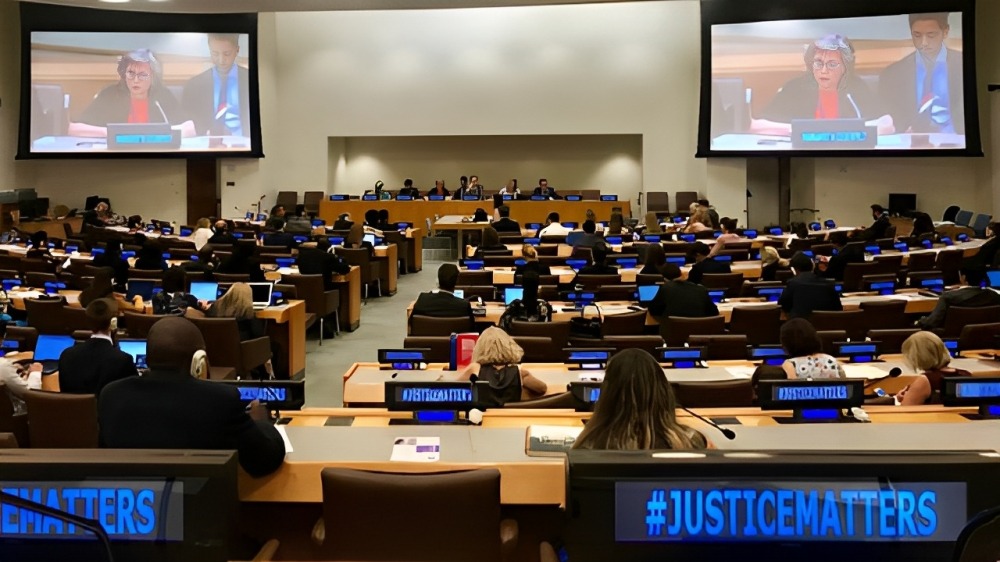
PGA President Margareta Cederfelt, MP (Sweden), appeals to the international community at the United Nations: "there is no lasting peace without justice and no justice as long as there is impunity."

International Justice Day is commemorated on 17 July, marking the 21st anniversary of the adoption of the Rome Statute of the International Criminal Court.

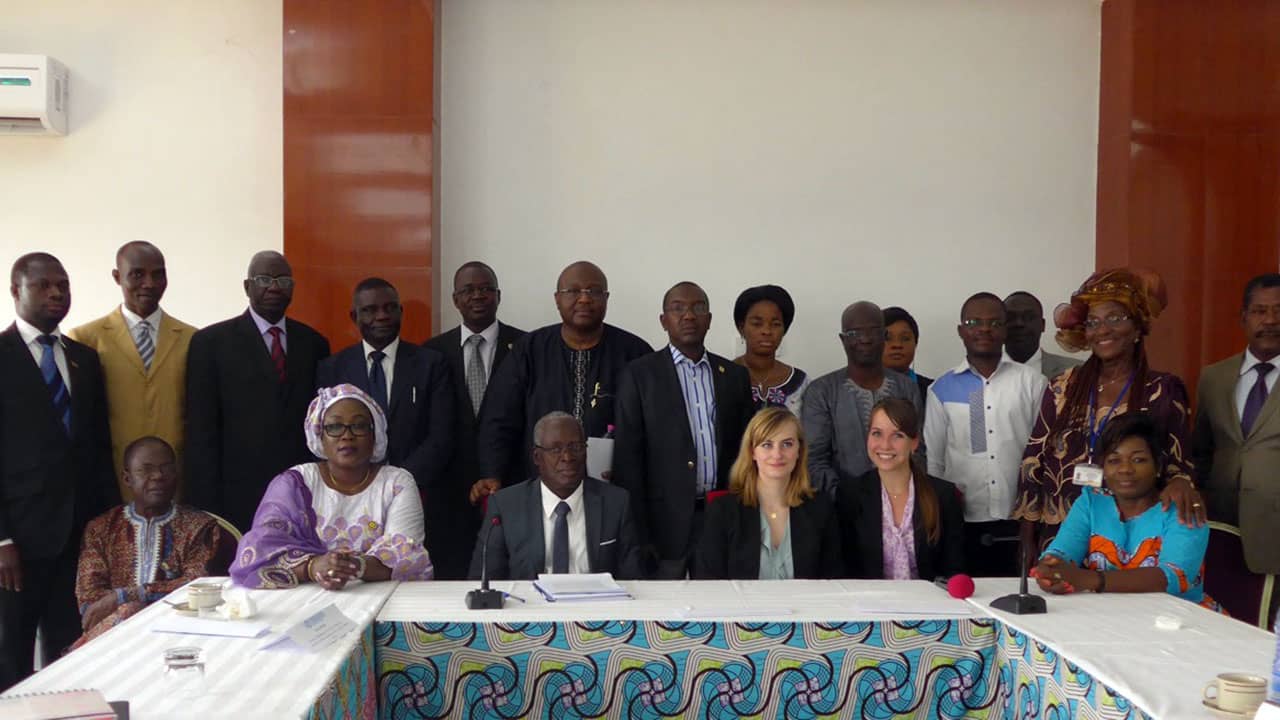
Parliamentarians from Francophone African Countries have sent a strong message confirming their commitment to the Rule of Law and Justice by adopting the Action Plan Lomé 2016

The Working Group on the fight against impunity in Francophone African countries held its second meeting on 10 and 11 November 2016, in Lomé (Togo).

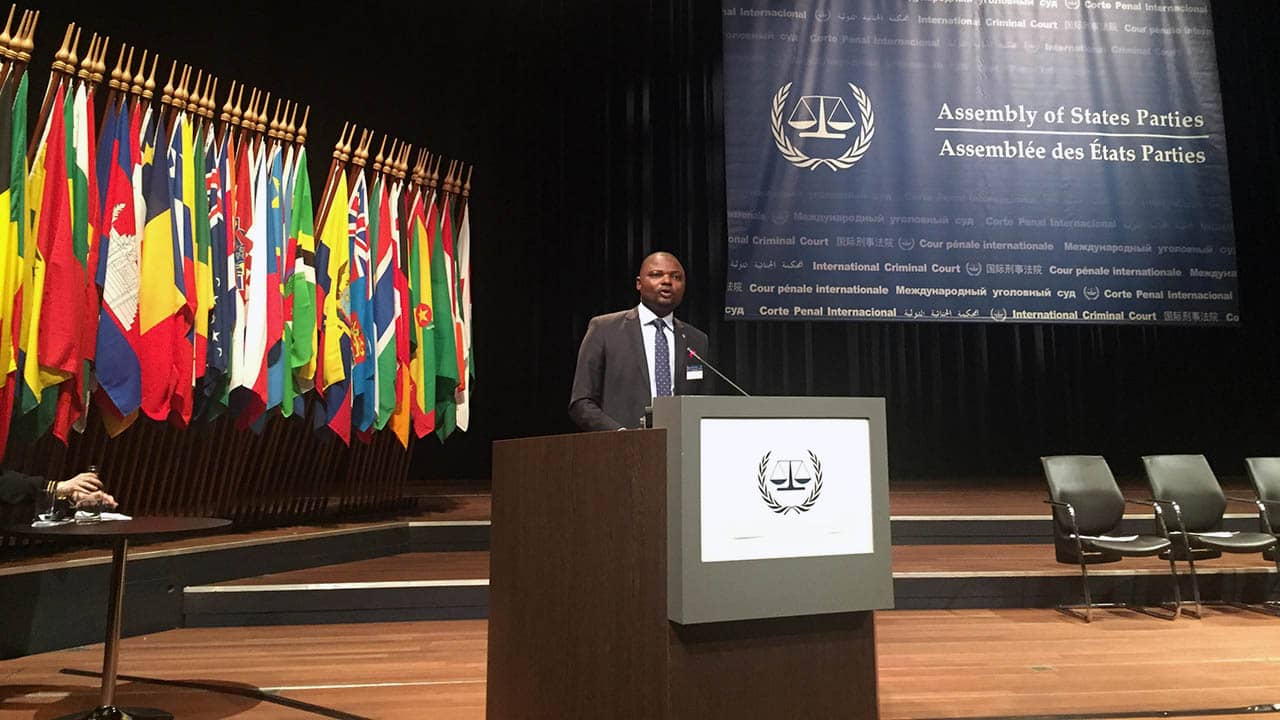
PGA Member Honorable Emery Okundji.

Statement presented by Honorable Emery Okundji, MP (Democratic Republic of Congo) on behalf of PGA at the General Debate of the 15th Assembly of States Parties to the Rome Statute.

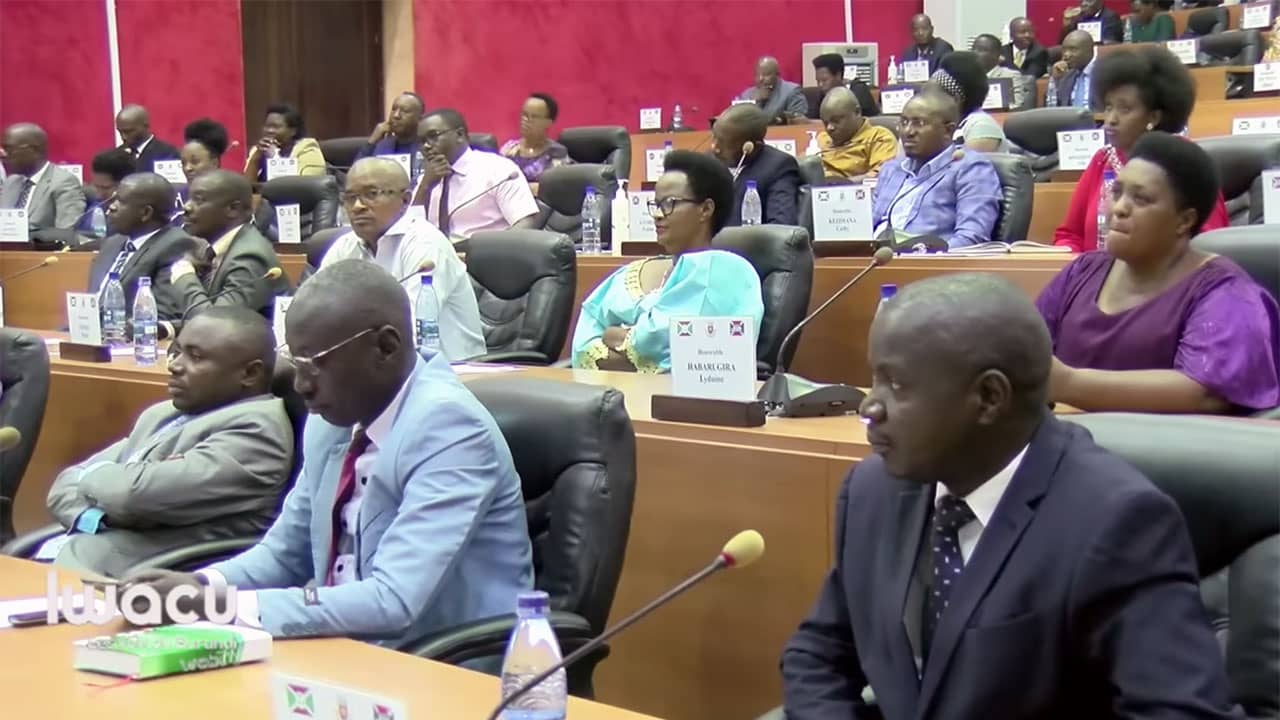
On 12 October 2016, the National Assembly and the Senate of the Republic of Burundi voted massively in favor of the country withdrawing from the Rome Statute of the International Criminal Court (ICC).

Burundi voted massively in favor of the country withdrawing from the Rome Statute of the International Criminal Court (ICC)

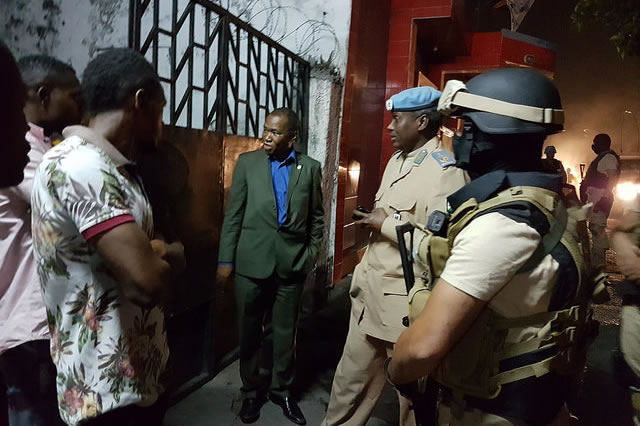
Should the acts of violence occurring in DRC amount to international crimes, the ICC would be able to exercise its jurisdiction and investigate and prosecute the authors of such acts. Photo: MONUSCO/Marie-Jeanne LAMAH

Parliamentarians for Global Action (PGA) and its Members have been alarmed by the reports covering the violent events that occurred in the past few days in the Democratic Republic of Congo (DRC) and particularly in Kinshasa.

On 2 January 2016, the President of the Democratic Republic of the Congo (DRC), Joseph Kabila, promulgated the Law implementing the Rome Statute of the ICC

On 2 January 2016, the President of the Democratic Republic of the Congo (DRC), Joseph Kabila, promulgated the Law implementing the Rome Statute of the ICC

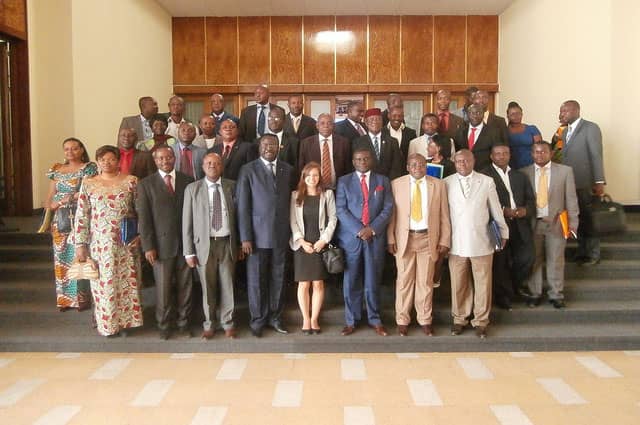
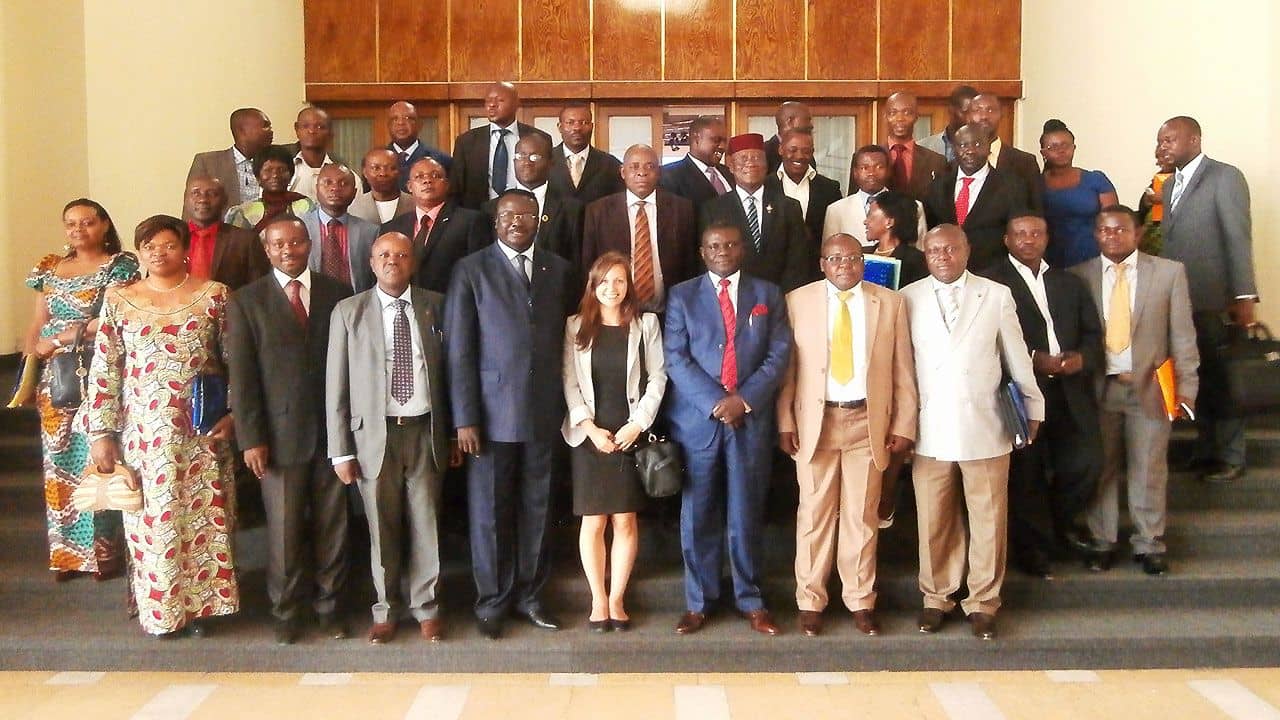
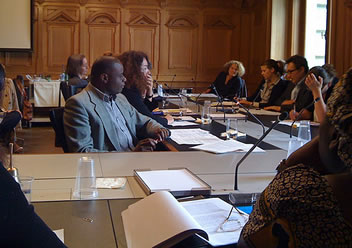
 Image: Seminar for DRC Legislators on policy measures to implement complementarity, National Assembly of the DR Congo, June 2013

Today, the Senate of the Democratic Republic of the Congo (DRC) voted quasi unanimously for the adoption of the Law implementing the Rome Statute of the International Criminal Court (ICC) in the domestic legal order.

The Seminar was hosted by the Parliament of the DRC in Kinshasa.

In the context of the ongoing process to reform the judicial system of the Democratic Republic of the Congo and to fight against impunity for the most serious crimes of international concern, PGA organised a “Seminar for Legislators on measures to impleme

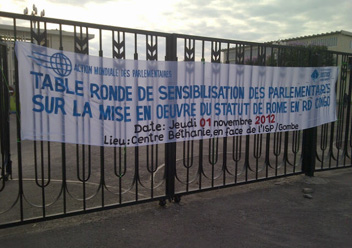
This round-table provided a platform to sensitize and create political will among parliamentarians on the implementation of the Rome Statute of the International Criminal Court.

In the context of a difficult political and security situation in the Democratic Republic of the Congo (DRC) and of the ongoing efforts to equip it with the tools to fight impunity, this round-table provided a platform to sensitize and create political wi

Both big multinational companies as well as the Congolese government urgently need to take action to end this unfortunate situation, which sustains and perpetuates conflict, violence and the impoverishment of the local populations in the region.

In light of the deeply disturbing, prevailing climate of impunity for sexual and gender based crimes in the eastern part of the Democratic Republic of the Congo (DRC), PGA’s Swiss National Group, chaired by Ms Yvonne Gilli, MP, and in cooperation with

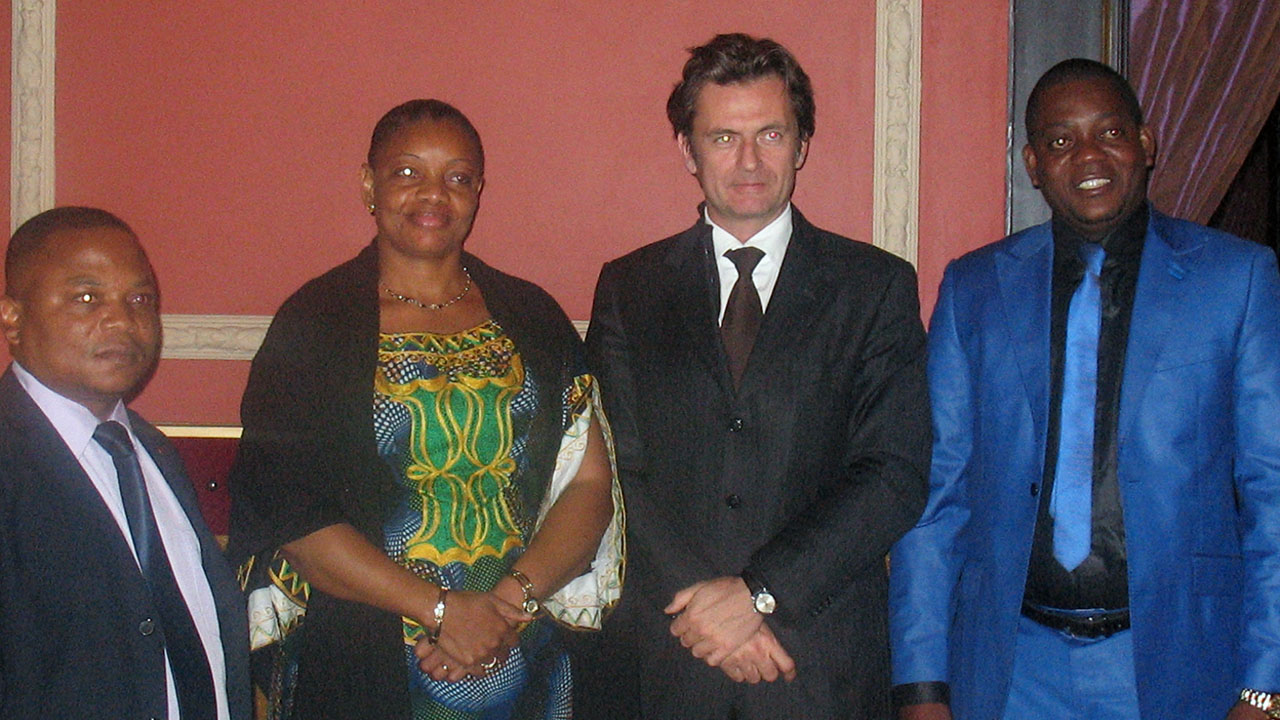
The visit of the four prominent DRC parliamentarians coincided with the arrest of Mr. Callixte Mbarushimana, Executive Secretary of the Forces Démocratiques pour la Libération du Rwanda (FDLR), on 11 October in Paris by the French authorities.

In the context of the ongoing debate on the implementing legislation of the Rome Statute in the Congolese parliament, a multiparty delegation of legislators from the Democratic Republic of the Congo travelled to The Hague to meet with senior officials of

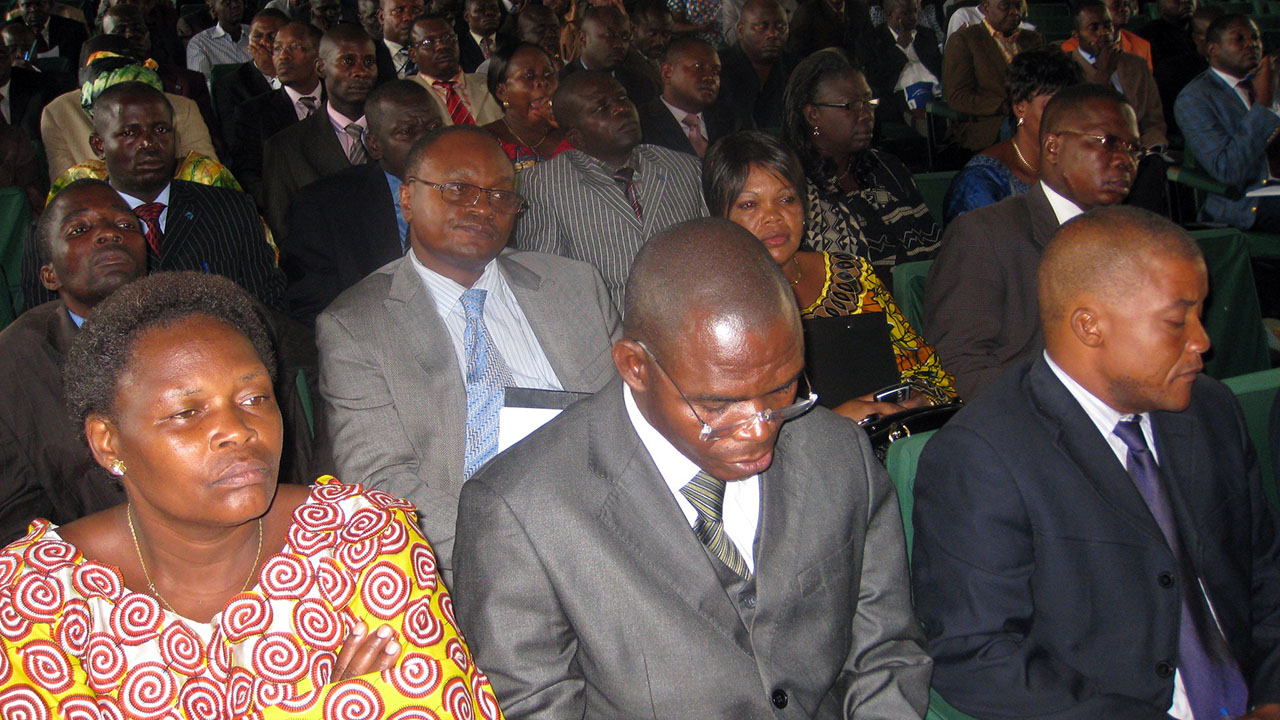
From December 10-12, 2009, PGA held an International Parliamentary Conference on Justice and Peace in the Democratic Republic of the Congo.

From December 10-12, 2009, PGA held an International Parliamentary Conference on Justice and Peace in the Democratic Republic of the Congo, the Great Lakes and Central African regions in the Palais du Peuple, seat of the Parliament of the DRC in Kinshasa.

Publication

Parliamentary Kit on the International Criminal Court

Parliamentary Kit on the International Criminal Court

It is imperative that the Rome Statute be ratified universally for the successful functioning of the Court. Parliamentarians should ensure that the ICC is truly universal.

Description

Created by the Rome Statute, the International Criminal Court (ICC) is the first permanent and independent international court capable of investigating and bringing to justice individuals who commit the most serious violations of international criminal law, international humanitarian law, and human rights.

The Rome Statute defines the crimes under the Court’s jurisdiction and provides the general principles and procedures for the operation of the Court. It also outlines the cooperation obligations of its State Parties. It is imperative that the Rome Statute be ratified universally for the successful functioning of the Court. Parliamentarians should ensure that the ICC is truly universal.

PDF(s)

Additional Details

  • Publication Type: Toolkit
  • Author(s): Parliamentarians for Global Action

Publication

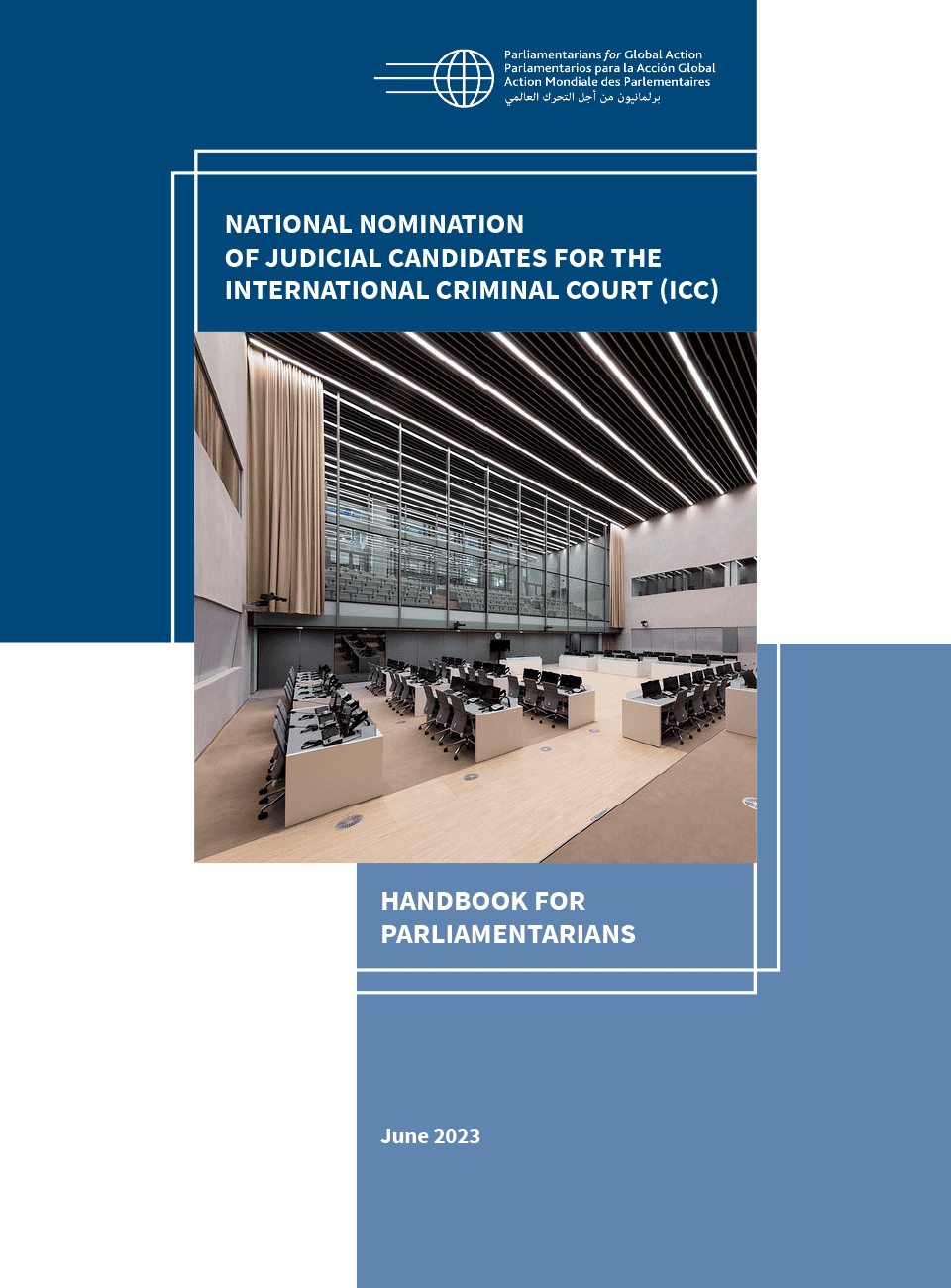
National Nomination of Judicial Candidates for the International Criminal Court

National Nomination of Judicial Candidates for the International Criminal Court

Criteria and recommendations for parliamentarians to improve national nomination procedures for International Criminal Court judicial candidates.

Description

The ICC is the first and only permanent independent court with the mandate to investigate and prosecute individuals responsible for committing international crimes, namely genocide, crimes against humanity, war crimes, and the crime of aggression. Its 18 judges from around the world, elected for a nine-year term, play a key role in ensuring this expectation is lived up to through their primary mandate to render authoritative and high-quality jurisprudence and guarantee fair trials.

Therefore, the quality of the judges has fundamental importance to the performance, efficiency, and effectiveness of the ICC, which is at the heart of the long-term success of the ICC and the Rome Statute system as a whole. In this handbook, PGA sets forth specific criteria and recommendations for Parliamentarians to encourage their governments to improve national nomination procedures for ICC judicial candidates and adopt good practices and requirements to ensure these processes are fair, transparent, and merit-based. The goal of robust nomination procedures is to ensure that only candidate judges or jurists of the highest caliber make it on the ballot.


PDF(s)

Additional Details

  • Publication Type: Handbook
  • Author(s): Parliamentarians for Global Action

Publication

Ratification and Implementation of the Kampala Amendments on the Crime of Aggression to the Rome Statute of the International Criminal Court

Ratification and Implementation of the Kampala Amendments on the Crime of Aggression to the Rome Statute of the International Criminal Court

A handbook aimed at assisting States in ratifying the Kampala Amendments, helping criminalize the most serious forms of the illegal use of force.

Description

It is our honor and privilege to present to you the Third Edition of the Handbook on the Ratification and Implementation of the Kampala Amendments on the Crime of Aggression to the Rome Statute of the ICC.

It is the product of our collaborative effort aimed at assisting States in ratifying the amendments adopted by consensus in Kampala and helping criminalize the most serious forms of the illegal use of force.

PDF(s)

Additional Details

  • Publication Type: Handbook
  • Author(s): Permanent Mission of the Principality of Liechtenstein to the United Nations; Global Institute for the Prevention of Aggression; Liechtenstein Institute on Self-Determination at Princeton University (LISD); (Drafting Assistance by PGA)