


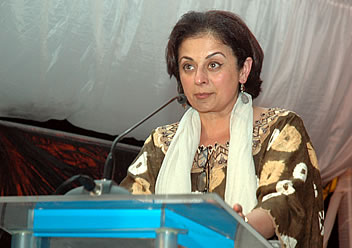
Ms. Shazia Z. Rafi, Secretary‐General of Parliamentarians for Global Action (PGA), has been appointed by the United Nations Secretary‐General to serve on the Advisory Board of the United Nations Democracy Fund (UNDEF), in an individual capacity, for the period of 2012 – 2013.
The Advisory Board also includes 13 UN Members States, two international civil society organizations and two other individuals serving in an individual capacity. The role of the Board is to offer the UN Secretary‐General policy guidance, consider proposals for funding, and recommend funding proposals for approval by the UN Secretary‐General.
Established in 2005 by the UN Secretary‐General, "UNDEF supports projects that strengthen the voice of civil society, promote human rights, and encourage the participation of all groups in democratic processes" (please see UNDEF website for further information).
The main areas of focus of UNDEF projects are: community development; rule of law and human rights; tools for democratization; women; youth; and media.
For further information on the work of UNDEF and the Advisory Board, please visit: www.un.org/democracyfund