


What is the UNSC?
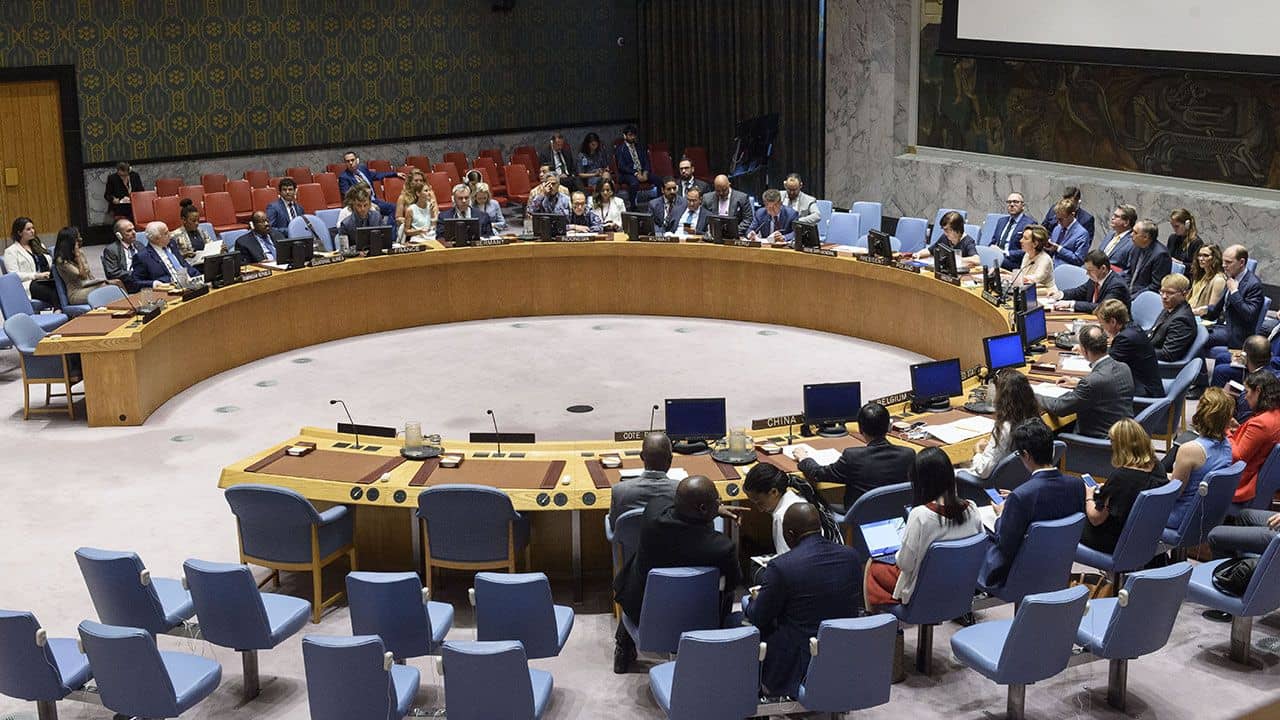
The United Nations Security Council (UNSC) is the organ whose primary responsibility is the maintenance of international peace and security under the UN Charter. It has 15 members, and each Member has one vote. China, France, Russia, the United Kingdom, and the United States serve as the body's five permanent members and can veto any Security Council resolution.
Under Chapter VII of the Charter of the United Nations, the UNSC has the power to decide what measures are to be taken in situations involving "threats to the peace, breaches of the peace, or acts of aggression”. Decisions taken under Chapter VII are binding on UN members.
In the framework of the Rome Statute of the ICC and acting under Chapter VII of the United Nations, the Security Council can:
- Refer situations to the ICC where it would otherwise not have jurisdiction, thus promoting the universality of the ICC; and
- Promote or enhance cooperation and assistance from States Parties and not Parties to the ICC.
Yet, to date, the Security Council has:
- Referred only two situations - Sudan, under Resolution 1593 (2005) and Libya, under Resolution 1970 (2011) - in which it expressly recognizes that States not Parties have no obligation under the Rome Statute, and instead only urges them to cooperate with the ICC.
- Failed to provide adequate support to the enforcement of arrest warrants and compliance with the orders of the Court in situations referred by it.
- Not addressed situations of non-cooperation with the Rome Statute and the Resolutions of the Council itself.
- Purported to limited the financial resources that the UN could offer to support the costs of investigations and prosecutions in cases arising from situations referred by the Council.
PGA’s Work
PGA organized several high-level strategic meetings and consultations between its members, Ambassadors to the UN, experts and the civil society on the relationship between the UNSC and the ICC.
- 15 July 2013 - Strategic Meeting at Permanent Mission of Liechtenstein to the UN in New York
- 16 March 2012 - High-Level Meeting at Chatham House, London
- 16 December 2011 - Strategic Consultations as a Side Event to the 10th Session of the Assembly of States Parties to the ICC in New York
The PGA Secretariat compiled the practice of the Security Council towards the ICC since the adoption of the Rome Statute in 1998 to assist experts, parliamentarians and other policy-makers interested in having a deeper understanding of the issue.
- 2012 - The UN Security Council and the International Criminal Court, PGA and the Chatham House
- 2012 - Selected practice of the UN Security Council in relation to the International Criminal Court and the Rome Statute System (1998-2012)
PGA’s Secretariat and PGA members of parliament have publicly and repeatedly called on the Security Council to actively make use of its prerogatives and refer situations of alleged commission of international crimes to the ICC and ensure the cooperation of the States with the Court.
- 20 December 2012 - Statement: Hon Boubacar Diarra, MP (Mali), Chair of PGA’s National Group, on the adoption of UN Security Council Resolution 2085 on 20 December 2012, welcoming the authorisation for the deployment of an international force in Mali to protect the civilian population
- 13 December 2012 - European Parliament Resolution: Annual Report on Human Rights and Democracy in support of a UN Security Council’s referral of the Syrian situation to the ICC
- 7 December 2012 - Letter: Ms. Marietje Schaake, MEP (The Netherlands) and other MEPs from all major political groups, to the EU High Representative for Foreign Affairs and Security Policy in support of a UN Security Council's referral of the Syrian situation to the ICC
- 22 June 2010 - Press Release: PGA Statement on 11th Report of the ICC Prosecutor to the UN Security Council on the Situation in Darfur, Sudan
- 5 December 2007 - Press Release: Parliamentarians urge the UN Security Council to take action to end Impunity in Darfur
- 24 June 2004 - Press Release: PGA Welcomes Withdrawal of Security Council Resolution 1487
- 17 June 2004 - Press Release: PGA Urges Governments to Oppose Renewal of Security Council Resolution 1487