


Loading...

Philippines and the Rome Statute

Introduction

PGA has been working in The Philippines since 2005, when preparations started fora Meeting of the Working Group of the Consultative Assembly of Parliamentarians for the ICC on the Universality of the Rome Statute in Asia, at the National Assembly of the Philippines, seeking to accelerate the process of ratification. Participating Speaker of the House of Representatives, Jose DeVenecia, publicly declared his support to the ICC at this occasion.

Rome Statute

The Philippines signed the Rome Statute on 28 December 2000 and ratified the Rome Statute on 30 August 2011.

Agreement on Immunities and Privileges

The Philippines have not signed the Agreement on Immunities and Privileges.

Kampala Amendments of 2010

The Philippines have not ratified the Kampala Amendments.

Status on the domestic implementation of the Rome Statute

On 11 December 2009, the Republic Act No. 9851 - Act Defining And Penalizing Crimes Against International Humanitarian Law, Genocide And Other Crimes Against Humanity, Organizing Jurisdiction, Designating Special Courts, And For Related Purposes, which had been previously enacted on the 27 July by the Senate and House of Representatives of the Philippines in Congress, was signed the President Arroyo.

The Act 9851, also known as the International Humanitarian Law Bill provides a definition and penalties for crimes regarding international humanitarian law, genocide and crimes against humanity amongst other provisions. It also provides for criminal liability of commanders and other superiors under the principle of command responsibility; protection of civilians, non-combatants, witnesses as well as reparations to the victims. It further provides for the universal jurisdiction over persons, whether military or civilian, suspected or accused of the crimes defined and penalized under the law, and designates the regional trial court as having original and exclusive jurisdiction over the international crimes punishable under the law.

Agreement on Privileges and Immunities of the Court(APIC)

The Philippines did not sign the APIC.

Additional Agreements

The Philippines signed a Bilateral Immunity Agreement (BIA) regarding the surrender of persons to international tribunals, proposed by the United States, on 9 and 13 May of 2003, which entered into force on 13 May of 2003.

Progress and PGA Action

The Philippines ratification of the Rome Statute came just a week after the vote of the ICC Ratification Bill in third reading by the Senate of the Philippines, where PGA Member Sen. Miriam Defensor Santiago, Rapporteur on the Bill and chairperson of the relevant Sub-Committee, and PGA Member Sen. Loren Legarda, Chairperson of the Foreign Relations Committee, played a fundamental role in bringing about an almost unanimous(by 17 votes in favour and only 1 vote against) decision in support of this treaty.

Indeed, Senator Legarda's role in facilitating a Briefing by the President of the ICC, Judge Sang-Hyun Song in the Senate of the Philippines in March 2011 was key in this historic accomplishment. At the same time, Sen. Miriam Defensor-Santiago, MP attended the sub-regional conference held in March in Kuala-Lumpur, PGA Malaysian, which was organized in order to review current ratification and implementation processes of the Rome Statute in a number of countries in the region, with a view to identifying the most effective means to moving these respective processes forward.

On September 2006 the then President of PGA, Sen. Alain Destexhe (Belgium) met briefly with President Arroyo when she was on a State Visit to Belgium and inquired her about ratification.

Human Rights Council Universal Periodic Review

The Philippines have been reviewed during the 13thsession of the UPR in 2012 and have ever since received recommendations to implement the Rome Statute, adopt the Kampala Amendments and the APIC by several states.

The next UPR revision is scheduled to take place in January 2017.

Status of the Rome Statute System as of October 2024:

 
States that have ratified the Rome Statute [125]
 
States that have signed the Rome Statute but have not ratified it yet [29]
 
States that have withdrawn from the Rome Statute [2]
 
States that have neither signed nor ratified the Rome Statute
 

125 countries are States Parties to the Rome Statute of the International Criminal Court. Of these, 33 are African States, 19 are Asia-Pacific States, 20 are from Eastern Europe, 28 are from Latin American and Caribbean States, and 25 are from Western European and other States.

Work of PGA in this Country:

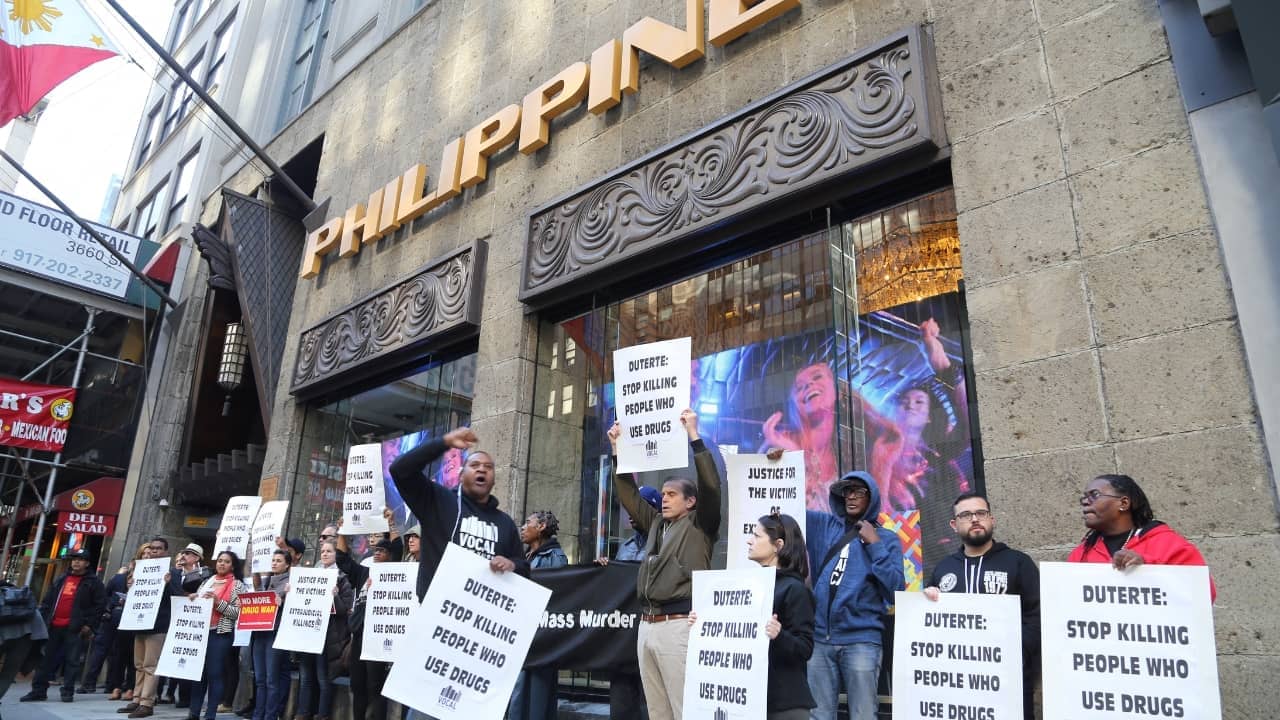
Photo: Flickr / VOCAL-NY, Philippines Drug War Protest,  2016

On 11 March 2025, Philippine authorities arrested former President Rodrigo Duterte in Manila and transferred him to the International Criminal Court (ICC) in The Hague.

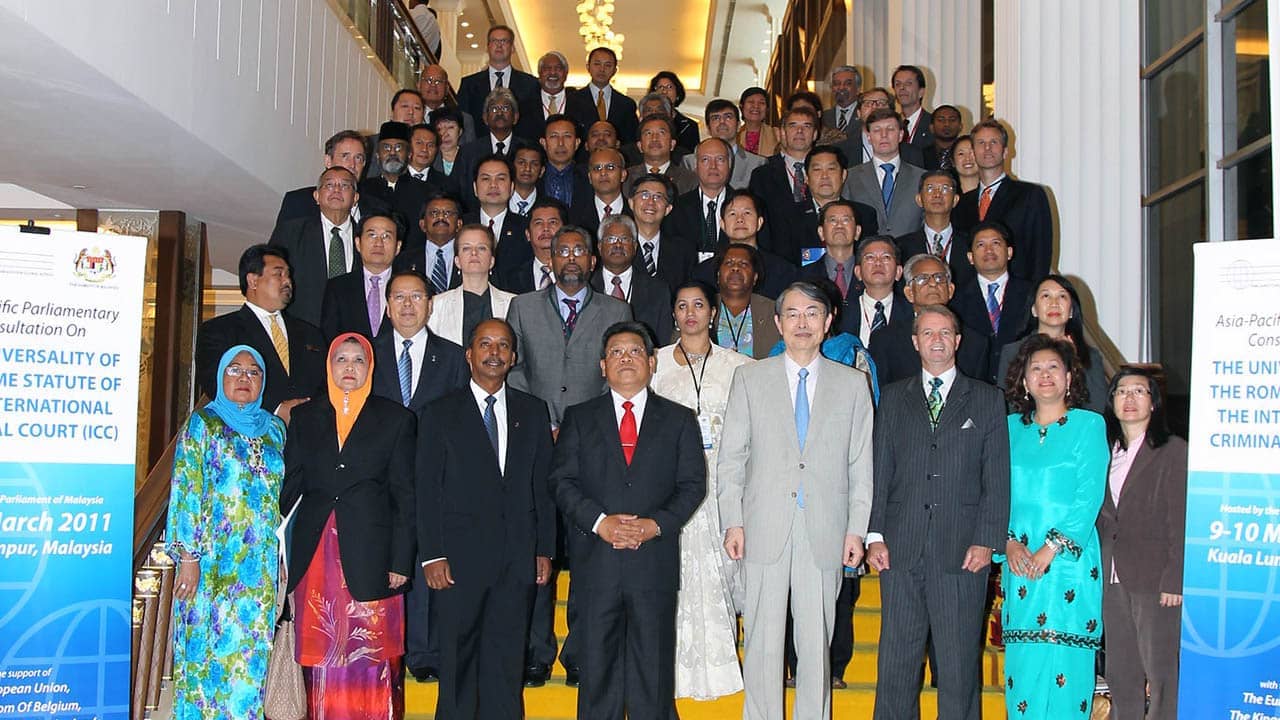
The purpose of this second Consultation was to review current ratification and implementation processes of the Rome Statute in a number of countries in the region, including in particular, in Malaysia.

Following on from the First PGA Asian Consultation on the ICC held in the House of Representatives in The Philippines four years ago, the purpose of this second Consultation was to review current ratification and implementation processes of the Rome Statu

Legislators from Cambodia, Indonesia, Japan, Malaysia, Nepal, New Zealand, Pakistan, the Philippines and Vietnam discussed prospects for increasing the participation of Asia in the ICC system.

Parliamentarians for Global Action (PGA), together with the Philippines Coalition for the ICC and the Coalition for the ICC (CICC), Asia and the Pacific organized an Asian Parliamentarians Consultation on the Universality of the International Criminal Cou

Publication

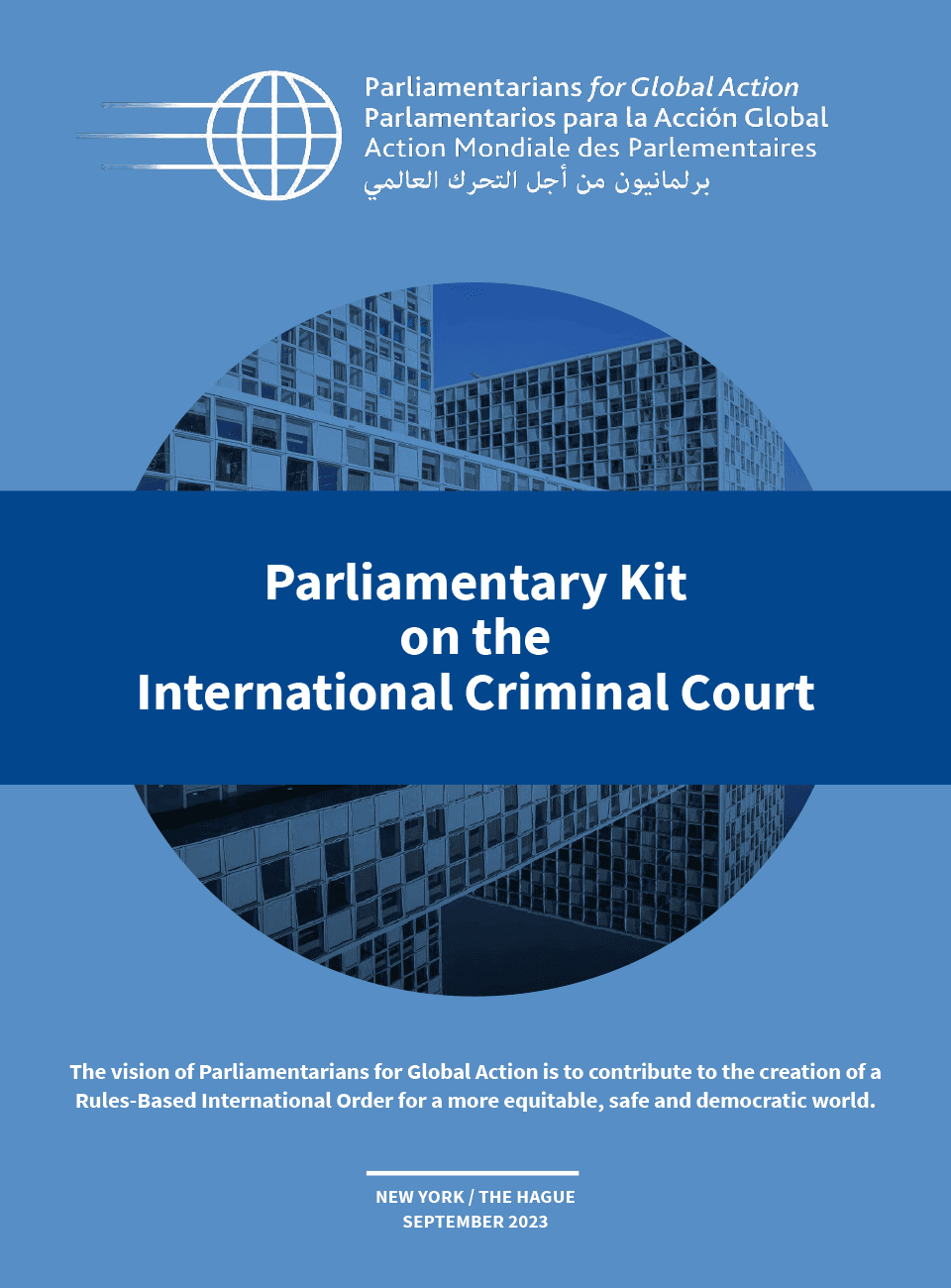
Parliamentary Kit on the International Criminal Court

Parliamentary Kit on the International Criminal Court

It is imperative that the Rome Statute be ratified universally for the successful functioning of the Court. Parliamentarians should ensure that the ICC is truly universal.

Description

Created by the Rome Statute, the International Criminal Court (ICC) is the first permanent and independent international court capable of investigating and bringing to justice individuals who commit the most serious violations of international criminal law, international humanitarian law, and human rights.

The Rome Statute defines the crimes under the Court’s jurisdiction and provides the general principles and procedures for the operation of the Court. It also outlines the cooperation obligations of its State Parties. It is imperative that the Rome Statute be ratified universally for the successful functioning of the Court. Parliamentarians should ensure that the ICC is truly universal.

PDF(s)

Additional Details

  • Publication Type: Toolkit
  • Author(s): Parliamentarians for Global Action

Publication

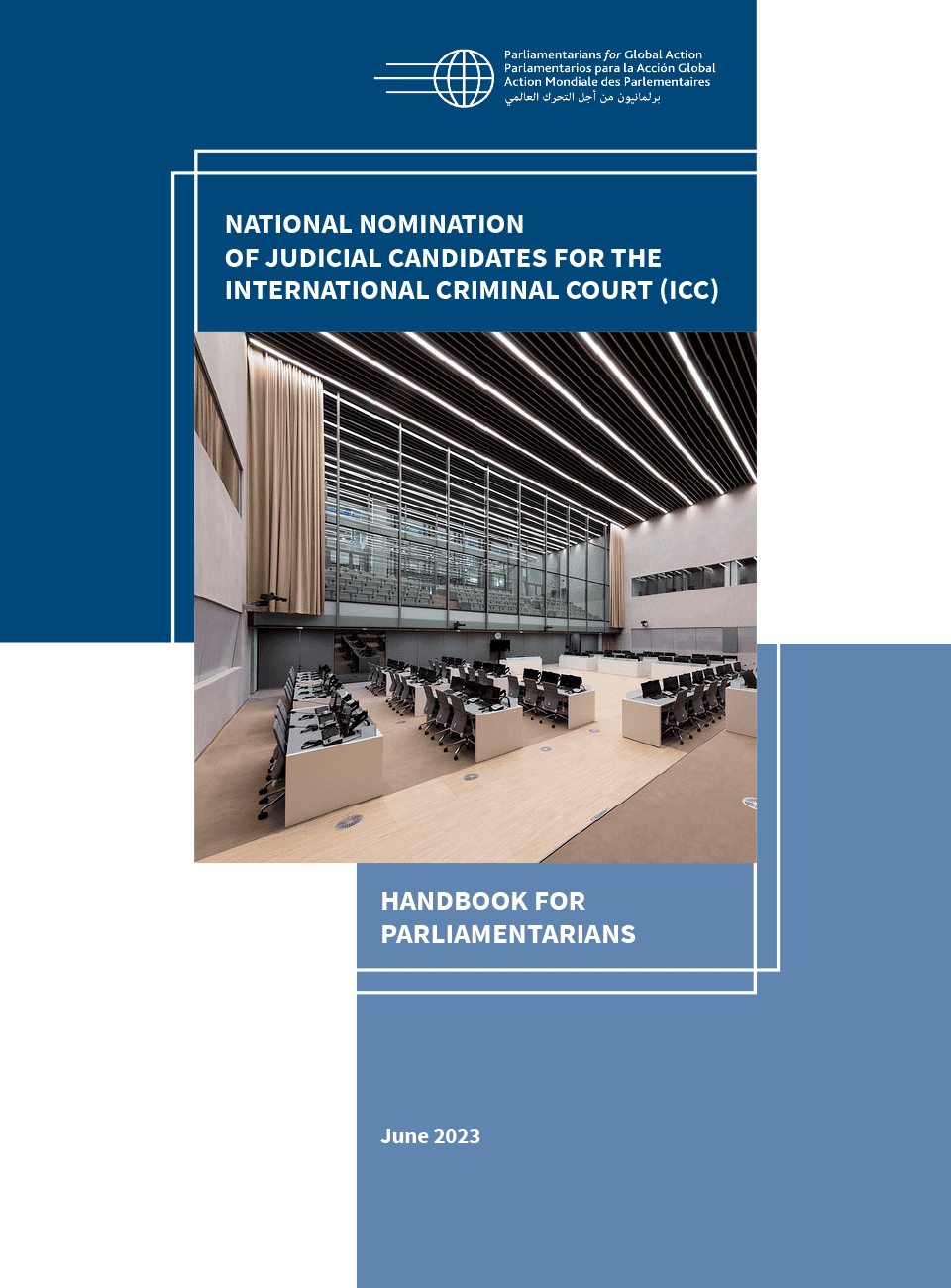
National Nomination of Judicial Candidates for the International Criminal Court

National Nomination of Judicial Candidates for the International Criminal Court

Criteria and recommendations for parliamentarians to improve national nomination procedures for International Criminal Court judicial candidates.

Description

The ICC is the first and only permanent independent court with the mandate to investigate and prosecute individuals responsible for committing international crimes, namely genocide, crimes against humanity, war crimes, and the crime of aggression. Its 18 judges from around the world, elected for a nine-year term, play a key role in ensuring this expectation is lived up to through their primary mandate to render authoritative and high-quality jurisprudence and guarantee fair trials.

Therefore, the quality of the judges has fundamental importance to the performance, efficiency, and effectiveness of the ICC, which is at the heart of the long-term success of the ICC and the Rome Statute system as a whole. In this handbook, PGA sets forth specific criteria and recommendations for Parliamentarians to encourage their governments to improve national nomination procedures for ICC judicial candidates and adopt good practices and requirements to ensure these processes are fair, transparent, and merit-based. The goal of robust nomination procedures is to ensure that only candidate judges or jurists of the highest caliber make it on the ballot.

PDF(s)

Additional Details

  • Publication Type: Handbook
  • Author(s): Parliamentarians for Global Action

Publication

Ratification and Implementation of the Kampala Amendments on the Crime of Aggression to the Rome Statute of the International Criminal Court

Ratification and Implementation of the Kampala Amendments on the Crime of Aggression to the Rome Statute of the International Criminal Court

A handbook aimed at assisting States in ratifying the Kampala Amendments, helping criminalize the most serious forms of the illegal use of force.

Description

It is our honor and privilege to present to you the Third Edition of the Handbook on the Ratification and Implementation of the Kampala Amendments on the Crime of Aggression to the Rome Statute of the ICC.

It is the product of our collaborative effort aimed at assisting States in ratifying the amendments adopted by consensus in Kampala and helping criminalize the most serious forms of the illegal use of force.

PDF(s)

Additional Details

  • Publication Type: Handbook
  • Author(s): Permanent Mission of the Principality of Liechtenstein to the United Nations; Global Institute for the Prevention of Aggression; Liechtenstein Institute on Self-Determination at Princeton University (LISD); (Drafting Assistance by PGA)