


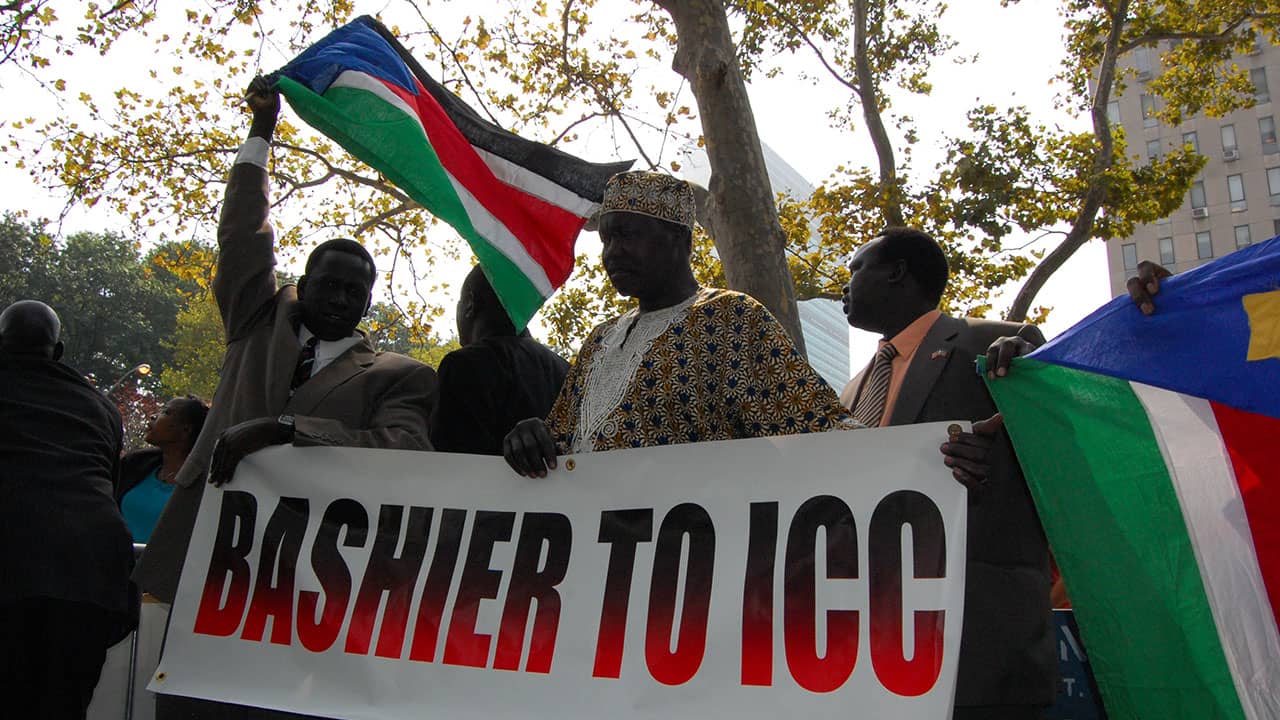
The Sudanese transitional government must show its commitment to breaking with a decades-long legacy of impunity for grave human rights violations and international crimes by swiftly facilitating the handover of Omar al-Bashir, Ahmed Haroun, and Abdel Raheem Muhammed Hussein to the International Criminal Court (ICC).
In a joint letter, more than 65 civil society organisations and individuals – including PGA, REDRESS, Human Rights Watch, Amnesty International, The Sentry, and the African Centre for Justice and Peace Studies (ACJPS), Darfur Bar Association, and the Strategic Initiative for Women in the Horn of Africa (SIHA) – urge the government to follow through on recent commitments to deepen its cooperation with the ICC by transferring the three individuals currently in Sudanese custody to The Hague.
Other signatories to the letter include representatives of the Krinding IDP camp in West Darfur, several Sudanese newspapers, including Darfur24 and Al-Hadatha, and regional organisations which advocate for effective criminal justice mechanisms, including the Southern African Litigation Centre (SALC), which initiated legal proceedings in South Africa following Omar al-Bashir’s visit to South Africa in 2015 (on the basis of South Africa’s duty to arrest and surrender him to the ICC).
Read the full statements:
For more information, contact:
New York:
Dr. David Donat Cattin
Secretary-General
E:
The Hague:
Ms. Frederika Schweighoferova
Director, Rome Statute system Campaign
E: