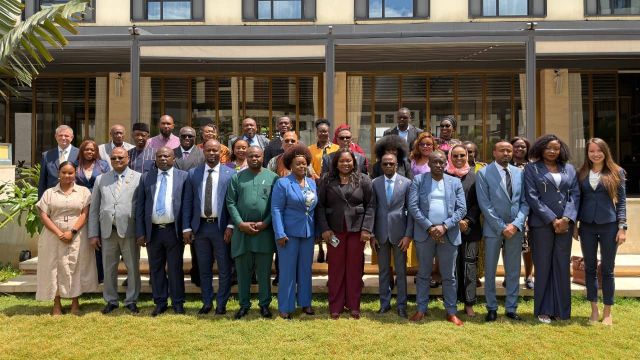



Initiated by MP Sahar Albazar (Egypt), Board Member of Parliamentarians for Global Action
At a time of rising global tensions and escalating conflicts across Europe, the Middle East, Asia, and Latin America, we, members of parliaments from across the world, issue this urgent and unified call for immediate de-escalation, restraint, and a renewed commitment to dialogue and international cooperation.
The continuation and expansion of armed conflicts are no longer confined to consequences within national borders or regions. They pose systemic global risks—destabilizing economies, deepening inequalities, and undermining decades of progress toward sustainable development.
Global Consequences We Cannot Ignore
- Food security at risk - Armed conflicts are disrupting global supply chains, driving food price inflation, and threatening access to basic nutrition—particularly across Africa and vulnerable regions of the Global South.
- Energy instability - Volatility in energy markets continues to strain household and national budgets, increase inflationary pressures, and weaken economic resilience worldwide. Rising energy costs disproportionately impact vulnerable and low-income communities and can lead to severe health impacts.
- Climate crisis - Military escalation significantly accelerates the climate crisis through massive greenhouse gas emissions, environmental destruction in conflict zones, and the diversion of funds from green initiatives, undermining global sustainability efforts.
- Disproportionate burden on the Global South - Countries not party to these conflicts are bearing disproportionate costs—through inflation, debt stress, and reduced fiscal space—placing highly indebted nations at risk of systemic economic collapse.
A Call for Responsible Leadership
We urge all parties engaged in conflict, and those with influence over them, to:
- Commit to immediate de-escalation - Refrain from further military escalation and prioritize ceasefire efforts wherever possible.
- Return to diplomacy and negotiation - Reinforce dialogue channels under international frameworks and good-faith mediation.
- Protect civilians and critical infrastructure - Uphold international humanitarian law and ensure the protection of food systems, energy facilities, and essential services.
- Shield the global economy from further shock - Avoid actions that disrupt trade routes, energy supplies, and financial instability.
- Support vulnerable economies - Expand international cooperation to mitigate the disproportionate impacts on highly-indebted and developing countries.
Why Parliamentarians?
As elected representatives, and the democratic branch closest to citizens, we affirm our responsibility to:
- Advocate for peace and diplomatic solutions within our government.
- Promote accountability and adherence to international law.
- Defend democratic values that encourage meaningful and balanced dialogue and understanding.
- Build cross-border parliamentary alliances to prevent further escalation.
- Translate why international cooperation serves local interests and ensure that national policies reflect global responsibility.
A Defining Moment
The world stands at a critical juncture. The continuation of these conflicts risks triggering a cascade of global crises—economic, humanitarian, and environmental—with long-term consequences for international stability.
International cooperation is not simply idealism — it's how we participate in decision-making processes that benefit our communities and help solve problems that cross borders. Peace is not only a moral imperative; it is a strategic necessity for global survival and shared prosperity.
We urge immediate and coordinated collective action before the costs become irreversible.
We invite parliamentarians worldwide to endorse this call and to advance its principles within their respective national and international engagements.