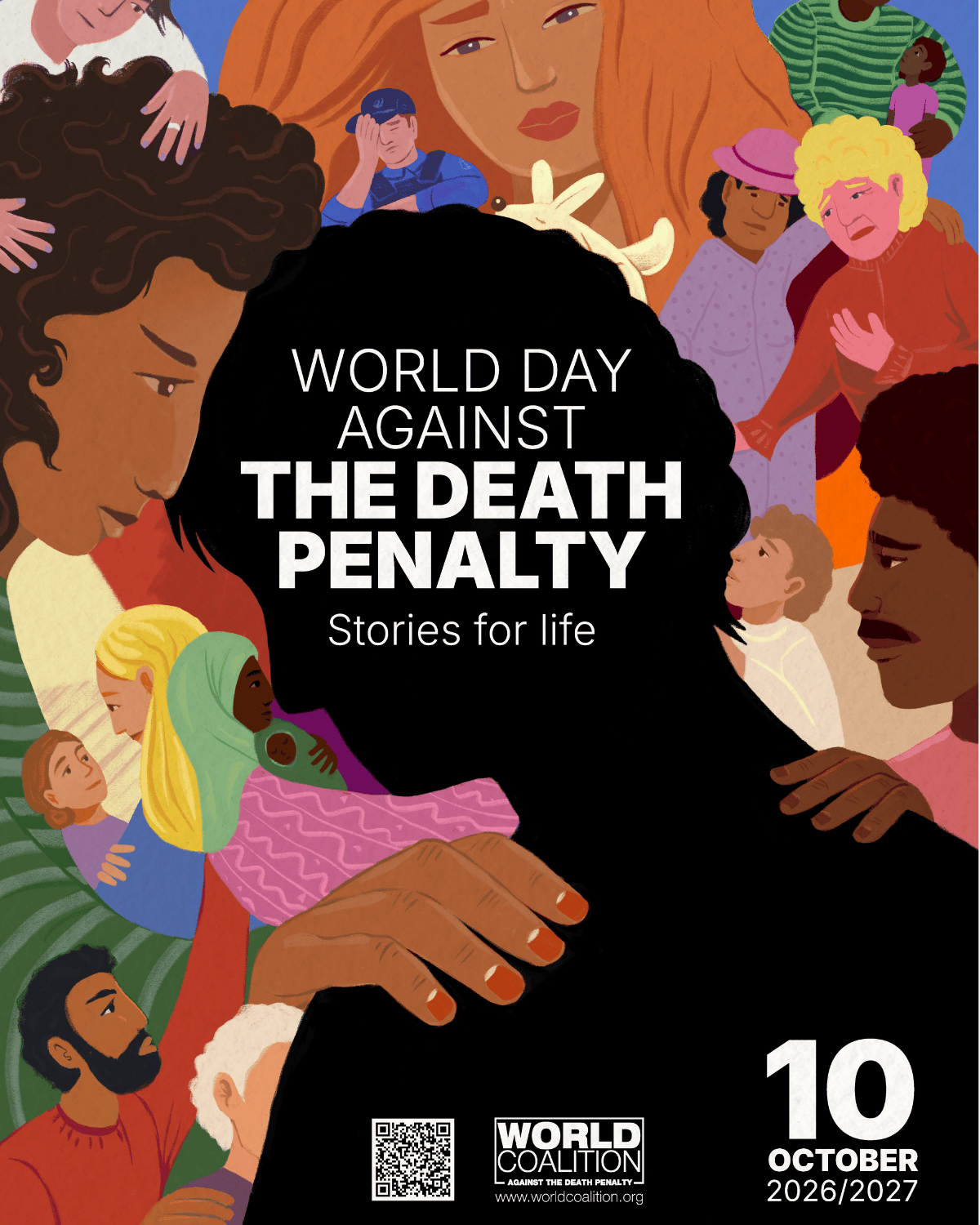



The death penalty affects individuals. The psychological and physical suffering it causes, that can amount to torture or other cruel, inhuman or degrading treatment, impacts many lives: not only the persons on death row themselves, but also their families and close relatives, the victims’ families (as capital punishment can inflict further harm and retraumatize victims), and all actors within the criminal justice and prison systems. The humanity of these individuals is often neglected – if not rendered invisible – thereby marginalizing their testimonies even though it is precisely their stories that highlight the cruelty and discriminatory nature of this punishment.
This is the core message of the 2026 and 2027 World Day Against the Death Penalty, “Stories for Life”, observed by the abolitionist movement on 10 October and supported by Parliamentarians for Global Action.
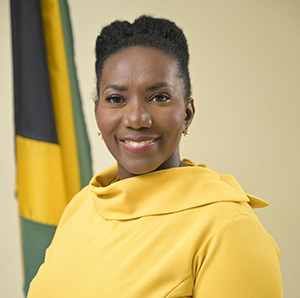
The theme “Stories for Life” reminds us that it is crucial to bear in mind that the application of the death penalty, or the persistent threat of execution, affects our entire society. There can be no truly meaningful justice unless it is grounded in respect for human rights and accountability. As long as the death penalty remains in law, the risk of irreversible wrongful conviction and human rights violations persist. As parliamentarians, it is our duty to ensure that the lived realities of those affected by the death penalty inform public debate, and to work through legislative channels to abolish this cruel, inhuman and degrading punishment.
Hon. Heatha Miller, MP (Jamaica), PGA Member
Humanizing the persons affected by the death penalty
In a world where security-focused rhetoric exploits the myth of deterrence, a minority of States continue to execute individuals to instill fear and control. Recent data indicates a dramatic 78% increase in executions and 2,707 recorded cases in 2025, according to Amnesty International. Many proceedings related to the death penalty processes often occur in the shadows, making it difficult to grasp the harsh reality and the suffering of those directly affected by capital punishment. Governments frequently withhold information, which equally prevents acknowledging the structural, social and individual factors that may have contributed to an individual to be in conflict with the law, and the disproportionate impact on vulnerable populations. In such a context, it is our responsibility to listen to the persons directly impacted by the death penalty, shedding light on their lived experiences and testimonies.
Testimonies from directly impacted persons have fueled the advocacy of civil society organizations and paved the way for progress. In Pakistan, this engagement led us, parliamentarians, to set my country on a path toward narrowing the scope of the death penalty, notably by removing capital punishment for drug-related offenses in 2023. This reform addresses a persistent concern, as many States continue to impose the death penalty for these crimes in the name of the “war on drugs,” despite the practice being strictly prohibited under international law. There is still a long way to go, including ensuring judicial sensitization and implementing reforms, but I remain committed to listening and amplifying the voices of persons directly affected, and upholding human rights. Hon. Barrister Danyal Chaudhry, MP (Pakistan), PGA Member
Parliamentarians as allies to the abolitionist movement
Parliamentarians act as a bridge between their constituents and the law. As representatives, they can amplify the stories and expose the realities lived by persons directly impacted by the death penalty, which are too often absent from policy debates. By giving visibility to the realities of persons on death row, parliamentarians can shift the narrative from abstract security arguments to restorative justice and human rights.
Aware of the realities in the Democratic Republic of the Congo, I decided to conduct an inquiry, in collaboration with the network of parliamentarians for the abolition of the death penalty, to shed light on the detention conditions of persons on death row in the country’s penal institutions. Conducting such a survey and interviewing the persons on death row makes it possible to highlight violations of their human rights and dignity – violations that run counter to the very principles of justice. The current situation does not foster accountability in my country. There is a need to improve the prison system, and the abolition of the death penalty is a part of that process.”
Hon. Christelle Vuanga, MP (DRC), member of PGA Executive Committee and Convenor of the International Law and Human Rights Program
To engage alongside the abolitionist movement, parliamentarians can:
- Listen to the people directly impacted by the death penalty and monitor cases, asking for more transparency in data related to the death penalty;
- Adopt legislation to abolish the death penalty or reduce its scope, and implement a moratorium on executions;
- Engage in public debate, highlighting the risks of wrongful convictions, the proven lack of deterrence, and the discriminatory nature of capital punishment;
- Work closely with civil society, including victims’ groups, to build a path towards abolition;
- Collaborate with parliamentarians across party lines and from other countries to identify strategies and learn from other experiences;
- Call on governments to support and vote in favor of the United Nations General Assembly Resolution for a Moratorium on the Use of the Death Penalty, scheduled for vote in December 2026.
On this World Day, Parliamentarians for Global Action calls upon its members to support the abolitionist movement, highlighting the experiences of the persons directly affected by the death penalty, raising public awareness, and taking action towards the universal abolition of the death penalty.