



Historic progress for the abolition of the death penalty
Lebanon became the second State in the Southwest Asia and North Africa region to abolish the death penalty. Hon. Georges Okais, MP (Lebanon), was among the parliamentarians that championed the bill: “With this vote, we have demonstrated the Lebanese people’s commitment to human rights and restorative justice.” Parliamentarians for Global Action celebrated this milestone, hoping it will inspire legislators across the region and worldwide. As the legislation was subsequently promulgated by the President in August, PGA called on Lebanese parliamentarians to:
- Urge authorities to ensure that all death sentences are commuted;
- Call on their government to ratify the Second Optional Protocol to the International Covenant on Civil and Political Rights;
- Ensure the government votes in favor of the upcoming UN General Assembly resolution for a moratorium on the death penalty in December 2026.
Suriname’s National Assembly unanimously approved the bill ratifying the Second Optional Protocol to the International Covenant on Civic and Political Rights (ICCPR), aimed at the abolition of the death penalty, reinforcing the country’s commitment to abolition and preventing any future reversal. By taking this step, Suriname joins 92 other States Parties, and, most recently, the Parliament of Sierra Leone, which adopted a similar bill in June. PGA now calls on the respective governments of these countries to deposit their instruments of ratification, formally becoming parties to the Second Optional Protocol.
A look back at the World Congress Against the Death Penalty
The World Congress Against the Death Penalty, organized by Ensemble contre la peine de mort (ECPM) met in Paris, France, from 30 June to 2 July. The conference gathered over 1,300 participants from 100 countries, including parliamentarians and PGA members: Hon. Millie Odhiambo, MP (Kenya), Hon. Christelle Vuanga, MP (Democratic Republic of the Congo), and Ms. Marietta Karamanli, MP (France). The high-level participation facilitated key commitments, notably Morocco’s pledge to host the next Congress, and announcements from Central African Republic, Chad and Cambodia of their intent to ratify the Second Optional Protocol to the ICCPR, aiming at the abolition of the death penalty.
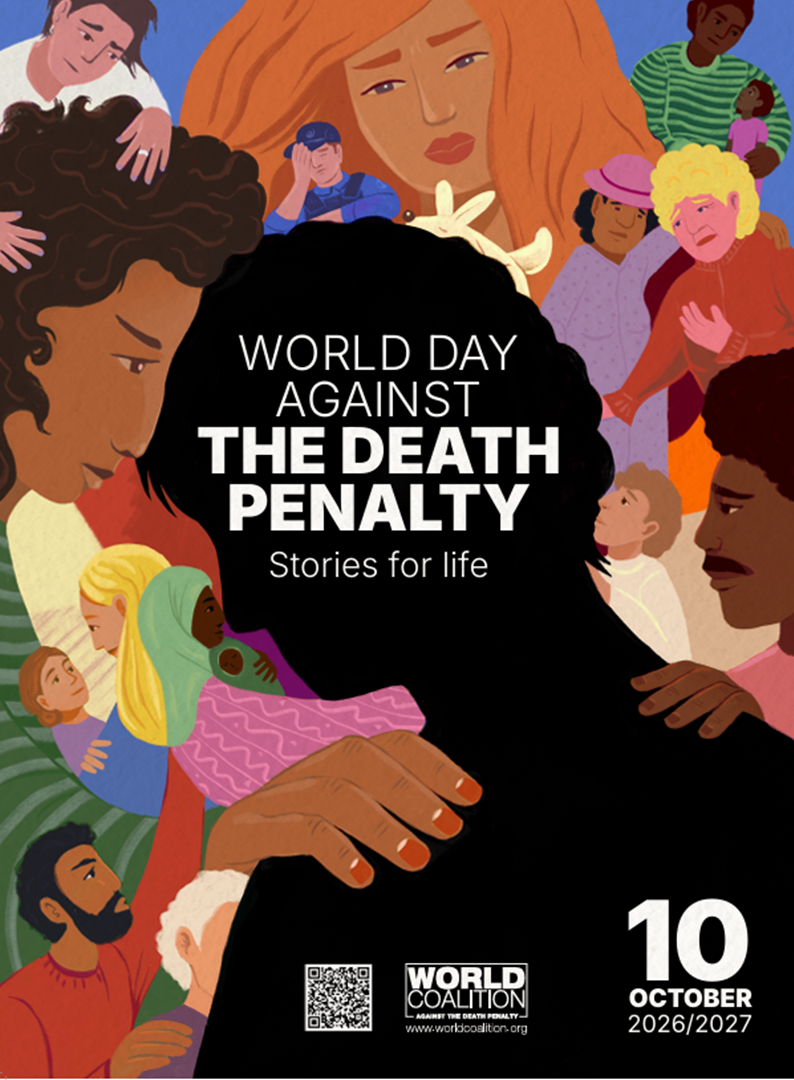
The discussion also fostered reflections on current urgent issues, including the resurgence of executions, the use of capital punishment for drug-related offences, discrimination, justice, the socio-economic impact, the role of the judiciary, and the importance of personal testimonies – which aligns with the upcoming theme for the World Day Against the Death Penalty (10 October), “Stories for Life.”
Remaining attentive to setbacks
Despite these milestones, significant issues remain. The execution spree continues in Iran, a pattern instilling fear and suppressing dissent. Singapore has also seen a significant rise in executions for drug-related offences, already surpassing the total for all of 2025. Amnesty International, the Anti-Death Penalty Asia Network (ADPAN), Capital Punishment Justice Project (CPJP) and Harm Reduction International (HRI) stated that these executions represent continued violations of safeguards and restrictions on the use of the death penalty set out under international human right law and standards which render these executions unlawful.
In the United States, there is an increasing number of executions and individuals on death row. In response, Amnesty International and 45 other organizations, including PGA, wrote an open letter to the Governor of California, Gavin Newsom, asking for his immediate action to end the threat of execution for more than 550 people currently on death row in California (the US state with the highest number of people under sentence of death).
On 9 September, the Algerian Government announced a review of a preliminary draft amendment to the Penal Code intended to enforce the death penalty for certain categories of crimes (the country has observed a de facto moratorium since 1993). This draft amendment concerns the perpetrators and instigators of arson, as well as those who kidnap minors and those who inflict abuse upon them. The severity of these offenses does not negate the right to life, the right to a fair trial, or Algeria’s obligations under international law.
The World Day Against the Death Penalty, observed every 10 October, unifies the global abolitionist movement and mobilizes civil society, political leaders, lawyers, and public opinion to support the call for the universal abolition of capital punishment. This year, the World Day will focus on calling for a person-first approach, re-centering the human in abolitionist advocacy, with the theme “Stories for life.” PGA encourages parliamentarians worldwide to mark this very important date and join initiatives launched by civil society organizations in their countries.
PGA will contribute through the following events:
- 7 October: Stories
for Life: Parliamentary Voices for Abolition in the Americas
Virtual roundtable for parliamentarians in the Americas on the abolition of the death penalty - 10 October: World Day against the Death Penalty
Positive developments:
Indonesia:
o In July, civil society organizations celebrated a decade without executions in the country, which implies that Indonesia became a de facto abolitionist in practice country. In a statement, 17 NGOs led by ADPAN called on Indonesia authorities to formally abolish the death penalty.
Kazakhstan:
o Kazakhstan’s new Constitution, which explicitly prohibits the death penalty, entered into force on 1 July. This follows the country’s abolition of the death penalty in June 2022 and ratification, in 2021, of the Second Optional Protocol to the ICCPR, aiming at the abolition of the death penalty.
Lebanon:
o On 11 August, the Lebanese National Assembly adopted the law abolishing the death penalty. The law was subsequently promulgated by the President on 17 August.
Philippines:
o The President granted a pardon to Mary Jane Veloso, who had been imprisoned since 2015 after receiving a last-minute reprieve from execution by firing squad in Indonesia for drug-related charges.
Saudi Arabia:
o Authorities granted pardon to nearly 2,000 Ethiopian nationals held on death row, often for drug-related charges. While Ethiopia has begun facilitating the repatriation of its citizens, hundreds of Ethiopian nationals remain on death row in Saudi Arabia.
Suriname:
o On 23 July, the National Assembly unanimously approved the bill ratifying Suriname’s accession to the Second Optional Protocol to the International Covenant on Civil and Political Rights, aiming at the abolition of the death penalty.
United Kingdom
o Seventy years after her execution, Ruth Ellis, the last woman to be executed in the United Kingdom, was granted conditional pardon by the King. This act recognizes the historic injustice of the death penalty in this case, including evidence of domestic abuse and coercive and controlling behavior. The application for a pardon was brought by four of her grandchildren.
United States:
o Louisiana Supreme Court’s overturned a death sentence, ruling that the evidence undermined the scientific foundation of the prosecution’s case. The man was released after 27 years on death row.
o Utah prosecutors dropped death penalty charges against a man who spent decades on death row, following DNA tests.
Viet Nam:
o The government presented its explanation before the National Assembly to reduce the scope of the death penalty for six offences, as part of proposed amendments to the Penal Code. The Committee on Legal and Judicial Affairs expressed support for narrowing the scope of capital punishment. The amendments are supposed to be tabled for a final vote in October.
Setbacks:
Algeria:
o The Minister of Justice presented proposed amendments to the Penal Code, which aims at expending the scope of the death penalty, following the President’s calls for harsher penalties after the deadly wildfires of August. The bill to amend the Penal Code contains several provisions expanding the scope of the death penalty, particularly regarding kidnapping, torture, sexual assault or the mutilation of children, as well as certain arson offenses. Algeria observes a moratorium on the death penalty for 33 years. Civil society organizations expressed concerns and launched a petition as an international appeal to maintain the moratorium on executions in Algeria.
Bangladesh:
o On 6 September, Parliament passed a bill imposing the death penalty for enforced disappearance. Civil society organizations called the President to return the bill to parliament for reconsideration, including removal of the death penalty, establishment for an independent investigative mechanism and stronger safeguards for victims, their families and people reporting suspected disappearances in good faith.
India
o A district judge issued 23 death sentences over four months, drawing the public attention to the larger issue of capital punishment in India. While permitted only in the “rarest of rare” instances, the death penalty is awarded on the discretionary views of the judge.
Iran:
o In Ghezelhesar Prison, prisoners protested for sixteen days to call on judicial authorities and members of parliament to conduct a comprehensive review of the death penalty, particularly in drug-related cases. Authorities promised to temporarily suspend drug-related executions. Hundreds of people sentenced to death for drug offences remain at imminent risk in other prisons across Iran.
o 12 individuals were sentenced to the death penalty for their involvement in the January 2026 protests and two of them were executed on 19 July. UN experts condemned the development and called for an immediate halt to executions. In 2026, at least 29 individuals have already been executed in connection with the January protests, while over 100 individuals have been identified to be on death row according to Iran Human Rights NGO.
o Executions continue to rise in Iran, in a pattern instilling fear and suppressing dissent. Since the beginning of the year, at least 575 executions have been recorded by the NGO Iran Human Rights.
Israel:
o A Palestinian man accused of killing an Israeli settler in the West Bank could become the first person sentenced to death under the Israel new death penalty law, which was condemned as discriminatory and effectively designed to target Palestinians by human rights experts, including the UN.
Japan:
o The country executed a man sentenced to the death penalty, previously found guilty of murder, attempted murder and arson in 2011. The jury rejected the defense’s argument that he was mentally ill at the time of the crime. His appeals were rejected in 2016 by a Supreme Court ruling upholding the death sentence. This is the first execution in Japan for 2026.
Libya:
o The de facto authorities in eastern Libya, the Libyan Arab Armed Forces, have resumed executions for the first time since 2010. Since 23 August, at least 30 individuals were arbitrarily executed following unfair trials and alleged torture-tainted and secretive trials. Amnesty International reports that at least 50 men are at imminent risk of execution by the Libyan Arab Armed Forces.
Nepal:
o Some parliamentarians renewed calls to reinstate the death penalty. Nepal abolished capital punishment in 1997, which is enshrined in its Constitution, and became a party to the Second Optional Protocol to the ICCPR in 1998. Any reversal would therefore violate Nepal’s international obligations. Civil society organizations, including ADPAN, called for the government to continue honoring its commitments by upholding its absolute prohibition of capital punishment.
Singapore:
o Singapore executed two individuals, a Singaporean and a Malaysian citizen, who were convicted for drug related offences. Since January 2026, the country has executed 18 people for such charges, surpassing the total for 2025 (17), according to CPJP. UN experts called for an immediate halt to the country’s continued and unlawful use of capital punishment.
o Amnesty International, CIVICUS and Human Rights Watch called on the Singapore government to drop charges against seven human rights defenders who face conviction for protests, vigils and other forms of public advocacy concerning the ongoing conflict in Gaza and opposition to the death penalty.
Syria:
o A Syrian Court sentenced Bashar al-Assad alongside other former officials to death in abstentia for crimes against humanity and war crimes, committed during the 14-year civil war that culminated in the fall of the Assad regime in December 2024. While these trials are crucial for accountability and transitional justice processes, highest standards in international criminal law limit applicable penalties to imprisonment.
United States
o On 1st July, a new law applying the death penalty for child sexual abuse, entered into force in Mississippi. This legislation defies the previous U.S. Supreme Court ruling that the death penalty for non-homicide crimes violate the 8th Amendment’s prohibition against cruel and unusual punishment.
o Filings from ongoing litigation over Tennessee’s lethal injection protocol adopted a year and a half ago show concerns about the executioners’ training and qualifications.
o Texas Appeal Court rejected a trial judge’s recommendation that Melissa Lucio, a victim of sexual abuse and domestic violence convicted for the accidental death of her daughter, is actually innocent despite forensic and eyewitness evidence.
o Christa Pike, a child rape victim, faces execution in Tennessee for a crime she committed when she was eighteen years old. In 2026, the Inter-American Commission on Human Rights concluded that the United States was responsible for the violation of her rights to life, liberty and personal security, the right to equality before the law, the preservation of health and well-being, fair trial, protection from arbitrary arrest and due process. It reiterated that Christa Pike should be provided with effective reparation, including a review of her sentence, in accordance with the guarantees of the right to justice and the right to due process, as well as pecuniary compensation. The Commission also recommended that her sentence be commuted. Christa Pike spent 27 years in solitary confinement.
o From July-September 2026, a total of 12 executions were recorded, included:
§ 6 in Florida
§ 2 in Texas
§ 2 in Alabama
§ 1 in Oklahoma
§ 1 in Tennessee
New reports and resources:
World Coalition Against the Death Penalty
o Ahead of the World Day Against the Death Penalty (10 October), the WCADP published a series of new tools to support the new theme of this World Day’s cycle, dedicated to humanizing the people affected by the death penalty, focusing on the stories of the human beings affected by the capital punishment whose voices are too often neglected or silenced. The leaflet, mobilization toolkit, and testimonies are available on the World Day webpage.