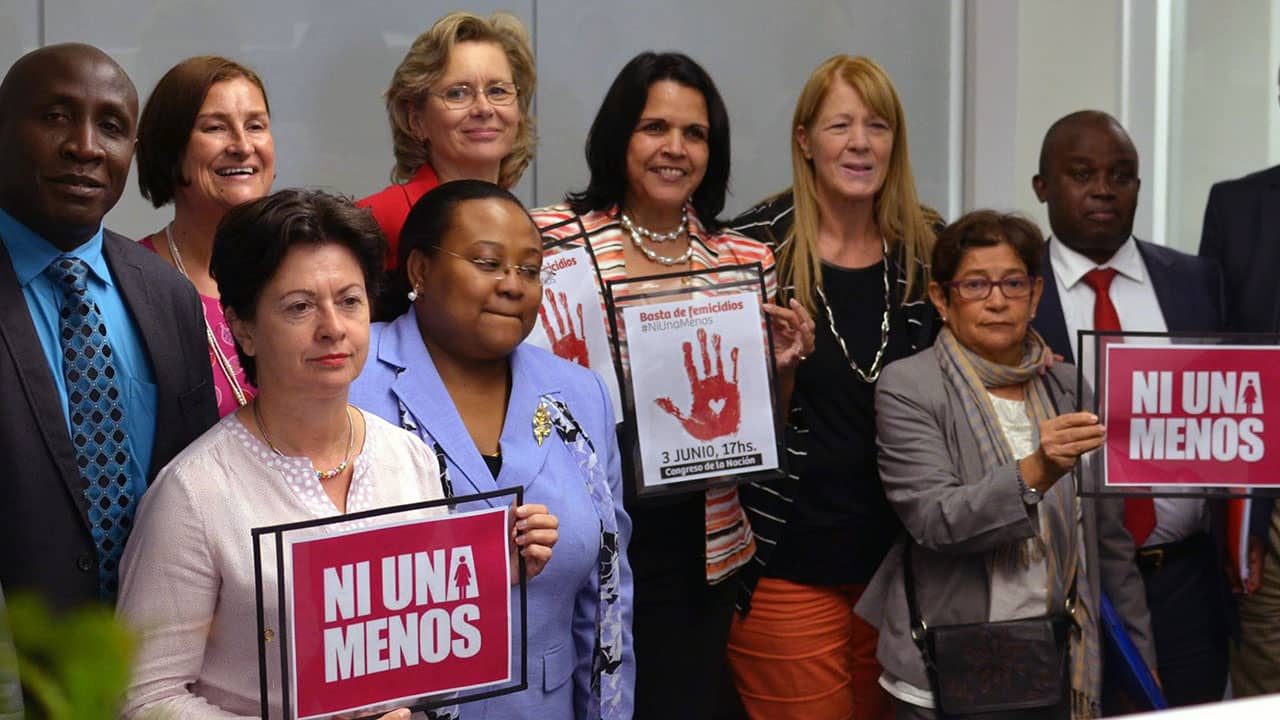



On the International Day of the Girl Child 2025, Parliamentarians for Global Action’s National Group in The Gambia, under the leadership of Hon. Abdoulie Ceesay, convened a cross-party high-level parliamentary dialogue to reaffirm The Gambia’s commitment to gender equality, the empowerment of girls, and the creation of inclusive political spaces for women.
The virtual briefing brought together members of parliament, civil society leaders, and international partners to reflect on both the progress made and the structural challenges that persist in ensuring that every girl in The Gambia can live free from violence, discrimination, and exclusion.
In his opening remarks, Hon. Ceesay highlighted the urgent need to move from commitment to implementation, emphasizing that while The Gambia has a solid legal framework protecting the rights of women and girls, gaps in enforcement and deep-rooted cultural practices continue to hinder progress.
He further stressed the importance of legislative leadership in promoting justice, particularly in aligning customary, religious, and international laws to uphold the rights of girls in areas such as marriage, inheritance, and reproductive health.
Removing Tax on Sanitary Pads: "A Matter of Dignity and Public Health"
Hon. Ceesay also called for the elimination of import taxes on sanitary pads, framing menstrual hygiene as a public health and human rights issue. He argued that continued taxation of menstrual products disproportionately affects girls, especially those in rural areas, who may miss school, suffer embarrassment, or resort to unsafe alternatives during their periods.
"As a father of two daughters, I know firsthand that sanitary pads are not a luxury — they are a necessity," he said. "Removing taxes on these essential products is a matter of dignity, health, and equality."
His call to action echoes long-standing advocacy from grassroots organizations, such as Women in Liberation and Leadership, who have raised awareness on "period poverty" and its impact on education and social participation.
Structural Barriers to Transformative Change
Dr. Fatou Baldeh, founder of Women in Liberation and Leadership, delivered a powerful address underscoring the persistence of harmful practices such as female genital mutilation, child marriage, and sexual and gender-based violence. She emphasized the critical need for political will, legislative reform, and collaboration with civil society to shift social norms and ensure the safety and inclusion of girls.
Participants also discussed several other actions to be taken:
- The need for greater representation and training for women in political spaces, including efforts that could re-introduce a gender quota bill to reserve at least 30% of parliamentary and local government seats in The Gambia for women. Although the bill failed to pass in the 5th Legislature due to political and procedural obstacles, renewed momentum aims to build consensus and ensure stronger women’s representation in decision-making.
- Support for policies that allow pregnant girls and adolescent mothers to stay in school.
- The importance of strengthening oversight bodies such as the National Human Rights Commission and the Office of the Ombudsman to promote greater accountability, transparency, and equal protection under the law. By equipping these bodies with sufficient resources, independence, and authority, they can more effectively safeguard rights, address discrimination, and reinforce public trust in democratic governance.
Notably, Hon. Gibbi Mballow shared personal experiences of backlash faced by MPs who speak out against female genital mutilation, underscoring the risks and resistance encountered in pushing for gender-sensitive reforms. He called for greater public awareness and education, and stronger enforcement of legislative reforms.
The dialogue also highlighted key national initiatives under way in The Gambia:
- The National Gender Policy 2025 - 2034, which provides a comprehensive framework to mainstream gender equality across all sectors.
- The Strategic Plan 2025 - 2030, which outlines a roadmap for implementing gender commitments through cross-sectoral collaboration.
- Plans to host a regional Women, Peace and Security training in 2025, displaying leadership in gender-inclusive peacebuilding.
Towards Real Change: A Shared Responsibility
Ms. Melissa Verpile, Director of Democracy, Gender, and Inclusion at Parliamentarians for Global Action, closed the session by reaffirming support for The Gambia’s efforts and encouraging legislators to be bold in translating principles into practice.
Participants left the convening with the following key steps for further action:
- Menstrual health must be addressed through practical policies, including tax exemptions on sanitary products.
- Customary and international laws must be harmonized to uphold gender equality in all spheres of life.
- Civil society partnerships are essential for reaching communities, challenging norms, and providing support to survivors.
- Political representation of women and girls must be increased through quotas, mentorship, and capacity building.
- Oversight and enforcement mechanisms must be strengthened to ensure that rights are protected and violators held accountable.
This year’s commemoration of the International Day of the Girl Child in The Gambia served, as more than a symbolic observance, it was a strategic platform for action. Parliamentarians for Global Action celebrates the leadership of its National Group in The Gambia and calls on parliamentarians worldwide to continue building inclusive, safe, and equitable political spaces, where girls today can become the empowered women leaders of tomorrow.